
How halal certification applies to airline catering
Certificates can cover products, production facilities or particular catering activities.
Read guide ↗Continue the meal types directory: How halal certification applies to airline catering and more detailed guides.
Certificates can cover products, production facilities or particular catering activities.
Read guide ↗
Caterers operate under different national and private halal systems.
Read guide ↗
Some passengers need more than a broad halal statement.
Read guide ↗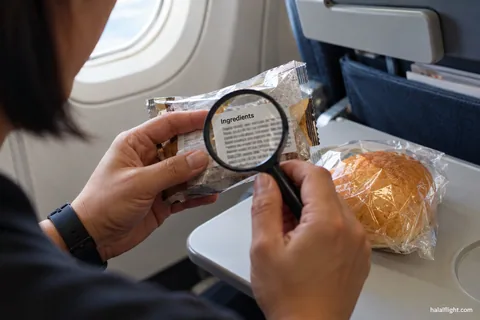
Pork can appear as ham or bacon, while lard is a less visible cooking fat.
Read guide ↗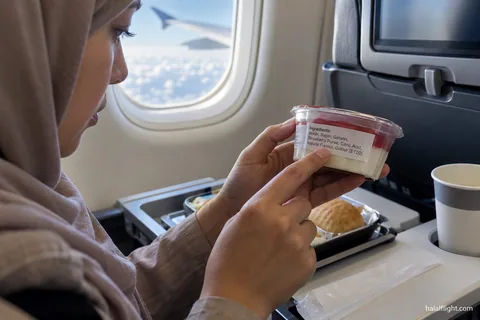
Jelly is an obvious place to check, but mousse, yoghurt desserts, marshmallows and sweets may also use gelatin.
Read guide ↗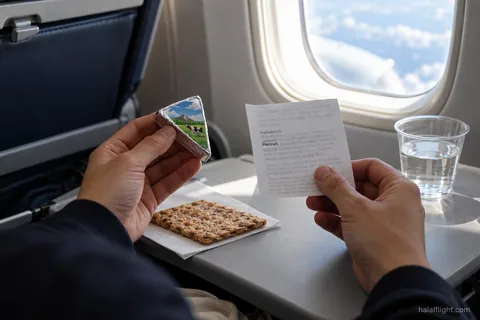
Cheese production can involve rennet, cultures and extra enzymes alongside milk.
Read guide ↗
An E-number identifies a food additive.
Read guide ↗
Declining wine as a beverage does not answer whether it was used in sauce.
Read guide ↗
Flavourings can use solvents not obvious from a finished food’s name.
Read guide ↗
Halal cross-contact concerns prohibited ingredients, while food safety also covers microbes and allergens.
Read guide ↗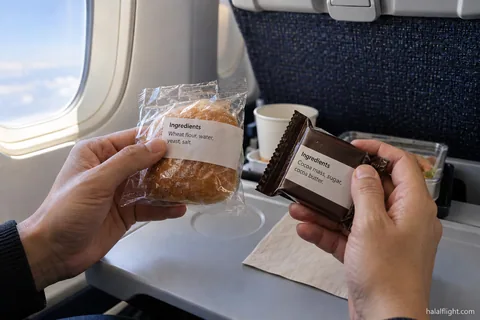
Bread and chocolate may involve fats, enzymes, emulsifiers and flavourings despite their simple appearance.
Read guide ↗
Muslim authorities do not all permit the same sea creatures.
Read guide ↗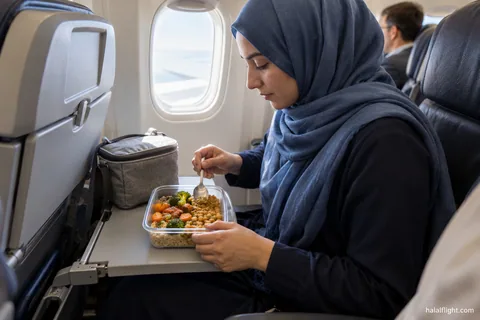
Plan a personal halal meal around airport screening, airline handling limits and destination customs, with practical packing advice for your journey.
Read guide ↗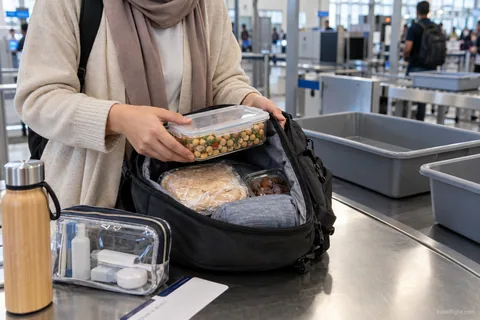
Check how food consistency, liquid containers, cooling packs and cabin baggage limits affect the halal food you take through airport security.
Read guide ↗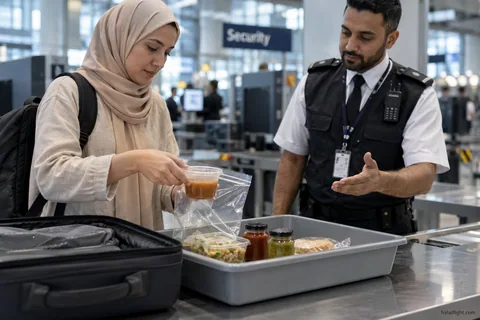
Understand screening rules for soups, dips and sauces, the importance of container size and why liquid allowances differ between airports.
Read guide ↗
Check origin-dependent meat and dairy rules for the EU, United States and Australia, and handle personal food declarations and leftovers correctly.
Read guide ↗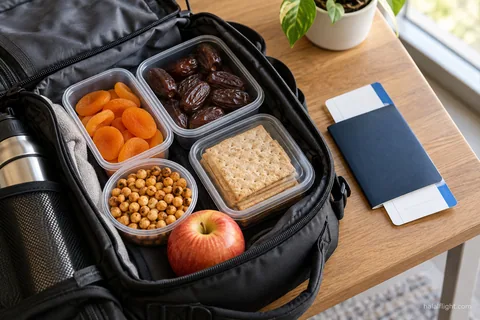
Choose travel-friendly halal snacks, inspect ingredient labels, account for liquids and allergens, and check destination rules for remaining food.
Read guide ↗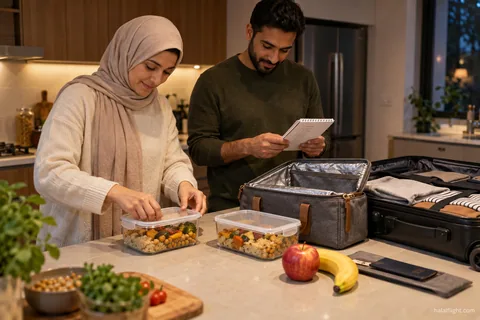
Build a meal plan for the full travel day, with suitable cold storage, practical portions, shelf-stable reserves and arrival import checks.
Read guide ↗