The first five minutes decide most of the outcome
A halal or Muslim meal that has not appeared is easier to sort out while the meal service is still under way. Crew can check how many special trays were loaded, look through the galley and, on some aircraft, speak to a colleague who counted the boxes at the start of the flight. Once the trolleys have gone back and the galley is being tidied, there is far less they can do.
The sequence that works best is short and calm:
- Notice that nobody has brought your tray, or that the label on it names a different meal.
- Press the call button or wait for the crew member nearest to you, rather than the one at the far end of the aisle.
- State your seat number and the exact meal you ordered.
- Ask them to check the special meal list before the remaining trays are handed out.
- Show your booking record if they ask for it, and listen to what they can offer.
This page covers the minutes on board. Complaints after landing, refunds of paid meals and compensation questions are separate matters and are only touched on at the end.
Saying it clearly to the crew
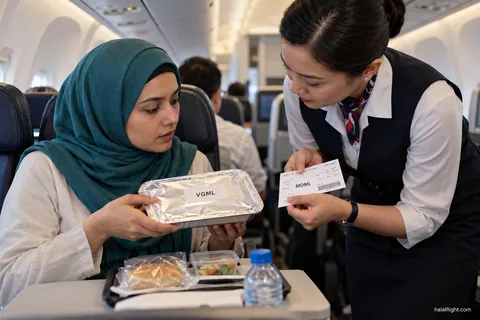
Crew deal with dozens of requests during a service, so a precise sentence helps. Something like: ‘I booked a Muslim meal for this flight, seat 34C, and I have not been served. Could you check whether it was loaded?’ is more useful than a general complaint about the food.
Why wording matters
Airlines list religious meals under their own names. One carrier may call the meal a Muslim meal, another a halal meal, and the booking code is usually MOML. Use the name shown on your confirmation, because that is what the crew will search for on the passenger list.
Speak privately
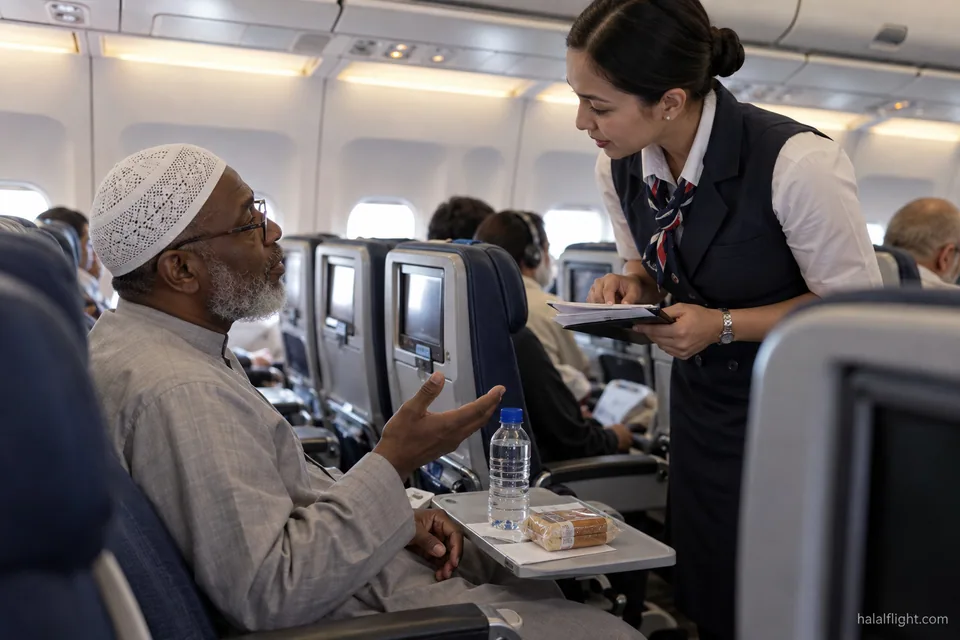
If the cabin is crowded, ask the crew member to step to the galley or lean in so that you can talk without drawing attention. A quiet conversation tends to produce a more practical response than a public exchange, and it keeps the focus on finding food for you.
Showing the request without arguing about it
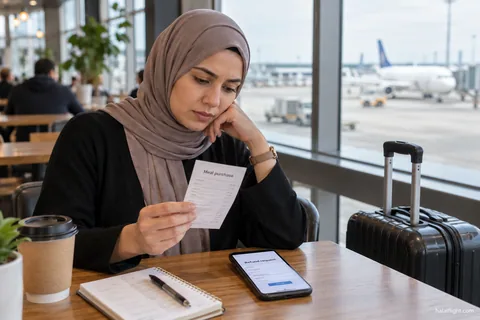
A confirmation on your phone helps the crew understand what you ordered. Useful items to have ready are the booking reference, the flight number and date, your name, and the line that names the meal. A screenshot taken before departure is valuable if the airline app later fails to load without a signal.
Submitted is not the same as confirmed
Some booking pages show that a request was sent, while others show that the airline accepted it for a particular flight. If your record only says ‘requested’, say so honestly. The crew will check the actual meal list, and what they find there matters more than the screenshot.
Be aware of what the evidence can and cannot do. It shows what you asked for and supports a later complaint. It cannot create a tray that was never loaded, so do not expect the crew to produce the exact meal simply because you have proof.
Judging a substitute before you accept it
If the exact meal is not on board, the crew may offer another special meal, a standard meal or separately packed items. Treat each offer as a new decision rather than an equivalent swap.
Questions worth asking
- Does this meal contain pork, gelatine from pork, lard or alcohol, including in sauces, dressings and desserts?
- Is the meat labelled, and does the label say anything about halal slaughter?
- Is the item sealed, or has it been opened or plated from a larger container?
- Is there an ingredient list I can read on the packaging?
Common substitutes and their limits
A vegetarian meal avoids meat, which removes the question of slaughter, but it can still contain alcohol-based flavourings or gelatine-based desserts. A kosher meal follows its own rules and is not the same thing as halal; the two overlap in places but they are not interchangeable. A standard chicken dish does not become halal because it is chicken. If an item cannot be explained to you, treat it as unconfirmed.
Whether a doubtful item is acceptable to you is a personal religious question. Many scholars allow more flexibility in necessity than in ordinary circumstances, and views differ between schools, so a qualified scholar is the right person to ask in advance how you should handle such situations.
Eating from your own reserve
Experienced travellers often carry something that needs no special handling: dried fruit, nuts, plain biscuits, cereal bars with a clear ingredient list, or a sandwich from a halal outlet. Having this in your bag turns a missing tray from a problem into an inconvenience.
Do not rely on the crew to refrigerate, heat or store your own food. Facilities on board are limited and airlines set their own rules on handling passenger food, which is why items that can stay at room temperature are the safe choice. Check the airline’s published guidance before you travel if you plan to bring anything perishable.
Keep allergies in a separate conversation. A missing religious meal and an allergy are different issues, and a crew member who is trying to solve the first should be told clearly about the second. Never accept a substitute without checking it against an allergy.
If nothing suitable is available
Occasionally the aircraft carries no suitable substitute at all. In that case, ask what can still be offered: plain bread rolls, fruit, a salad without meat or dressing, crisps, biscuits, or hot and cold drinks. Items with a short, readable ingredient list are the easiest to assess.
For adult travellers this usually means eating less than planned until the next airport. For children, older people and anyone with a medical condition that depends on regular meals, say so to the crew and ask for the most suitable available option. A traveller who is unwell should put health first and ask the crew for help.
If you are fasting, the question of breaking or continuing the fast on a flight is separate and belongs to your own scholar. This page does not address it.
Record what happened while it is fresh
A short note made on board is worth more than a long memory a week later. A complaint that names the flight, the request, what was offered and what you decided is much easier for an airline to investigate than a general account.
- Flight number, date, route and seat number.
- The meal you ordered and the proof you hold, including the time you last checked it.
- The name or description of the crew member you spoke to and roughly when.
- What you were offered and what you accepted or declined.
- A photograph of any label, tray or packaging, if the crew do not object.
- Any extra money you spent because of the missing meal, with receipts.
Keep these in one note on your phone and save the booking confirmation alongside it.
After landing: the written complaint route
Raise the matter with the airline first, in writing, and state what you would like in return: an explanation, an apology, a refund of any meal charge or a goodwill gesture. A specific request is easier to answer than a general expression of dissatisfaction. Keep a missing complimentary meal, a paid meal that was not supplied and a flight disruption apart in your message, since they may be handled differently.
For flights to or from the UK, the airline’s own complaint process comes first. If you are not satisfied with its reply, the Civil Aviation Authority explains that you can take the matter to an approved alternative dispute resolution body, to the CAA itself if the airline has no such scheme, or to court. The AviationADR page sets out how its process works, including that the airline must either have given a final written response or have had eight weeks to answer. Check both pages for the current conditions, and whether your airline is a member, before you rely on them.
Checklist if your halal meal is not on the tray
- Speak to the crew at once, quietly, with seat number and exact meal name.
- Ask them to check the special meal list before service finishes.
- Show your booking record and say whether it was submitted or confirmed.
- Ask for ingredients and packaging before accepting any substitute.
- Do not treat vegetarian, kosher or chicken as halal by default.
- Eat from your own non-perishable reserve if nothing suitable is offered.
- Mention any allergy separately, every time.
- Write down names, times, offers and expenses before you land.
- Complain to the airline in writing within a reasonable time and say what you want.
- Ask your own scholar in advance how to handle doubtful situations, not only after they occur.
Frequently asked questions
What should I say first if my halal meal has not arrived?
Give your seat number and the exact name of the meal on your booking, then ask the crew to check the special meal list before the service ends. Keep it short and polite. A precise request lets them search the passenger list quickly, which is more useful than describing the problem at length.
Can I demand the halal meal if I show my confirmation?
No. A confirmation shows what you ordered and supports a later complaint, but it cannot produce a meal that was not loaded. The crew can check, offer alternatives and record the issue. If the record only says the request was submitted, say that honestly, because the airline’s own meal list decides what is on board.
Is a vegetarian or kosher meal a safe replacement for halal?
Not automatically. Vegetarian meals avoid meat but can still contain alcohol-based flavouring or gelatine in desserts. Kosher meals follow different rules and are not interchangeable with halal. Ask for the ingredients and read the label. Whether a particular substitute is acceptable to you is a question for a qualified scholar.
Can I ask the crew to heat or chill the food I brought?
You can ask, but you should not rely on it. Airlines set their own rules on handling passenger food and equipment on board is limited. Food that is safe at room temperature, such as dried fruit, nuts or plain biscuits, avoids the problem altogether. Check the airline’s published guidance before you fly.
What should I include in a complaint about a missing halal meal?
Name the flight, date, seat and the meal you ordered, attach your confirmation, and describe what the crew offered. Add any receipts for extra food and say what outcome you want. For UK flights, complain to the airline in writing first, then check the CAA and AviationADR pages for the next step.