The rule that decides everything: solid or liquid
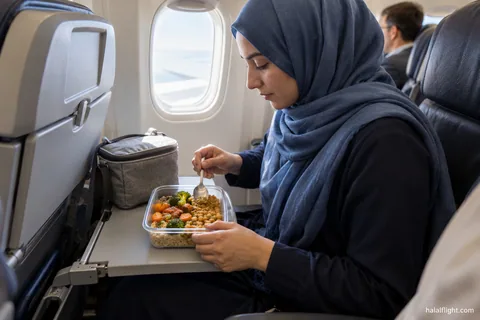
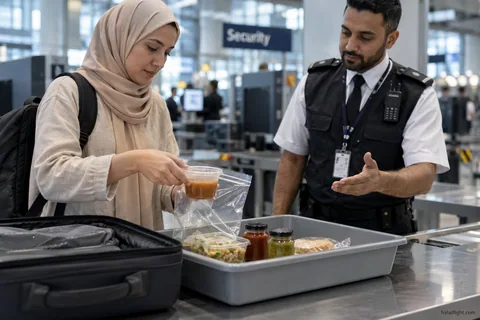
Airport screening does not ask whether food is halal. It asks what physical form the food takes. A wrapped sandwich or a box of dates is a solid, whereas hummus, yoghurt, soup, a curry sauce or a tub of rice pudding behaves like a liquid, paste or gel in the eyes of the rules. Your lunch can therefore be partly welcome and partly restricted even when every item in it is perfectly halal.
Before packing, sort what you want to take into two groups: clearly solid items, and anything you could pour, spread or squeeze. The second group is where problems arise, and where this guide spends most of its time. The wider question of whether airlines let you eat your own food on board, and the matter of liquids at checkpoints as a topic of its own, are covered on separate pages of this site.
What the published limits say
Limits are set by each country and sometimes applied differently by each airport, so there is no single worldwide figure. Two examples show the range.
United States
The Transportation Security Administration states that liquids, aerosols, gels, creams and pastes must be in containers of 3.4 ounces (100 millilitres) or less per item, placed in a quart-sized bag kept separate from the rest of the carry-on. Larger containers go in checked baggage, and any item that alarms in screening needs additional screening. That page does not set out rules for food, so check the TSA food screening directory for individual items.
London Gatwick
Gatwick's security page currently says that liquids may be carried in containers of up to two litres, and that containers made of metal or with double walls do not qualify and must be emptied before screening. It also says that cakes, fruit, vegetables, sandwiches and all solid foods can go in hand luggage, that frozen food is not permitted, and that passengers should pack food and powders in hold luggage wherever possible.
The two airports illustrate why a rule you know from one journey may not apply on the next. Always read the page of the airport you are leaving from on the day you pack.
Soft foods that surprise people
Items that look like food but count as liquids or pastes cause most of the confiscations. Typical examples in a halal lunch box include:
- Hummus, labneh, tahini, yoghurt and dips.
- Soups, stews, sauces and gravies.
- Honey, date syrup and jam.
- Soft cheese spreads and similar items.
A small amount left in a large pot does not solve the problem, because the container size is what is measured. If you want a dip with your bread, use a small container that meets the limit at your airport, or buy it after security, where the limits no longer apply, and ask about the ingredients at the counter.
Ice packs, gel packs and keeping food cool
An insulated pouch is allowed in the same way as any bag, but the cold packs inside it are treated separately. A frozen pack that is still frozen solid at the checkpoint is often accepted, while one that has softened can be classed as a liquid or gel. Gatwick states that frozen food is not permitted, which shows that even frozen solids can be refused at some airports.
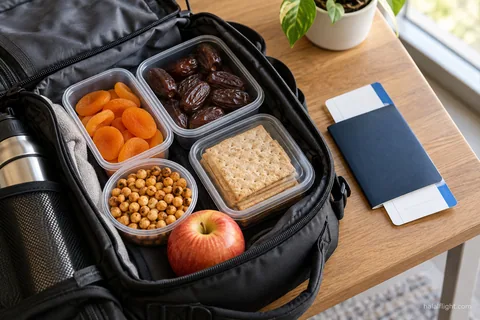
If cooling matters, choose a plan that does not depend on the checkpoint's goodwill. Take food that is stable at room temperature, such as dried fruit, nuts, bread and wrapped biscuits, or buy a chilled item after security. Remember too that a long journey and a hot terminal quickly defeat a small cooling pack, so a perishable halal meat meal is a poor choice for a long day of travel.
Does your food bag count as luggage?
A separate carrier bag of food may be counted as an extra item by the airline, even if the security officer is content with it. Gatwick, for instance, states that passengers can carry one piece of hand luggage, with some exceptions, within set dimensions. Your airline may be more flexible or less, particularly on low-cost carriers.
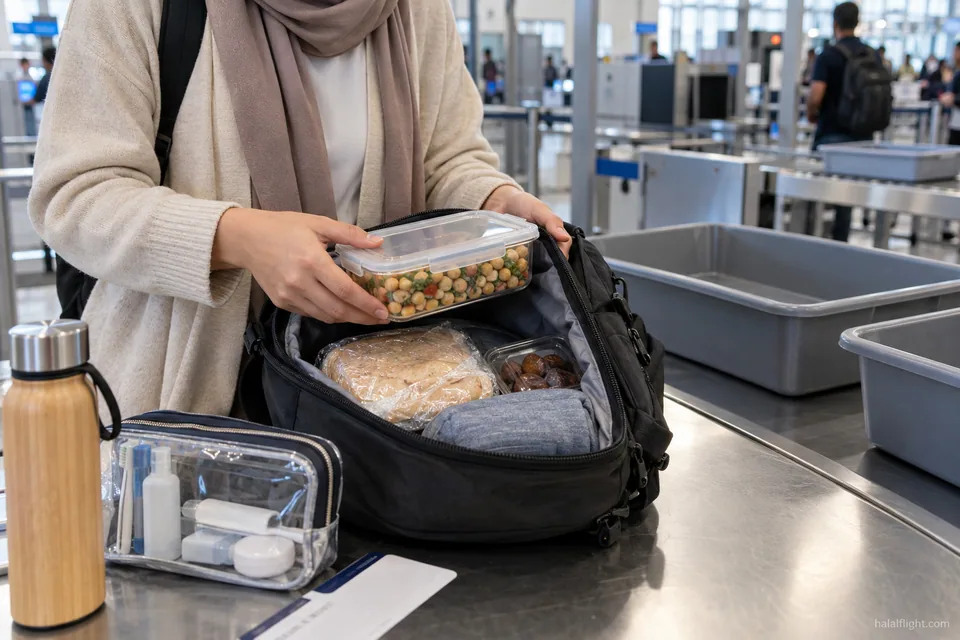
The safest method is to place the food inside your permitted bag, near the top, so that you can lift it out if an officer asks for a separate inspection. If you want to carry a full meal as an additional item, check the airline's baggage policy before you leave home rather than at the gate, where a dispute is much harder to resolve.
Connections, return trips and arrival countries
Passing the first checkpoint does not mean your food will pass the second. If your itinerary involves renewed screening during a transfer, the limits at the connecting airport apply to anything you carry there, including a drink you bought and a sauce you opened. Plan for the strictest airport on the route and for your return journey as well.
Arrival is a separate hurdle. Many countries restrict meat, dairy and plant products at the border, whatever the religious status of the food. Homemade halal meat dishes are a typical example. Look up the customs rules of your destination, and use the customs-focused page on this site for the principles.
Packing for fast inspection
Officers may ask you to remove food from your bag. A tidy pack speeds the process and reduces the chance that a container is opened or discarded. Use transparent or easily opened containers, keep sauces and pastes together in one pouch, and label homemade items so that their contents are clear without tasting.
Tell the officer if you need to keep a food item sealed for religious reasons or because you will not accept it after it has been handled. This is a polite request rather than a right, and it is easier to make when the container is already in a bag you can open yourself.
Checklist, and what to do if food is confiscated
Before you leave home
- Read the security page of your departure airport and of any airport where you change planes.
- Separate solids from anything spreadable, pourable or frozen.
- Put soft foods in small containers within the stated limit.
- Place the food inside your permitted bag unless the airline confirms otherwise.
- Check the customs rules of your destination for meat, dairy and plants.
If an item is taken
Accept the decision calmly, ask whether you can finish or hand over the item to someone outside security, and move on. Officers apply the rules of that day and cannot make exceptions for religious foods. Buy replacement food after security and check ingredients on its label or ask the outlet. Keep dates and other safe, solid snacks as your reserve so that one confiscation does not leave you without a meal.
Frequently asked questions
Can I take homemade halal food through airport security?
Solid homemade food, such as sandwiches, cakes or cooked dry dishes, is generally accepted at many airports, but rules differ. Anything that is a sauce, soup, paste or gel is treated as a liquid. Check your departure airport's current rules, and your destination's customs rules for meat and dairy before you pack.
Is hummus a liquid at airport security?
At many airports, yes, hummus and similar spreads are treated as liquids, pastes or gels, so they must fit the container limit. The US limit is 3.4 ounces (100 millilitres) per item in a quart-sized bag. Other airports may set a different limit, so check the one you leave from.
Can I bring ice packs to keep halal meat cold?
Rules vary. A pack that has partly thawed may be classed as a liquid, and Gatwick states that frozen food is not permitted. A chilled meat meal is also risky on a long journey. Safer options are shelf-stable foods or chilled items bought after security.
Does a food bag count towards my cabin baggage allowance?
It may. Airlines can count a separate food bag as an additional item, even if security accepts it. Put the food inside your permitted bag, or check your airline's baggage page before travelling if you want to carry it as an extra item.
Will food that passed security at home pass at my connection?
Not necessarily. A transfer with renewed screening applies the connecting airport's rules, which may be stricter. Choose food that suits every checkpoint on the route, including the return journey, and avoid opened sauces or drinks that you bought elsewhere.