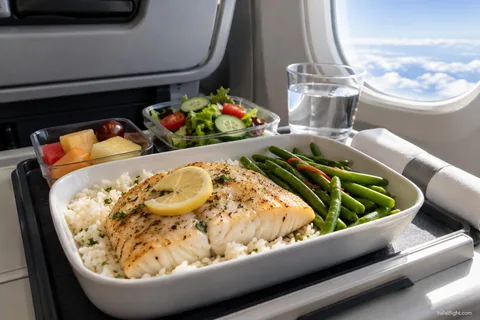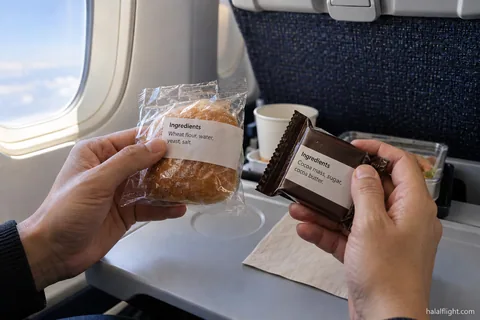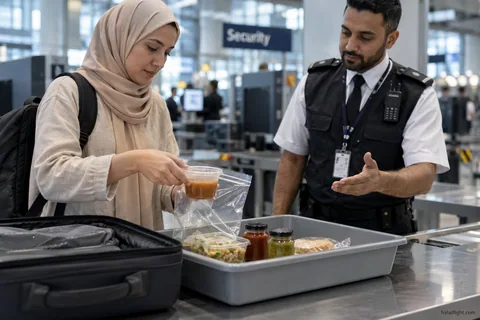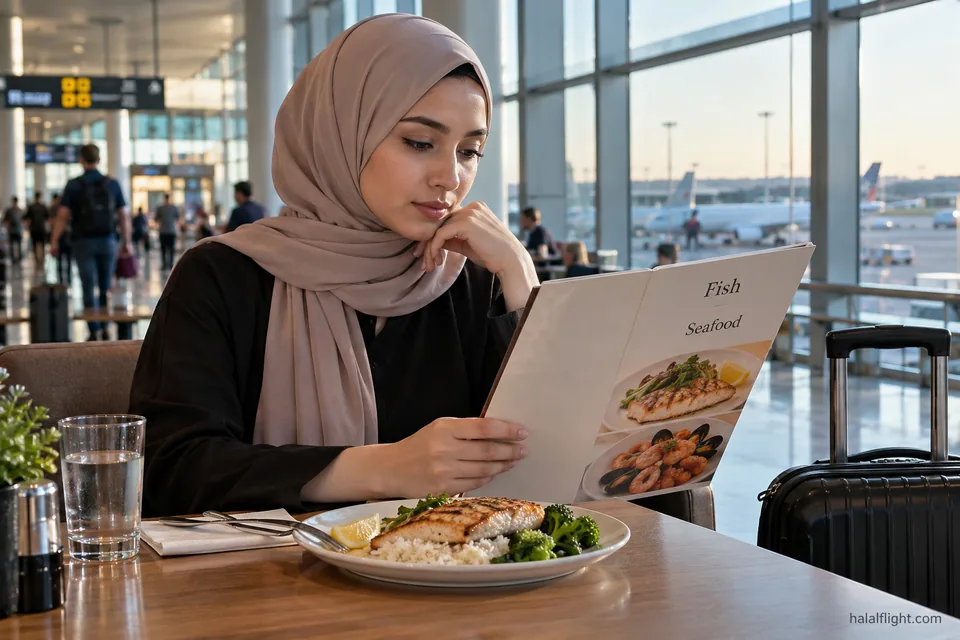
The short answer: there is no single seafood rule
Seafood is one of the areas where well-established Muslim sources reach different conclusions. Some explanations treat food from the sea as broadly lawful. Others, including answers published for followers of Ayatollah Sistani, separate scaled fish and shrimp from other marine animals. Both positions exist today, and a menu that simply says "seafood" cannot satisfy every passenger.
For an air traveller this produces two practical questions. First, which creatures do you personally accept? Second, is the dish on the tray free of other doubtful ingredients, such as wine, alcohol-based flavourings or unsuitable stock? The first question is a matter of religious guidance. The second is a matter of recipe and catering, and the airline can usually help with it.
This page explains the main viewpoints in neutral terms and then turns to what you can realistically ask a cabin crew member or a booking agent. It does not issue rulings. Where your own practice is uncertain, a qualified scholar you trust is the right person to decide, ideally before you travel rather than at 35,000 feet.
The broad-permission view
One widely read explanation, published by MuslimSG in Singapore, states that seafood is generally halal to eat and refers to the Qur'anic verse in Surah Al-Ma'idah (5:96) on food from the sea. The article attaches conditions: the food must not be harmful to the person eating it, and anyone with a seafood allergy should avoid it. It also notes that animals living mostly on land, such as amphibians, are not covered by the same statement.
The same article lists shellfish among permitted items in its comparison table and says that, at a restaurant that is not halal-certified, seafood is often the safer choice, provided the diner asks that no alcohol or animal fat is used in cooking. That last point is useful on aircraft too, because airline catering kitchens prepare many sauces in advance.
How to read this source sensibly
It is one explanation from one religious authority, aimed mainly at readers in Singapore. It should not be presented as the position of every Muslim body. If you follow a school or a marja' whose guidance is narrower, this article describes a different view, not yours.
The species-specific view
Answers published on the website of Ayatollah Sistani take a narrower approach to what comes from the water. In the question-and-answer entry on this subject, fish with scales are permissible, and fish without scales are not. If a person cannot tell whether a fish has scales, the answer says it should not be eaten. Shrimp is treated as permissible alongside scaled fish.
The same entry says lobster, crayfish, snails and shellfish are not permissible. It also addresses how the fish died: fish that die in the water are not permissible, unless they died in a fishing net. These details are why a followers' practice may differ from the broad view above even when both people intend to eat halal.
What this means on a plane
- A dish described as "white fish" does not tell you whether the species has scales.
- "Seafood medley", "fruits de mer" or "prawn and mussel" dishes mix categories, so a traveller following the narrower view may need to decline the whole item.
- Fish paste, surimi or fish-based sauces can hide the species altogether.
Other traditions and schools have their own positions, and this page cannot list them all. Treat the two sources above as examples of how far the range extends.
Why a generic seafood code does not help
Airlines use meal codes to organise special requests. A Muslim meal code (MOML) addresses pork, alcohol and the halal status of meat, but it was not designed to express a passenger's view on shrimp, shellfish or particular fish. Equally, a seafood meal code, where an airline offers one, describes a category of food rather than a religious position.
This means the booking system alone cannot guarantee that a seafood dish matches your practice. If the species matters to you, a code is a starting point, not a confirmation. The reliable route is to ask the airline's special-assistance or customer-service team what species appear in the dish on your route and class of travel, and to ask early, because catering menus are normally fixed well before departure.
If the airline cannot name the species, treat that as an answer. Choose a different meal or bring your own food rather than guessing. How to handle fish and seafood meals as a category is covered on the page about fish and seafood meals for Muslim travellers; this page concentrates on the religious guidance behind the choice.
Species and preparation are separate questions
A fish that is permitted in principle can still arrive in a dish that causes concern. Common examples are a wine reduction, a sauce thickened with an animal-derived ingredient, stock made from a different meat, or a garnish flavoured with alcohol. MuslimSG itself makes the point by advising diners to ask that no alcohol or animal fat is used when cooking seafood.
Resolve the two questions independently:
- Decide which species you accept, using guidance you trust.
- Ask whether the sauce, marinade, stock and any side components fit your requirements.
A permission to eat seafood does not describe everything on the plate. This is also why ingredients such as bread, chocolate and flavourings have their own pages on this site, and why cross-contact in catering kitchens is treated separately. For the alcohol question specifically, see the page on alcohol-based flavourings in airline food. Keep the two checks apart, and you avoid assuming that an acceptable fish makes the whole meal acceptable.
How to ask the airline without a debate
Cabin crew are not scholars and cannot be expected to discuss jurisprudence. Short, concrete requests work best. Rather than explaining your school of thought, state what you accept and what you do not, in practical terms.
Wording that tends to work
- "Which fish or shellfish are in this dish?"
- "Does the sauce contain wine, spirits or beer?"
- "I eat fish with scales and shrimp only. Is there anything else from the sea in this meal?"
- "If you cannot confirm it, which meal on board has no seafood and no alcohol?"
Write these down or save them on your phone, particularly if you travel with an airline whose crew may not share your first language. If you contact the airline before the flight, ask for the answer in writing so you can show it at the gate or on board.
Remember that the person answering may only see a menu card. If the card does not list the species, they may honestly not know. A polite request to check with the catering team, or a decision to choose another meal, is more productive than pressing for certainty that cannot be given.
Allergies, harm and personal circumstances
The MuslimSG explanation specifically excludes food that is harmful to the person eating it and advises people with a seafood allergy to avoid it. On a long flight this deserves attention for practical reasons as well as religious ones. Reactions at altitude are difficult to manage, and shellfish traces can be present in sauces and stocks that look unrelated.
If you have a seafood allergy, declare it when booking, carry any medication prescribed to you in your cabin bag, and do not rely on a Muslim meal request to cover an allergy. They are separate needs, and an airline may handle them through different channels.
Questions about whether a particular medical or personal situation changes what is permissible belong to a qualified scholar and a doctor. This page cannot answer them. What it can do is remind you that religious acceptability, allergy safety and recipe checks are three independent tests, and a dish must pass the ones that apply to you.
Checklist before you accept a seafood meal
Use this list on the day you book, a few days before travel and again when the tray arrives.
- Confirm the guidance you follow on fish, shrimp and shellfish; if unsure, ask a scholar before departure.
- Ask the airline which species are in the meal on your flight and cabin.
- Ask whether the sauce, marinade or stock contains alcohol or animal-derived ingredients.
- Check for allergy risks and declare them separately.
- Keep written confirmation if the airline provides it.
- Carry a shelf-stable backup, such as a sealed sandwich filling or snack, in case the dish cannot be confirmed.
If it goes wrong
If the dish arrives and you cannot confirm what is in it, decline it politely and ask what other meals are available. Eat your backup food rather than a dish you doubt. If you have eaten something you later realise did not match your practice, seek guidance from a scholar on how to proceed instead of deciding alone under stress.
Frequently asked questions
Is all seafood halal on a flight?
It depends on the guidance you follow. Some explanations, such as the MuslimSG article, treat seafood as generally permitted. Others, such as answers published for followers of Ayatollah Sistani, allow scaled fish and shrimp but not other sea animals. Ask a qualified scholar which applies to you, then ask the airline for the actual species.
Does a Muslim meal on an airline guarantee the fish is acceptable to me?
Not automatically. A Muslim meal request mainly addresses pork, alcohol and meat sourcing. It does not record your view on shrimp, shellfish or fish without scales. If the species matters, ask the airline to name it for your flight and be ready to choose another meal if they cannot.
Can a fish dish still be a problem if the fish itself is permitted?
Yes. The sauce, marinade or stock may contain wine, spirits or other ingredients you avoid. MuslimSG advises asking that no alcohol or animal fat is used in cooking. Treat the species and the recipe as two separate questions, and confirm both before eating.
What should I say to cabin crew about seafood?
Keep it short and practical: ask which fish or shellfish are in the dish and whether the sauce contains alcohol. State what you accept without debating the reasons. If the crew cannot confirm, ask for a meal without seafood and without alcohol, or eat the backup food you brought.
What if I do not know whether a fish has scales?
The Sistani answer says that if a person is unsure whether a fish has scales, it should not be eaten. If you follow that view, ask for the species name or choose a different dish. Individual cases are best put to a qualified scholar rather than settled on board.