Why customs rules ignore halal status
A certificate from a halal authority tells a Muslim consumer how an animal was slaughtered and processed. A border agency asks a different question: could this product carry an animal disease or pest into the country? Because the two questions are unrelated, halal certification does not override an import restriction, and a product that is perfectly lawful to eat may still be refused.
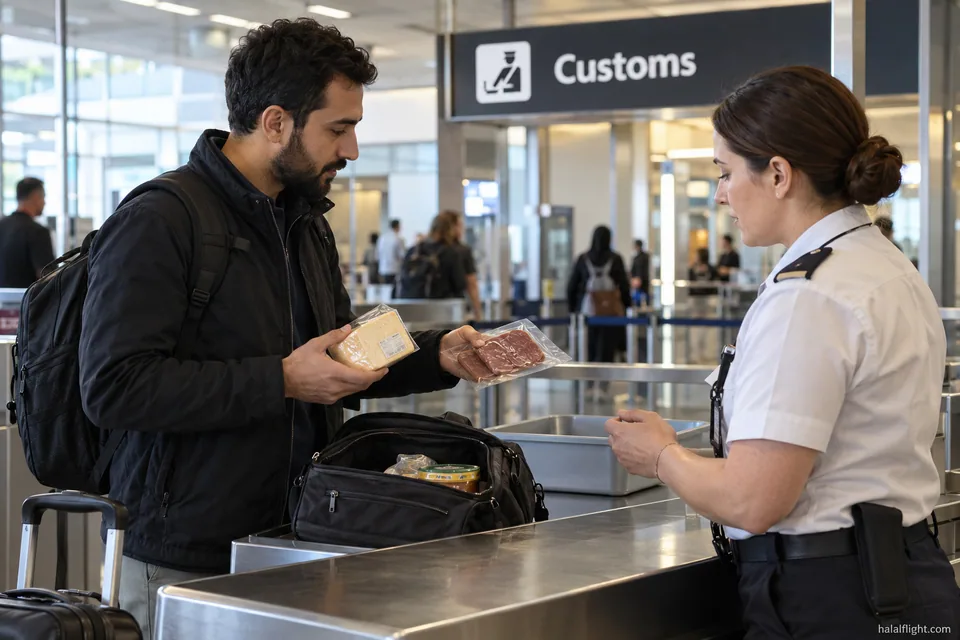
Rules usually depend on three things together: where the product was made or the animal was raised, how it was processed (cooked, canned, cured, fresh), and where you are arriving. A single worldwide allowance does not exist. A sandwich with a meat filling is still a meat product, and so is a pastry with a dairy filling.
This page explains how to approach the question. It does not replace the official guidance of the country you enter, which changes and which officers apply on the day. Always check the current official page before you pack and declare when in doubt.
How the three main variables work
Origin
Many authorities treat products from some countries or regions more leniently than others, because of differing animal-disease status. Canada's food-import guidance for travellers, for example, sets different conditions for meat from the United States and meat from other countries.
Processing
Fresh, dried and cured items usually face tighter limits than commercially prepared, cooked, shelf-stable products in sealed packaging. Even so, sealed packaging alone is rarely enough.
Destination and route
The rules of the country where you land govern. If you transit another country and clear its border, its rules apply there as well. A trip with a connection may therefore involve two sets of rules.
Always identify your exact product (for example, "commercially packaged cooked chicken in a sealed tin, made in country X") before searching the official site, because the guidance is usually organised by product type and origin.
Canada: a worked example
The Canadian Food Inspection Agency publishes a detailed page for travellers bringing food into Canada for personal use. It states that all food products must be declared and that a Canada Border Services Agency officer may inspect them at the point of entry.
Meat
For meat from the United States, the page requires that it travels with you, is retail packaged or labelled, and comes with proof of origin, with a limit of 20 kg per person. For meat from other countries it says fresh, dried and cured meats such as hams and sausages are not permitted. Only commercially prepared products that are cooked, shelf-stable and in sealed containers are allowed, and only if you bring them yourself.
Dairy
Ice cream, yogurt, kashk and pasteurized cheese are permitted from any country, while unpasteurized cheese is allowed only from countries free of certain animal diseases. The page sets a limit of 20 kg or 20 L per person, and notes that duties and taxes may apply above exemption limits.
The point is not that Canada is typical. It shows how much detail a single country can apply, and why a sandwich or a block of cheese cannot be judged from general knowledge.
New Zealand: strict declaration culture
New Zealand's Ministry for Primary Industries requires travellers to declare food products on the New Zealand Traveller Declaration. Its page says officers inspect declared items on arrival and that clearance into New Zealand is not guaranteed.
On dairy, the page allows items only if they contain no fresh fruit, with weight limits that depend on origin and packaging: for example 20 kg for commercially manufactured, packaged, unopened New Zealand-made dairy, and 2 kg otherwise. On meat, it says some meats may need documentation or may be prohibited, and states that no pork products are allowed to be brought to New Zealand. Fresh fruit and vegetables are not allowed.
For a Muslim traveller, the pork rule is irrelevant to the diet but a reminder that the list of banned items is long and specific. Declare, and let the officer decide.
The EU, the United States and Australia in outline
Official guidance in these regions points the same way, though details differ.
- European Union: personal imports of meat and milk products from outside the permitted area are generally restricted, with limited exceptions such as certain infant or medical foods. Read the European Commission's personal-import page for the current list.
- United States: agricultural products must be declared and assessed for admission. Cooking, commercial packaging or a small portion does not remove the need to check, and labels showing ingredients and origin help the inspector.
- Australia: specified food, plant and animal products must be declared for assessment. A sealed commercial wrapper does not guarantee entry, and uncertain items should be presented rather than guessed at.
These outlines are summaries. Because rules, thresholds and exceptions are revised over time, use them to know where to look, not as the final answer. Each authority publishes lists by product, and many offer a declaration card or online form that you should complete accurately.
What counts as meat or dairy in practice
Travellers often underestimate what is covered. Items that frequently raise questions include:
- Sandwiches, wraps and pastries with meat or cheese.
- Instant noodles and soup mixes containing meat or milk powder.
- Ghee, butter, yoghurt, labneh and soft cheeses.
- Dried meat snacks, biltong, pastirma and sausages.
- Baby food and formula containing milk or meat, which some authorities treat separately.
- Confectionery or baked goods with milk-based fillings.
Some of these may be allowed under conditions and others not. The safest approach is to look up the product category on the official site, or to leave doubtful items at home. Declaring an item is never a problem in itself. Failing to declare something that turns out to be restricted is where trouble starts, and the consequences vary by country and are described by each authority.
Leftovers, onboard food and disposal
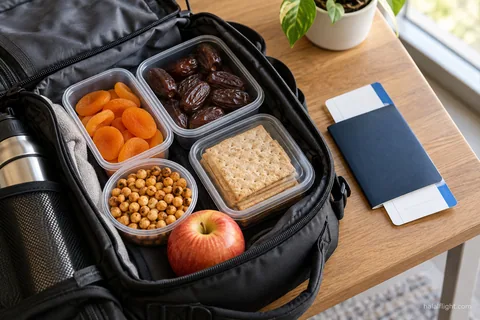
The food left in your bag at landing is the most common source of problems, because it feels harmless. Plan to finish perishable items before arrival, and pack portions that match what you can eat.
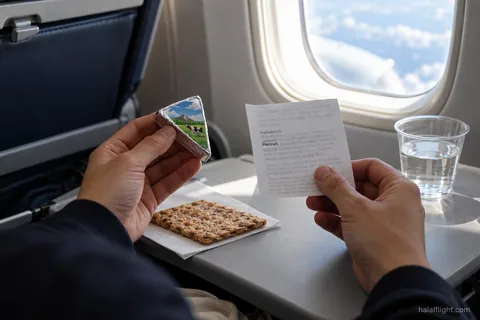
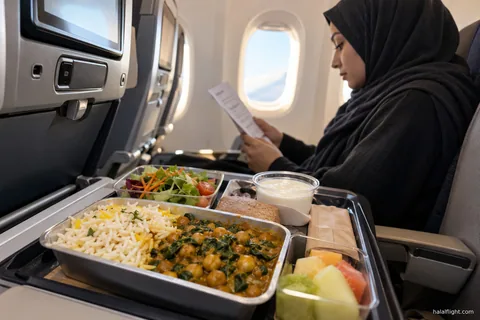
Meals served on board can also be restricted in some countries once the flight has landed, so do not pocket an unopened meat or dairy item for later without checking. Ask the crew whether the airline has a procedure for disposal, and use designated food-disposal bins at the airport where they exist before the border checkpoint.
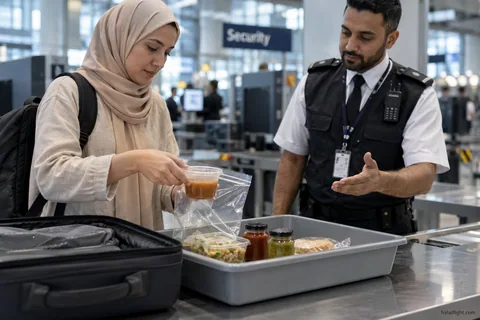
If food remains in your luggage when you reach the border, follow the declaration instructions on the form or sign. Moving it to another bag, a coat pocket or a child's bag changes nothing about the rules and can be treated as concealment. If you are unsure, declare it and let the officer decide. The question of whether discarding food is acceptable to you is a matter for your own conscience and, if needed, a scholar.
Checklist, and what to do if something is seized
- List every meat, dairy and egg item you plan to carry, including snacks and gifts.
- Identify origin and processing for each: made where, cooked or not, sealed or not.
- Open the destination authority's official page and check each item.
- Read the transit country's rules if you clear its border.
- Complete the declaration form or card accurately and tick the food box if in doubt.
- Keep original packaging and labels.
- Eat or dispose of perishables before the border.
If an item is refused or seized
Stay courteous and do not argue the point on religious grounds; the officer is applying an animal-health rule. Ask what the official process is, and whether the item can be re-exported, surrendered or treated. Keep any paperwork you are given, because it may matter later. If you are fined, the authority's own website explains how to pay or appeal. For your next trip, note what happened and adjust the packing list accordingly.
Frequently asked questions
Can I bring halal-certified meat into another country?
Not automatically. Halal certification describes slaughter and processing, while border rules address animal-health risk based on origin, processing and destination. Many countries restrict personal imports of meat even when certified. Check the destination's official page for your exact product and declare it on arrival.
Do I have to declare cheese, yoghurt and ghee at the border?
Usually yes, where the country asks travellers to declare food. Canada's guidance says all food products must be declared, and New Zealand requires declaration of food items. Rules on dairy depend on origin, processing and quantity, so declare and let the officer decide.
Is a sealed commercial package enough to be allowed in?
Not by itself. Australia's approach, for instance, is that a sealed commercial wrapper does not guarantee entry. Authorities consider origin, ingredients and processing as well, and may still inspect or refuse. Keep labels visible and present uncertain items to an officer.
What should I do with leftover meat or dairy from my flight?
Finish perishables before landing where possible, or ask the crew about disposal and use airport disposal bins before the checkpoint. If any remains in your bag, follow the declaration instructions. Moving it to another bag does not change the rules and can look like concealment.
Are infant formula and baby food treated differently?
Often, yes. Some authorities, including the European Union in its personal-import guidance, list limited exceptions for infant or medical foods. Conditions vary by country and by product, so check the destination authority's page for the exact item and quantity before packing.