The short answer: the steps do not change at 35,000 feet
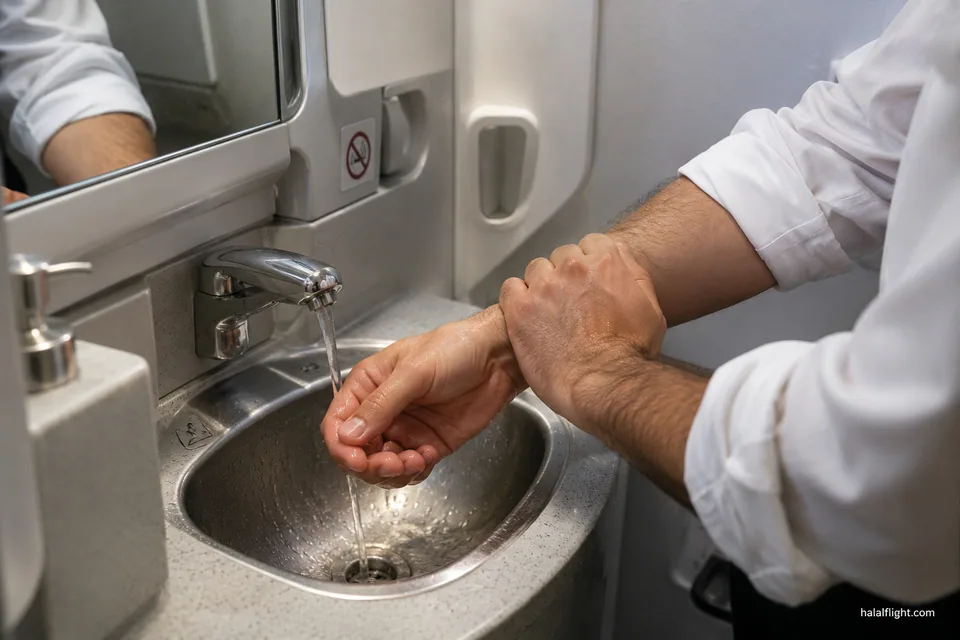
Ablution on an aircraft follows the same sequence as at home. What changes is the space: a narrow basin, a low tap, a floor that gets wet easily and a queue of passengers outside the door. The practical aim is to complete wudu properly while using the washroom for as short a time as possible.
Most travellers choose one of two moments. Some make wudu in the airport before boarding, then try to stay in a state of purity for the first prayer of the journey. Others use the aircraft washroom when a prayer time arrives and the seat belt sign is off. Both are workable; the better choice depends on how long the flight is and which prayer is due.
This page covers how to make wudu in a cabin. Questions about what to do when water is not available are handled separately under tayammum, and the timing and direction of prayer are covered on their own pages.
Steps of wudu as a quick refresher
The explanation published by Egypt's Dar al-Ifta describes wudu in these stages, and it is a useful checklist to run through before you enter a tiny washroom:
- Make the intention in your heart and say Bismillah.
- Wash both hands up to the wrists, right hand first, three times, with water reaching between the fingers.
- Rinse the mouth three times.
- Sniff water into the nose and blow it out three times.
- Wash the whole face three times, from the hairline to the chin and from ear to ear.
- Wash each arm from wrist to elbow three times, right arm first.
- Wipe the wet palms over the head.
- Clean the inside and behind the ears with wet fingers.
- Wash each foot up to the ankles, right foot first, with water reaching between the toes.
The same source lists what cancels wudu: natural discharges, falling asleep and loss of consciousness. Schools of jurisprudence differ on some details, so follow the method of the school you normally practise.
Airport or aircraft: choosing where to make wudu
Before boarding
Airport washrooms usually have wider basins and more floor space than an aircraft, which makes a full wash of the arms and feet easier. Locate the washrooms near your gate when you arrive at the terminal, rather than when boarding is called and queues are longest. If you are still in wudu when you reach your seat, you may be able to pray without moving at all.
On board
If wudu breaks during the flight, or if you set out without it, the aircraft washroom is the usual place to renew it. Ask yourself first whether the prayer time is close to ending, because that affects how much time you can spend. Wait for a moment when the seat belt sign is off and the aisle is not blocked by a service trolley.
Keeping wudu on a long journey
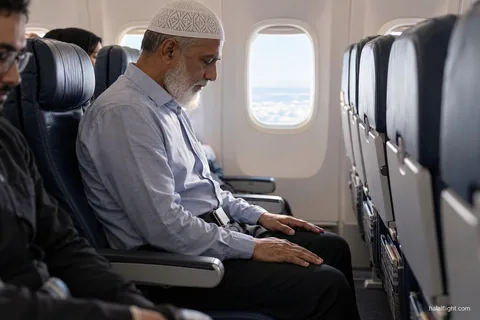
Sleeping can cancel wudu, so a passenger who dozes before a prayer should expect to renew it. If you know a nap is coming, consider whether to make wudu after waking rather than before.
Using a small basin without flooding the washroom
Aircraft sinks are designed for brief hand washing, not full ablution. A few habits make the job manageable:
- Prepare your clothing first. Roll sleeves above the elbow and tuck long cuffs before you turn the tap on.
- Wash in stages. Complete the face, arms and head wiping at the basin, then deal with the feet last.
- Control the splash. Cup water in your hands instead of letting the tap run onto the floor, and keep the flow low.
- Protect your footing. A wet floor and moving aircraft are a poor combination. Never lift a foot into the basin if you cannot do so safely; some travellers instead wash the feet with cupped water while braced against the wall, and others rely on a scholar-approved alternative described below.
- Carry a small towel. Dry the basin edge and any water on the floor so the next passenger is not left with a puddle.
Some scholars' guidance for travellers mentions a small spray bottle or purpose-made wudu socks as aids. Whether these suit your practice is a question for your own scholar, and your airline may have rules about what you can carry through security, so check before packing.
Wiping over socks: conditions that scholars discuss
Many travellers wonder whether they can wipe over their socks instead of washing their feet in a cramped cabin. This is a point where scholarly conditions matter, and ordinary socks are not automatically included.
A fatwa published by Dar al-Ifta states that most scholars allow wiping over socks when three conditions are met: the socks are thick and sturdy enough to walk in, they cover the parts of the feet that would otherwise be washed, and they were put on while in a state of ritual purity. The same fatwa notes that some scholars, including the Hanbalis, allow wiping even over thin socks, and it says a person facing real necessity may follow that more permissive view without blame.
Dar al-Ifta's general ablution guidance adds a time limit for a person who is in wudu and wearing covering footwear: up to twenty-four hours, or up to three days when travelling. The flight itself may or may not count as travel under the school you follow, so ask about that specifically.
The practical lesson is to decide before the day of travel. If you want to rely on this concession, choose suitable socks, put them on after completing a full wudu, and understand the conditions. Do not assume that any pair of socks you happen to be wearing will qualify.
Etiquette and safety in a shared washroom
An aircraft washroom is a shared, safety-regulated space, and crew instructions come first.
- Return to your seat when the seat belt sign comes on or when the crew ask passengers to sit, even if you have only completed part of your wudu. You can resume afterwards; ask your scholar how to handle an interrupted ablution.
- Do not use the washroom while the crew are asking everyone to remain seated for take-off, landing or turbulence.
- Gather your belongings and know your plan before you enter, so you are not in the cubicle longer than needed.
- Do not block the galley or the aisle while waiting. If several passengers are waiting, be aware that others may have urgent needs.
- Leave the basin and floor as clean as you found them, and dispose of paper towels in the bin.
If your clothes become damp, check the cabin temperature before you return to your seat, especially on an overnight flight where it may feel colder.
When wudu is not possible
There are situations where a passenger genuinely cannot use water, such as an illness, a locked or out-of-service washroom, or turbulence that keeps everyone seated until the prayer time is nearly over. These raise a different religious question from simple inconvenience, and the size of the sink alone does not settle it.
Do not decide this in the moment. Before you fly, ask a qualified scholar what applies to you, including whether and when dry ablution is valid and whether a prayer must be repeated later. A separate guide on tayammum explains the general idea, but individual rulings belong to a scholar who knows your circumstances.
Checklist: wudu on your next flight
- Decide before departure whether you will make wudu at the airport, on board, or both.
- Find the washrooms near your gate when you arrive.
- Check which prayer times fall during the journey and how much time you will have.
- Choose socks and clothing that suit your plan, and put socks on after completing wudu if you intend to wipe over them.
- Pack a small towel or tissues for the basin and floor.
- Know your scholar's view on wiping over socks, interrupted wudu and what to do if water is unavailable.
- Wait for the seat belt sign to be off, and return to your seat when asked.
- Leave the washroom clean and be considerate of the queue.
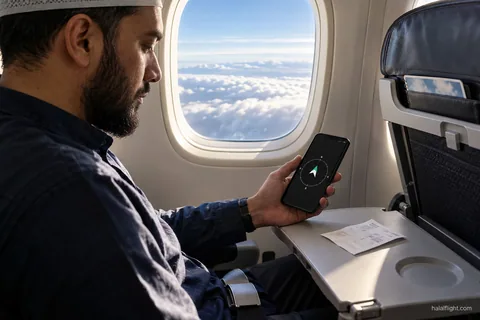
- Save a written note of your scholar's answers on your phone, so you can read it offline during the flight.
Frequently asked questions
Can I make wudu in an aeroplane toilet?
Yes, aircraft washrooms have a basin with running water, and many travellers make wudu there. Keep your wash tidy, use small amounts of water and follow crew instructions about when the cabin may be used.
Do I have to renew wudu for every prayer on a long flight?
Not necessarily. Wudu remains valid until something cancels it, such as a natural discharge, sleep or loss of consciousness, according to the explanation published by Dar al-Ifta. If none of these has happened, you may still be in wudu at the next prayer. Your scholar can advise on borderline cases such as a short nap.
Can I wipe over my socks instead of washing my feet on a plane?
Many scholars permit wiping over socks that are sturdy enough to walk in, cover the area normally washed and were put on in a state of purity. Some allow it even with thin socks. The conditions differ, so ask your scholar before relying on the concession during a flight.
What if the seat belt sign comes on while I am making wudu?
Return to your seat as soon as the crew or the sign requires it. Safety instructions take priority over completing ablution at that moment. Ask a scholar beforehand how to continue if your wudu is interrupted, and whether you must restart or can resume from where you stopped.
Is it better to make wudu at the airport before boarding?
Often it is easier, because airport washrooms are larger and less restricted. Doing it there can save time on board. It depends on how long the wait is and whether you stay in wudu until you pray, so many passengers plan to do it in both places if needed.