Why the roll and the chocolate need their own check
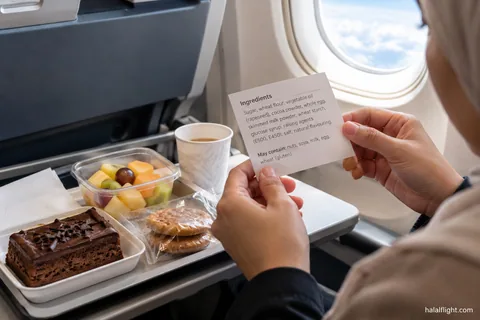
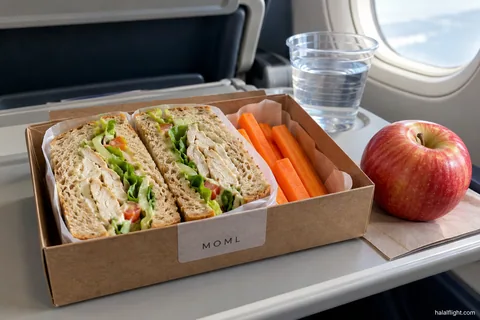
On an airline tray the main dish gets most of the attention, yet the bread roll, the butter portion and the small chocolate each come from a different manufacturer with a different recipe. An assurance given for a hot meal does not stretch to them. If your Muslim meal is described as halal certified, ask whether that wording covers every item on the tray or only the main component, and if it does not, check the accompaniments individually.
The rest of this page looks at the two items that most often travel without a clear statement: bread and chocolate. Sandwiches and other cold meals, desserts and cross-contact in kitchens have their own pages on this site.
What can sit inside a plain bread roll
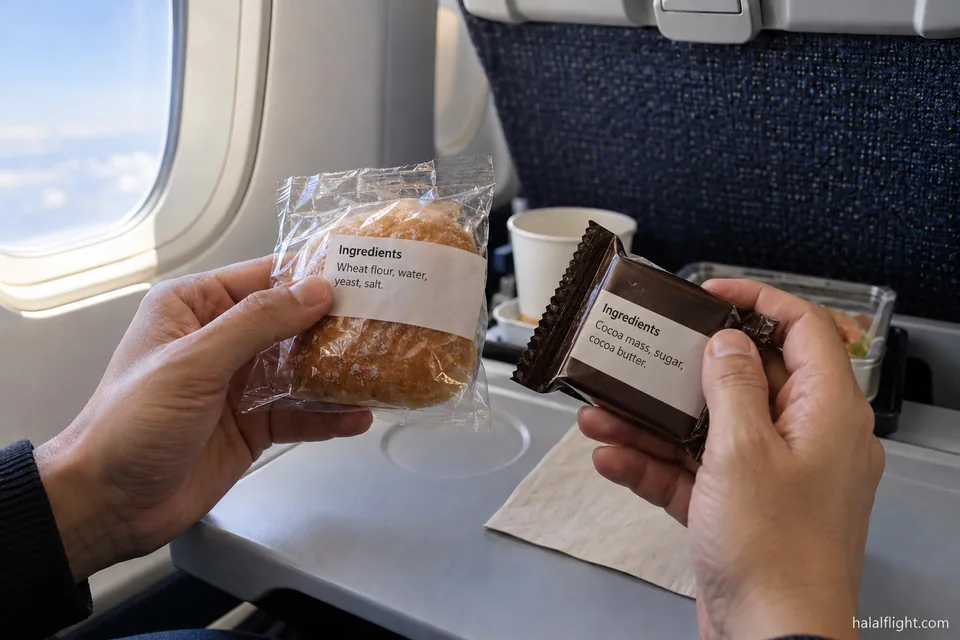
Flour, water, yeast and salt are the basis of bread, and a loaf made only from them raises no concern. The question arises with the extras used in larger-scale baking. The Real Bread Campaign, run by the charity Sustain, notes that halal is a status confirmed by an accreditation body rather than something added to bread, and that some industrial dough products carry a halal mark precisely to reassure customers.
Ingredients worth looking for on the label
- Emulsifiers such as mono- and diglycerides of fatty acids (E471), E472e and sodium stearoyl-2-lactylate (E481), which are a problem only if made from a pig-derived fat.
- Enzymes and processing aids, such as phospholipase, which can be undeclared on the label.
- L-cysteine, a dough conditioner whose source can matter.
- Shortening and lard, where the fat source is not named.
- Glycerine (E422), whose origin can be animal or plant.
Halal Foundation's guidance for bakery products makes a similar point: enzymes, release agents and conditioners may never reach the label, which is why a certifier reviews them at audit.
Why "plant-based" and "animal-derived" are not visible on the packet
Many of the additives above can be made from either animal or plant sources, and the E-number is the same in both cases. Mono- and diglycerides are the usual example: the name tells you the chemistry, not the origin. A certifier asks for a source declaration for each ingredient; a passenger holding a packet normally cannot see one.
That is why a recognised halal certification mark, or a supplier statement that names the source, is more useful than the ingredient list alone. Where there is neither, the honest position is that the origin is unknown, and you decide in light of your own practice whether to eat the item. Some scholars treat an ingredient of uncertain source as doubtful, and views differ, so a qualified scholar is the right authority for your own case.
Chocolate: plain bars versus fillings and coatings
A plain bar of chocolate and a filled praline are different products. The plain bar is made from cocoa, sugar, cocoa butter and usually milk ingredients, with an emulsifier and a flavouring. A filled chocolate adds a centre, and the centre is where the risk of a problem is higher.
- Liqueur fillings contain alcohol by design.
- Flavourings may be carried in ethanol, and the label often says only flavouring.
- Dairy derivatives such as whey or cheese-based ingredients may involve enzymes of unclear origin.
- Glazing agents and decorations can include shellac or insect-derived colours; Halal Foundation lists carmine and shellac among the confectionery ingredients that need a source check.
- Gelatine appears in some fillings and chews; porcine gelatine is prohibited, and bovine gelatine needs verification of slaughter.
Sugar can also be a quiet issue, because Halal Foundation notes that some refining uses bone char, which never appears on a label. How much weight to give this is a question for your scholar, not for the packaging.
Familiar packaging does not freeze a recipe
Manufacturers change formulations, and the same brand can have different recipes in different markets. A bar you have eaten at home may not be the same product that an airline buys for a specific route, and an airline may use a different supplier from one season to the next.
Read the packet in your hand, on the flight, as the source of truth. Your memory of the same brand from a shop is context, not evidence, and should not replace the current ingredient list or the certification mark on this particular packet.
What to check on a sealed packet
- The ingredient list, including anything described as flavouring, emulsifier or glaze.
- A halal mark, and the name of the certifier behind it.
- A manufacturer name and a batch or best-before code you can quote later.
Asking for the right information
Start with what you can see. If the packet shows a credible certification mark and a clear ingredient list, you have most of what you need. If it does not, there are two sensible routes.
- Ask cabin crew whether the airline has a supplier list or catering tag for the item. They usually cannot give a full ingredient history, but they can tell you what is printed on the catering label.
- Photograph the packet, including the brand, product name and code, and write to the manufacturer after the flight to ask for the source of the emulsifiers, enzymes and flavourings.
Keep these enquiries proportionate. The goal is a reliable answer for the items you will meet again on future flights, not an interrogation at the seat.
Choosing an alternative when the answer is uncertain
If a relevant uncertainty remains and nobody onboard can answer it, setting the item aside is a legitimate choice. Fruit, nuts in a sealed pack with a clear list, or a plain biscuit with a certification mark can serve as a substitute, subject to your allergies and to the airline's offer.
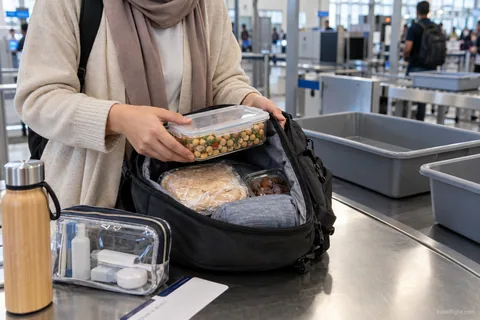
You can also bring your own bread, snacks or chocolate from a source you trust, provided the airline, airport security and the destination country allow them. Rules on food imports differ by country, particularly for items containing dairy or meat, so check before you pack.
Checklist for bread and chocolate on board
- Ask at booking whether the halal or Muslim meal wording covers the roll, spread and dessert.
- Read the actual packet: ingredients, certification mark, manufacturer.
- Look for emulsifiers, enzymes, shortening, glycerine and glazes.
- Treat liqueur centres and ethanol-carried flavourings as separate from the plain bar.
- Photograph the packet if you cannot decide, and write to the manufacturer later.
- Choose a clearly labelled alternative if the answer remains unclear.
- Take individual religious questions to a qualified scholar.
Frequently asked questions
Is airline bread always halal?
Not automatically. Bread made from flour, water, yeast and salt raises no concern, but industrial rolls may contain emulsifiers, enzymes, shortening or conditioners whose source is not stated. Check the label and any certification mark on the packet itself, and ask the airline if the roll is not labelled.
Which ingredients in bread should I look out for?
Common ones are mono- and diglycerides (E471), E472e, E481, glycerine (E422), L-cysteine, shortening or lard, and enzymes used as processing aids. They are a problem only if the source is prohibited, so a certification mark or supplier statement helps more than the E-number alone.
Can chocolate on a flight contain alcohol?
Yes, if it has a liqueur filling, and some flavourings are carried in ethanol without saying so clearly. Plain bars usually carry less risk than filled chocolates, but read each packet and look for a certification mark or ask the manufacturer.
Does my halal meal certificate cover the bread roll and chocolate?
Not necessarily. A certificate may cover only the main dish or named components. Ask the airline whether the wording applies to every item on the tray, and check the accompaniments individually if it does not.
Is the chocolate I know from home the same as the one on the plane?
Not always. Manufacturers change recipes over time and between markets, and airlines may use different versions. Read the ingredient list and certification mark on the packet you are given, rather than relying on what you remember of the brand.