Why drinks and recipes are separate questions
On a flight, declining the drinks trolley is simple. The harder question is what went into the food before it was loaded. Wine can be used to build a sauce, brandy to flavour a pâté, liqueur to soak a dessert, and none of these appears on the tray as a drink.
Many Muslim travellers therefore ask two things at once: which beverages are being offered, and whether any dish was prepared with alcohol. This page deals with the second question, alcohol used as a cooking or flavouring ingredient in airline meals. Pure alcohol-free drinks and the wider topic of flavourings have their own pages on this site.
Whether a trace of cooked-in alcohol is acceptable to you is a religious judgement on which scholars and certifiers differ. A qualified scholar is the right person for a personal ruling; this page helps you gather the facts to bring to that conversation.
Does cooking remove the alcohol?
A common belief is that heat makes alcohol disappear. Measured data say otherwise. The United States Department of Agriculture publishes a table of alcohol retention factors for foods prepared with alcoholic beverages. It reports, to the nearest 5 per cent, that:
- alcohol stirred into a hot liquid retains about 85 per cent;
- a flamed dish retains about 75 per cent;
- alcohol added with no heat and left overnight retains about 70 per cent;
- a dish baked or simmered for 15 minutes retains about 40 per cent;
- one baked or simmered for an hour retains about 25 per cent;
- one baked or simmered for two and a half hours retains about 5 per cent.
So the amount left depends heavily on how and for how long the dish was cooked. A short simmer leaves a large share. A staff member saying that the sauce was heated therefore does not answer the question, and it cannot replace knowing which ingredients were used.
What the airline definition says
Airlines that offer a Muslim or halal meal usually state that it excludes alcohol, and the wording differs. TAP Air Portugal describes its Muslim meal as having no pork, alcohol or doubtful (mushbooh) items. Delta states that its Muslim meals are halal-certified and contain no pork, by-products of pork or alcohol. Air France describes its halal meal as excluding food and beverages prepared with alcohol, which goes a step further than listing drinks.
Standard economy meals have no such promise. If you are on the regular menu because a halal option was not available, the dish descriptions are your main guide, and the points below become more important. Check which description applies to your meal, and the date you fly, rather than relying on a general belief about the carrier.
Dishes and wording that suggest alcohol
Menu words to notice
Descriptions that mention wine, red wine jus, white wine sauce, brandy, cognac, sherry, port, rum, liqueur, beer batter or a named spirit are the plain signals. French and Mediterranean dishes often rely on wine for depth, and some desserts are finished with liqueur.
Less obvious sources
The American Halal Foundation lists alcohol-containing sauces among its concerns and names sake, mirin and rice wine as ingredients to watch for. Sauces and marinades inspired by East Asian cooking can therefore carry alcohol even when the menu does not say so. Extracts and flavourings can also be carried in alcohol, which is the subject of a separate page here.
Where the risk is greater
- Sauces over chicken, fish or vegetables.
- Mushroom, cream and tomato-based dishes.
- Cakes, tiramisu-style desserts and mousses.
- Pâtés and terrines.
Traditional names and substitutions
A familiar dish name does not guarantee the traditional recipe. A caterer may leave out the wine and use grape juice, stock or vinegar, or may keep the name and change the ingredients quietly. The reverse can also happen: a plain-sounding sauce may contain a splash of wine. Ask what was actually added, not what the dish is called.
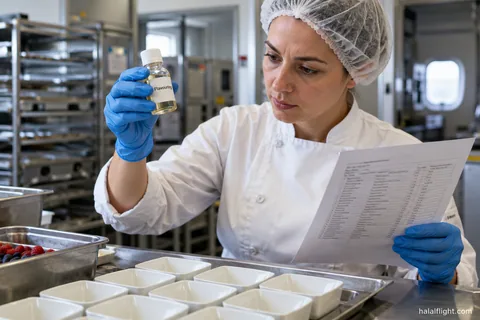
Where possible, request the information in writing. Airlines may be able to provide ingredient lists or confirm that a meal is prepared under a halal programme, and a written statement is easier to rely on than a verbal answer during service.
Questions to put to the airline
Short, specific questions work best. Try asking:
- Does this meal or any of its sauces, dressings or desserts contain wine, beer, spirits or liqueur?
- Is the Muslim meal prepared from a separate halal recipe, or is it the standard meal with the pork removed?
- Can you send the ingredient list or the menu description for my route?
- Is the dessert flavoured with alcohol or alcohol-based extract?
If the airline answers only that the meal is halal, ask which standard or certifier that refers to, since certifiers differ on trace alcohol. The American Halal Foundation, for example, treats ethanol and intoxicants as non-halal, but you should confirm with your own preferred authority.
Removing sauce does not undo the cooking
Scraping a sauce aside after it has been served does not reverse its effects. Flavour, liquid and any alcohol are absorbed into the meat or vegetables during cooking, and the food below may carry the same ingredients. If the composition of a sauce is unknown, it is more reliable to ask for a different dish than to try to rescue the original.
If a main dish is in doubt, the page on fish and seafood meals and the pages on vegetarian and vegan meals describe other options, each with their own caveats.
If you are unsure when the meal arrives
A short routine helps you decide quickly.
- Read the tray label and menu card before opening the dish.
- Ask the crew whether the sauce and dessert contain wine or liqueur; if they do not know, say so politely and note it.
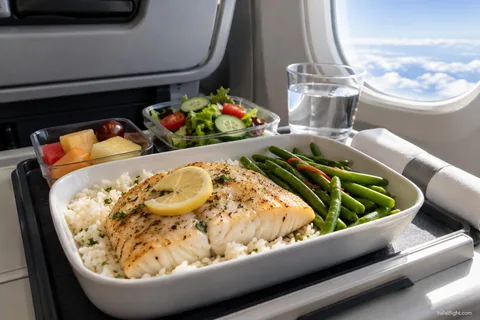
- Choose items that are unlikely to include alcohol, such as plain rice, steamed vegetables, fruit and sealed bread.
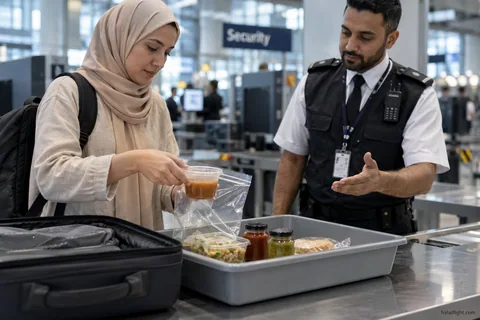
- Use backup food you have packed, within the customs rules of your destination.
- Ask for an alternative item if one is available.
- After the flight, report the issue to the airline, naming the flight, the date and the dish, so that the requirement is recorded.
Frequently asked questions
Does the alcohol burn off when food is cooked?
Only partly. A United States Department of Agriculture table shows that a dish baked or simmered for 15 minutes retains about 40 per cent of the alcohol, one cooked for an hour about 25 per cent, and one cooked for two and a half hours about 5 per cent. Stirring alcohol into a hot liquid retains about 85 per cent.
Can I tell from a menu if wine was used in a sauce?
Sometimes. Words such as wine jus, brandy, sherry, liqueur or beer batter are clear signals, but many sauces use wine without saying so. If a menu is vague, ask the airline in advance or the crew on board, and prefer a written ingredient answer over a verbal one.
Is a halal-certified airline meal always free of cooking alcohol?
Airline halal definitions commonly exclude alcohol, for example on TAP, Delta and Air France, but wording differs and standards between certifiers can differ on trace amounts. Read the definition that applies to your meal and flight, and ask your own preferred authority if you want a ruling.
What should I do if a sauce contains wine and no alternative is offered?
Do not rely on removing the sauce, since cooking spreads the ingredients through the dish. Ask for another item, eat the components you can confirm, such as fruit, plain rice or sealed bread, and use any backup food you packed. Report it to the airline afterwards.
Are desserts a bigger risk than main courses?
They can be, because liqueur, rum or alcohol-based extracts are common in cakes, mousses and tiramisu-style dishes, and these are often served without cooking. Ask whether the dessert contains alcohol or alcohol-based flavouring, and choose fruit or a sealed biscuit if the answer is unclear.