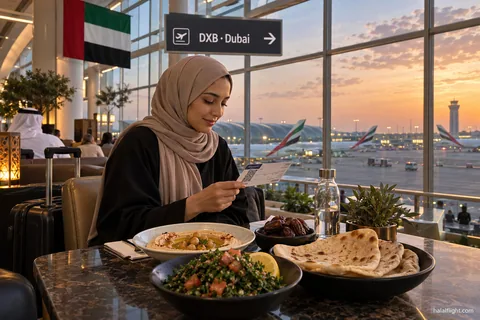
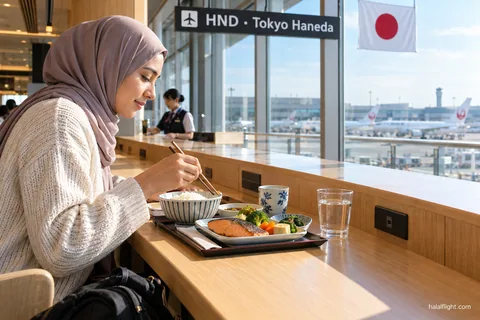
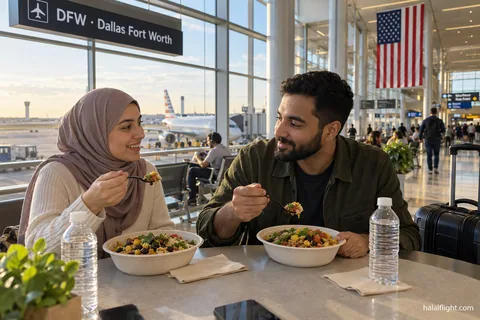
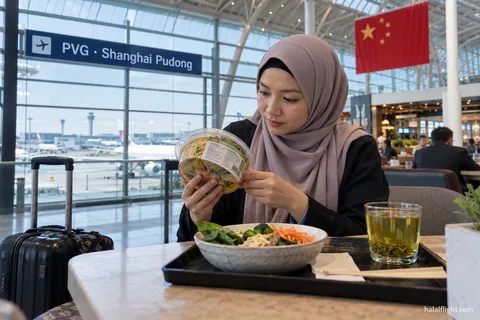
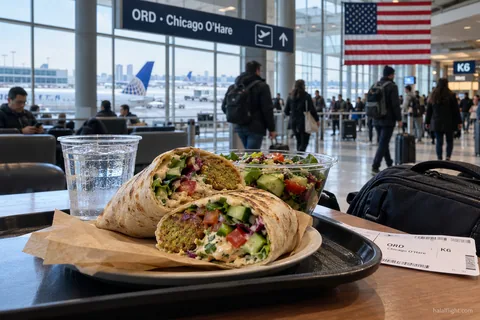
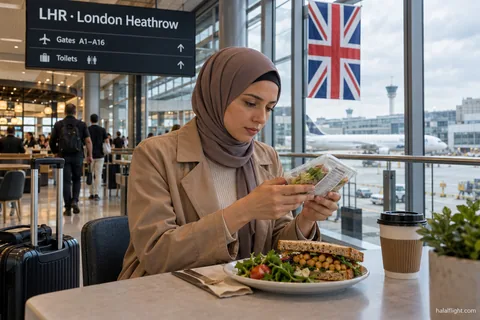
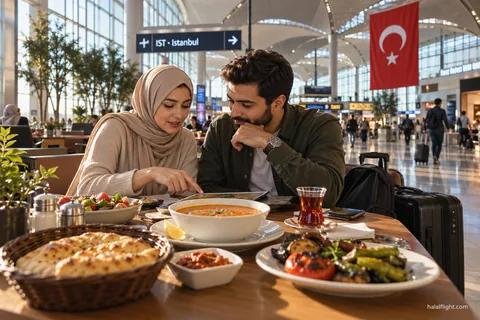
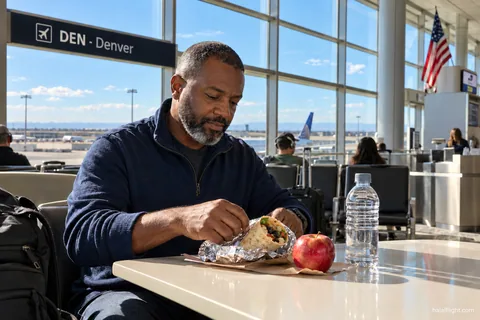
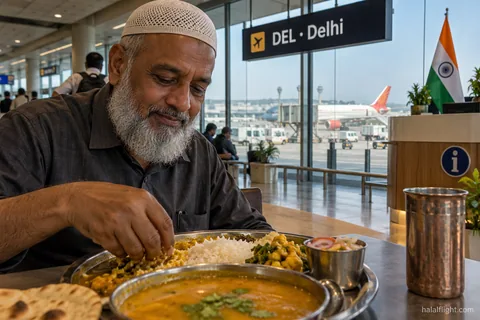
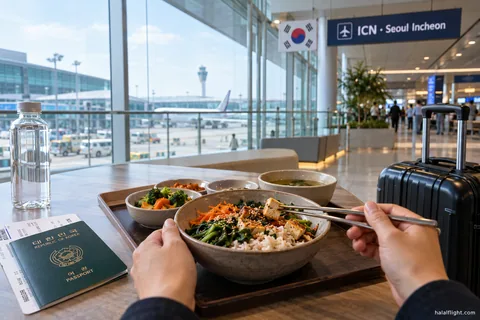
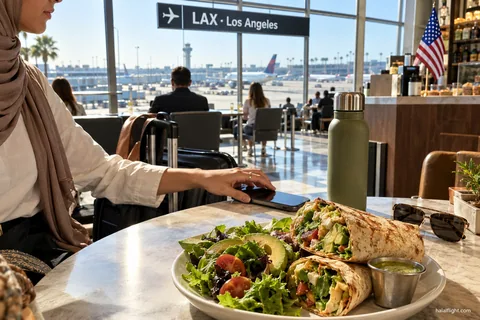
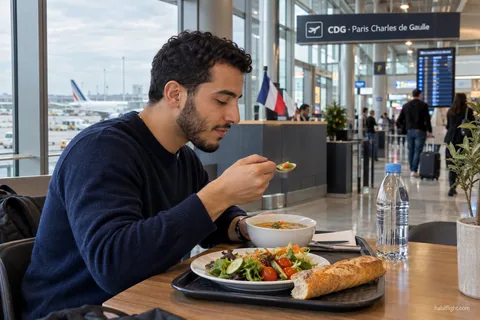
Airport food is rarely labelled the way a special meal on board is. This page explains what to check, how to pick the right guide for your route, and which questions to ask before buying a meal.
What this section covers
The guides below cover major international airports across Europe, the Middle East, Asia and North America, plus a handful of topic guides that apply to any airport: lounges, long layovers, prayer rooms, security rules for food and liquids, and pilgrimage routes. Each airport guide looks at the same practical questions: where food is found, how the terminals connect, how to judge a dish, and where to pray.
None of them replaces a check on the day. Restaurants open, close, change suppliers and move between terminals. Treat each guide as a way to prepare the right questions, then confirm on the airport's official website or at the counter.
Airports also differ in how much they publish. Some list every outlet with its terminal and opening times; others give only a short directory. Where information is thin, the guides say so instead of filling the gap with guesses, and suggest what to ask in person.
Food is only one part of a trip, so the same pages also help with the rest of the airport day: finding a quiet place, timing a meal around boarding, and deciding how much to buy before a long flight.
Halal-certified, halal-friendly or simply meat-free
Three different situations are often described with the same word, and the difference matters when choosing a meal.
- Certified: an outlet displays a certificate from a named body, ideally current and visible at the counter. Certification usually covers a defined scope, such as certain products or one kitchen, not every item sold.
- Halal-friendly or halal options: the menu includes some items said to be prepared according to halal rules, but the kitchen may also handle pork or alcohol. Ask what exactly is covered.
- Vegetarian or seafood only: no meat means no slaughter question, but sauces, stocks, gelatine, flavourings and cooking alcohol can still be an issue.
Some travellers accept only certified food; others accept vegetarian or seafood choices when nothing else is available. That is a personal and religious judgement, and a qualified scholar is the right person to ask about it.
Questions to ask at the counter
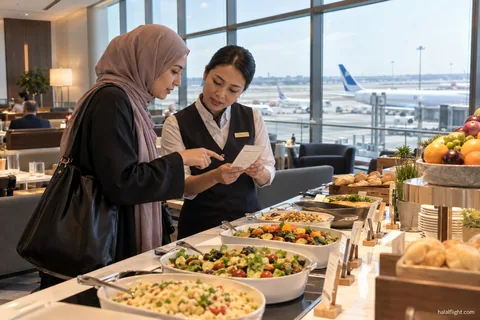
A short, polite set of questions usually gets a clear answer from staff.
- Is the meat halal, and who certifies it?
- Is it cooked on a surface or in oil shared with pork?
- Does the sauce, broth or dressing contain alcohol, lard or animal-derived additives?
- Can the dish be made without the doubtful ingredient?
- Is the information the same for this branch, not just the chain in general?
If staff cannot answer, that is itself useful information. Choose a simpler option, such as whole fruit, plain nuts, a sealed product with a readable ingredient list, or a vegetarian dish with few components.
Terminals, security zones and timing
Where a restaurant sits can matter as much as what it serves. Large airports are split into terminals, concourses and piers, and some are linked only by a train or shuttle. Food before security is usually open to anyone; food after security is only reachable if the boarding pass and the route allow it.
- Look up your departure terminal and gate area first, then the food nearby.
- On a connection, check whether a terminal change means passing security or immigration again.
- Allow for walking time, train rides and queues, not just the stated layover.
- Gates are often reassigned late, so keep a fallback close to the final gate.
For a long wait between flights, the layover and lounge guides help weigh whether to leave the secure area at all.
Prayer rooms and timing around prayer
Many large airports provide a prayer room, multi-faith room or quiet room, but names, locations and facilities differ widely. Some are before security, some after, and a few are only in one terminal. Washing facilities, separate spaces and direction markers are not guaranteed.
When planning a meal, work out the prayer times for the departure city and the arrival city, then see where they fall against boarding and any connection. A dedicated guide to prayer rooms in international airports gives the general picture, and the airport guides note what each airport publishes about its own facilities.
What to carry with you
A small kit makes a delay far less stressful, whatever the airport offers.
- Dry, shelf-stable snacks such as nuts, dates, plain biscuits and fruit bars.
- An empty reusable bottle to fill after security.
- A printed or saved copy of the booking confirmation and any special-meal confirmation.
- A small cloth or mat if a prayer space may be basic.
- Notes on any allergy or dietary restriction in the local language, if the destination is not English-speaking.
Security rules for liquids, sauces, soups and baby food vary by country and change over time. Read the dedicated guides on those topics and check the rules of the airports on the route before packing food in hand luggage. Customs rules on bringing meat or dairy products across a border can also be strict.
Choosing the right guide for your trip
Start from the situation, not from the list.
- Departing from or arriving at one airport: open that airport's guide and read the terminal and prayer notes first.
- Changing planes: open the guide for the connecting airport and the one about long layovers, then compare the airport pairs on the route.
- Travelling during Ramadan: use the airport guides alongside the Ramadan connection, suhoor and iftar planning pages, since timing can be more important than the menu.
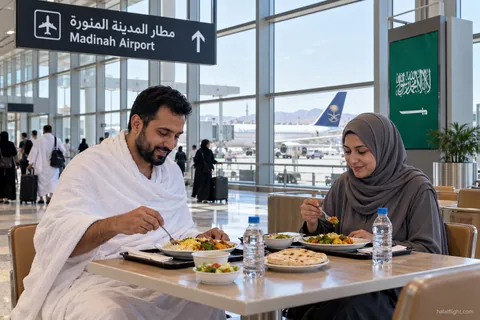
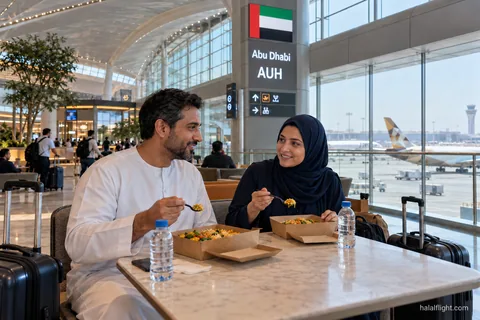
- Pilgrimage travel: the Madinah and Abu Dhabi guides address routes common to Umrah and Hajj journeys.
- Time in a lounge: read the lounge guide, because lounge catering is not always the same as the airline's meal on board.
If an airport is not listed, the general method still applies: find the official dining directory, identify the terminal, ask the questions above, and keep a fallback snack.
How to use these guides responsibly
The guides are independent and informational. They do not issue certifications, and they cannot guarantee that any outlet will be open, stocked or compliant on a particular day. Menus, suppliers and certificates change, so confirm directly with the airport, the outlet or the airline before relying on any detail.
Questions about whether a particular food, certification or situation is acceptable are religious questions. They belong to a qualified scholar, not to a travel guide.