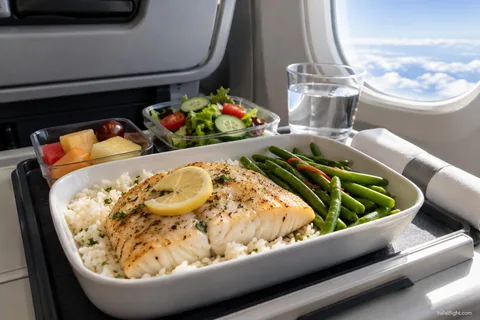
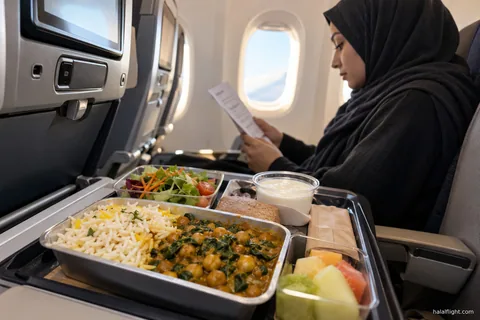
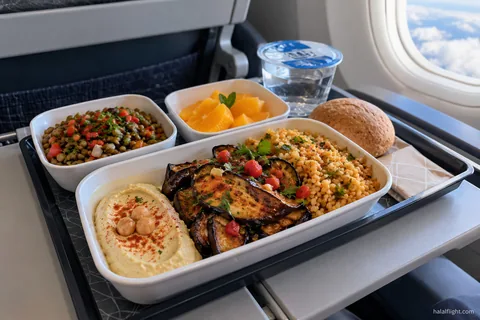
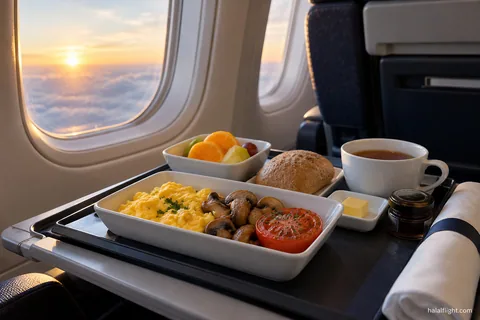
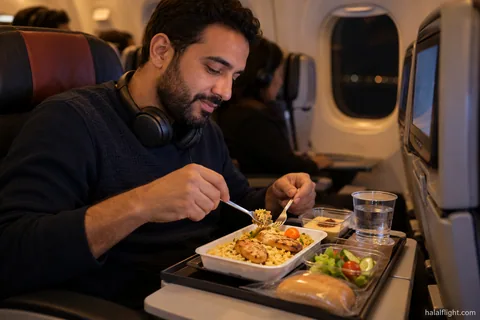
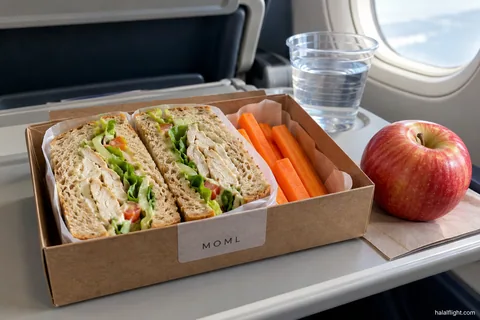
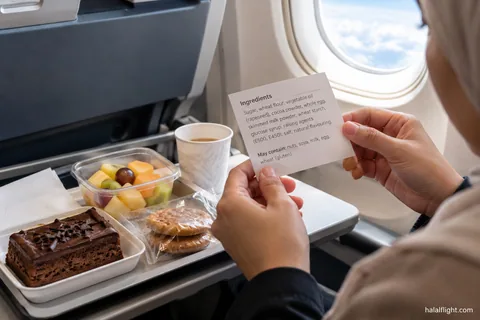
Airline menus use codes and labels that do not always mean the same thing. This directory explains the main meal types, special diets and ingredient questions, then points you to the guide that fits your situation.
Why meal types matter before you book
An airline meal is not simply halal or not halal. Between the two sit several labels, each with its own rules: a Muslim meal code, a halal certificate, a pork-free menu, a vegetarian tray, a kosher box. Passengers who treat them as synonyms are the ones most likely to receive something unexpected at 35,000 feet.
Knowing the vocabulary before booking turns a vague wish ("something halal") into a specific request that a reservations agent can enter and a catering kitchen can prepare. This directory groups the guides by the question you are really asking, so you can go straight to the right one instead of reading everything.
One more point: the same airline can offer different standards on different routes, because catering is often prepared by local suppliers at each departure airport. A meal that was reliable on the outbound flight may be sourced differently on the return, which is why each leg deserves its own check.
MOML, halal, Muslim-friendly and pork-free
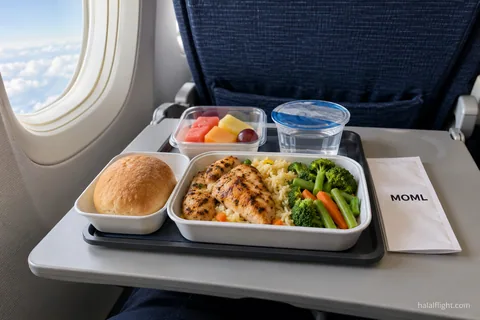
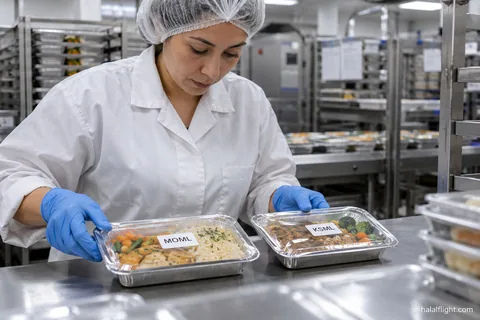
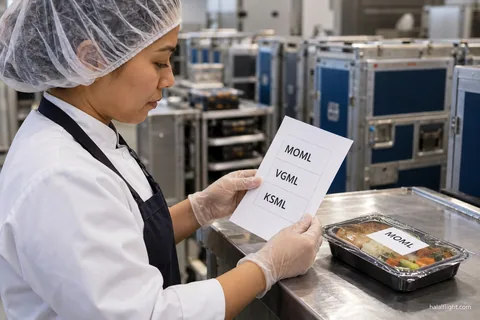
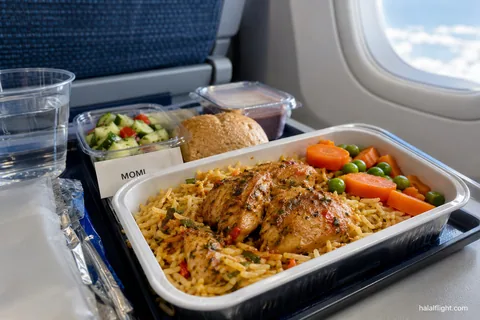
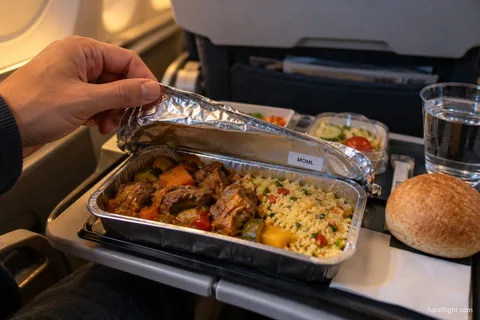
The industry code MOML stands for Muslim meal. Airlines apply it in different ways: some source certified halal meat for it, others simply remove pork and alcohol. The label alone does not tell you which approach the carrier follows.
- Halal-certified: a recognised body has approved the supplier or the product line.
- Muslim meal (MOML): a special-meal code; the standard behind it depends on the airline and the catering unit.
- Muslim-friendly: usually means no pork and no alcohol, without a formal guarantee about slaughter.
- Pork-free: pork is absent, but other doubtful ingredients may remain.
The first group of guides compares these labels and shows how to find an option when MOML is not listed at all. Read them first if you are unsure what your airline actually offers.
Vegetarian, vegan and kosher: close but not the same
Many travellers choose a vegetarian or vegan special meal as a fallback. It removes meat from the question, which helps, but it does not settle everything. Vegetarian trays can contain wine-based sauces, vanilla extracts made with alcohol, gelatin in desserts or cheese made with animal rennet.
Kosher meals are sometimes suggested as an alternative because their supervision is strict. Kosher and halal rules overlap in places and differ in others, so whether a kosher tray is acceptable is a personal and scholarly decision, not a default. The comparison guides lay out the differences without telling you what to conclude.
Choosing by food type and meal service
If the label question is settled, the next step is practical: what will you actually eat, and when? The food-type guides cover poultry, beef and lamb, fish and seafood, and plant-based trays. The service guides cover breakfast on early and overnight departures, lunch and dinner, cold sandwiches, desserts and drinks.
Choose by the meal that worries you most. A passenger on a dawn departure needs a different guide from one on a long dinner service. Seafood has its own set of scholarly views, so it is treated separately instead of being folded into the general meat guides.
Timing also shapes the choice. Short flights often carry a single cold snack, while long-haul services include two hot meals and a light bite, and special-meal trays are normally served before the regular trolley. Knowing what a flight of your length typically serves helps you decide how much backup food to bring.
Special diets combined with halal
Halal is rarely the only requirement. Families travel with infants and children, and adults manage diabetes, allergies, lactose intolerance, low-salt plans, gluten-free eating or pregnancy. Airlines usually treat each as a separate special-meal code, and a booking system may allow only one code per passenger on a segment.
The practical consequence is that a combined need often has to be confirmed in writing and checked again before departure. The diet guides explain how to word a request that covers both requirements, what to ask the airline, and what to pack as a safety margin when a combined tray cannot be promised.
Where two special diets collide and the airline cannot combine them, many passengers prioritise the stricter requirement and carry a safe supplement. That is a personal choice made case by case.
Ingredients and certification worth questioning
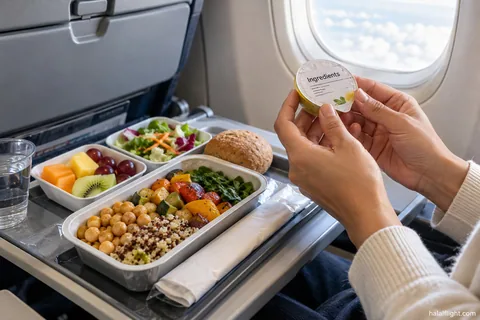
Most problems on board come from ingredients that nobody mentioned, not from the main dish. The ingredient guides look at the usual suspects:
- pork and lard in pastry, spreads and ready sauces;
- gelatin in desserts, mousses and sweets;
- animal rennet in cheese and other dairy;
- E-numbers with animal origins, and alcohol-based flavourings;
- wine or spirits in cooking sauces;
- cross-contact in catering kitchens and aircraft galleys.
A separate group explains how halal certification works in airline catering, who issues it, and what stunning and slaughter standards mean in practice. These guides help you ask better questions; they do not replace the airline's own answer.
Requests, deadlines and problems on the day
A correct code is useless if the request never reaches the kitchen. The request guides cover booking online, adding a meal after ticket purchase, changing or cancelling it, working through a travel agent, and handling codeshare flights or connections that involve several airlines. Deadlines differ between flights and carriers, so the safest habit is to confirm the meal as soon as the booking exists and again before departure.
Another set of guides deals with what happens when things go wrong: a meal that was not loaded, a wrong special meal, a complaint, a refund for a prepaid meal, or a reconfirmation after a schedule change. Keep a record of what you asked for, and when.
Bringing your own food and how to use this directory
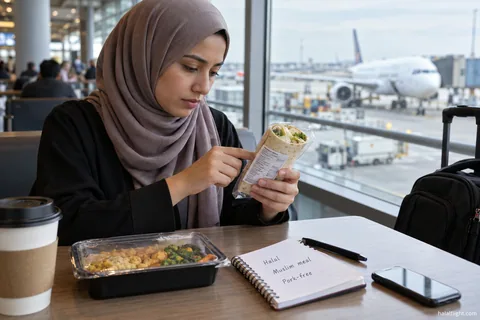
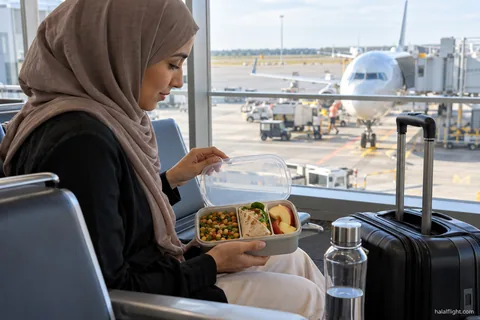
Carrying your own food is the backup plan that works regardless of the airline. The packing guides cover carry-on rules, liquids and sauces at security, customs limits on meat and dairy, keeping food fresh, and whether crew can heat or chill it. Rules differ by country and change, so check the current regulations of the departure and arrival airports.
A sensible order for most readers: understand the labels, pick your food type or diet, check the ingredients, send the request, confirm it, and pack a backup. Always verify details with the airline, because menus and policies change. Questions of religious ruling, such as what is acceptable when no halal option exists, belong to a qualified scholar rather than to a travel guide.