The short answer: plant-based is not the same as halal
A vegetarian or vegan label tells you about exclusions. It does not tell you that a meal has been certified, that no alcohol was used in preparation, or that the equipment was kept free of non-halal food. Halal is a separate standard with its own checks, and a meal can meet one without meeting the other.
That does not make plant-based meals unsuitable. Many Muslim travellers eat them with confidence when they have read the ingredients. The point is that the confidence has to come from the airline's published description or a written answer, not from the word vegetarian or vegan on its own.
Whether a particular plant-based meal is acceptable to you is a personal religious judgement. Views on gelatine, trace alcohol and shared kitchens differ between schools and certifiers, so a qualified scholar is the right authority for a ruling.
How the labels are defined
Vegetarian
Used loosely, it means no meat. Airlines then split it into types. Delta, for instance, describes its Western vegetarian meal as a non-strict lacto-ovo option that can include eggs and dairy but excludes meat and seafood, and describes an Asian vegetarian meal that excludes meat, seafood, eggs and dairy.
Vegan
The Vegan Society describes veganism as a way of living that seeks to exclude animal exploitation and cruelty, and in food terms avoids products derived wholly or partly from animals. It lists honey among the animal foods avoided, alongside meat, dairy and eggs. Delta's vegan meal likewise contains no meat, seafood, eggs or dairy.
Muslim or halal meal
Delta states that all its Muslim meals are halal-certified and contain no pork, pork by-products or alcohol. That is a different kind of statement from the vegetarian ones: it names alcohol and certification, which the plant-based definitions do not.
Where a vegan meal is more specific
Some airlines add alcohol to the vegan specification. Lufthansa explicitly excludes alcohol from its vegan meal definition, alongside meat, fish, dairy and eggs. That is useful ingredient information for Lufthansa flights. It does not turn every vegan dish on every other airline into a halal meal, and it is not a halal certificate, so it is worth reading the airline's own wording rather than generalising from one carrier.
The Vegan Society also runs a Vegan Trademark scheme, a third-party certification for products and ingredients. That tells you about animal-derived content in a product, not about halal status, because the trademark is a vegan certificate and not a religious one. If you see a trademark on packaged items, treat it as useful but partial evidence.
Ingredients that can sit inside a plant-based meal
Even when no meat is present, a few ingredients deserve a question.
- Wine, beer or spirits in sauces: vegetable dishes with a tomato, mushroom or cream-style sauce sometimes use them.
- Alcohol-based flavourings: extracts are often carried in alcohol, particularly in desserts and baked goods.
- Gelatine: appears in set desserts and some sweets; vegan meals should exclude it, vegetarian meals should be checked.
- Cheese enzymes: in vegetarian meals, rennet may be animal-derived.
- Mono- and diglycerides and similar additives: may come from animal or plant fats.
Each has its own page here. This page is only the reminder that a plant-based label does not clear them.
The extras around the main dish
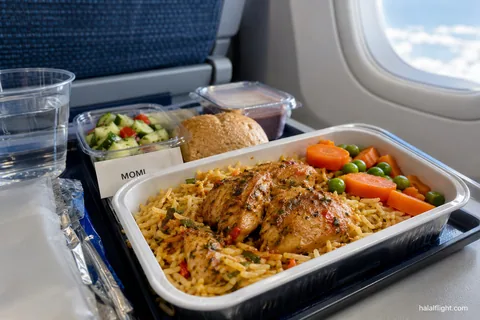
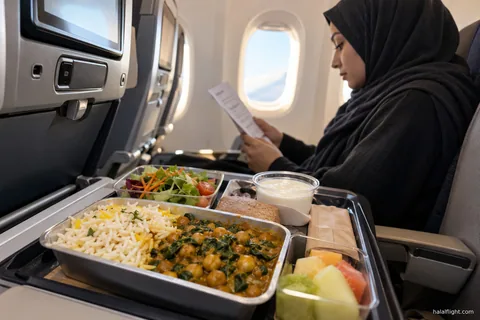
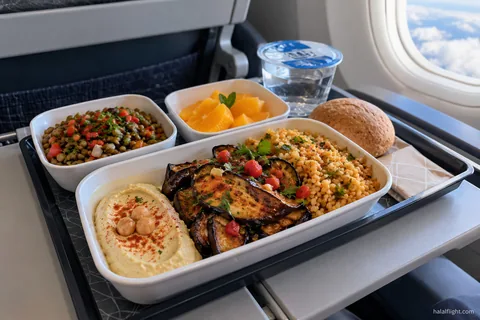
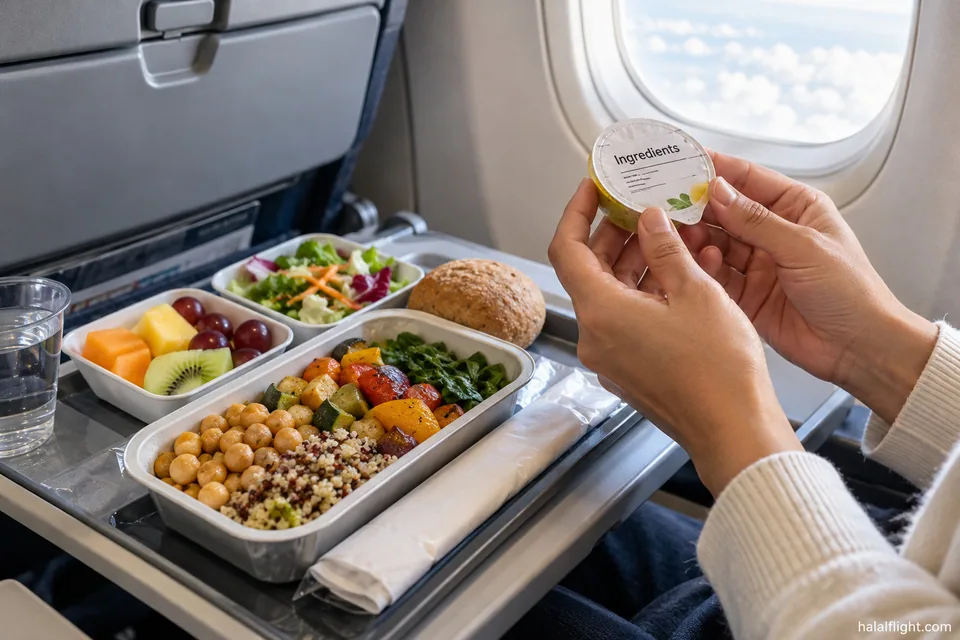
The main course is usually easy to judge. The surrounding items are where uncertainty sits: bread rolls, dressings, desserts, yoghurt, a small cheese portion, a sweet snack. A photograph of vegetables on a booking page cannot tell you what is in the sauce poured over them.
If an item has a visible label, read it. If it is a component without one, ask the crew whether the catering information lists it. Eating around a doubtful item is a reasonable choice, and nothing obliges you to finish the tray.
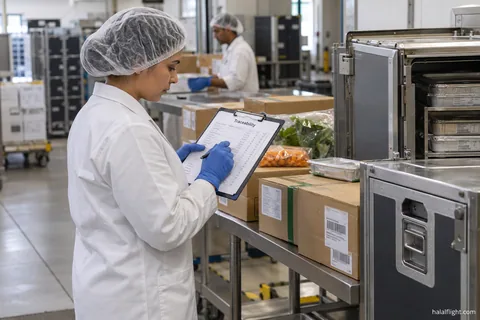
It also helps to remember that special meals are often prepared by a catering unit at the departure airport. The same airline can therefore serve a differently sourced vegetarian meal from one city than from another, and a description you read for one route may not match the supplier on the return leg. Checking each sector separately costs a few minutes and avoids relying on a single reassuring answer.
Plant-based and other dietary needs are separate requests
A vegetarian or vegan meal may suit your wish to avoid meat while still being unsuitable for an allergy or intolerance. Nuts, soy, sesame and gluten are common in plant-based dishes, and airlines usually state that they cannot guarantee an allergen-free environment, so your allergy plan is a separate matter from the halal question.
Tell the airline everything that applies and ask whether a single meal can meet it. Do not assume that combining labels will produce a safe result. The page on halal meals with allergies covers that planning in detail, and the pregnancy page covers food-safety points for expectant travellers.
If there is no Muslim meal available
When the Muslim meal is not offered on your route, or has run out, a plant-based meal is one of several fallbacks. Weigh them in this order.
- Ask whether a halal meal can be supplied on the sector, and whether another cabin or flight number is better served.
- Compare the published vegetarian and vegan descriptions with your own requirements, and choose the narrowest one you accept.
- Ask in writing about alcohol, gelatine and cheese enzymes.
- Look for evidence that covers the supplier or the meal, if certification matters to you.
- Prepare permitted sealed backup food for the parts you cannot confirm.
Rules on bringing food through security and customs vary by country, so check them before packing.
Checklist before you order or eat
- Read the airline's current meal descriptions for your exact flight.
- Choose the narrowest plant-based type that suits you.
- Ask about alcohol, gelatine and cheese in writing.
- Keep the confirmation with you, on paper or on your phone.
- Check the label on the tray and the dessert when it arrives.
- Pack backup food and eat only what you are satisfied with.
- Give feedback to the airline afterwards, so your requirement is recorded.
Frequently asked questions
Is a vegan airline meal halal?
Not by name. Vegan means no animal-derived food, but it does not state that alcohol, wine or alcohol-based flavourings are absent, and it is not a halal certificate. Some airlines, such as Lufthansa, exclude alcohol in their own vegan definition. Read the carrier's wording and ask about sauces and desserts.
Why is vegetarian not enough if there is no meat?
Because halal also concerns alcohol, animal-derived additives and how the food was prepared, not only meat. A vegetarian dish can contain wine in a sauce, gelatine in a dessert or cheese set with animal rennet. Removing meat addresses one concern, not the whole standard.
Does the Vegan Trademark mean something is halal?
No. The Vegan Trademark is a third-party scheme certifying that products and ingredients are vegan. It addresses animal-derived content, not religious status. A product can carry it and still contain alcohol-based flavouring, so it is helpful evidence but not a halal guarantee.
Which is safer to choose when no Muslim meal is available, vegetarian or vegan?
Vegan is narrower, because it removes dairy, eggs and gelatine, which reduces the questions you need to ask. Neither removes the alcohol question unless the airline says so. Choose whichever written definition you can accept, and confirm sauces and desserts.
Can I rely on cabin crew to tell me what is in a plant-based meal?
Crew can read the label and the catering information they hold, which may be limited. They may not know recipe details. For anything that matters to you, ask the airline in writing before the flight, and treat on-board answers as helpful but not always complete.