What makes a departure time good or bad in Ramadan
The best departure time is the one that leaves you with the fewest difficult tasks while fasting and the most realistic chance to eat, pray and rest. A flight’s take-off time only describes one moment in a much longer day, so the choice should be made on the full journey rather than the headline hour.
Four things to weigh together
- Fasting load: how much of the travelling, queuing and carrying falls in daylight.
- Iftar and boarding: whether the evening meal lands in a quiet moment or in the middle of a gate queue.
- Sleep: how much rest you can realistically get before and after the flight.
- Arrival tasks: driving, work, family meetings or a fast to start again within hours.
A morning departure that gets you to your destination before sunset can look attractive, yet it may require an early suhoor and a very short night. A late departure can protect your sleep before travel but leave you tired on landing. Neither is automatically better, which is why the sections below compare each time of day.
Morning departures
An early flight means getting up around or just after suhoor, travelling to the airport while fasting and flying through the first half of the fasting day.
Advantages
- You may arrive in time to eat iftar at your destination with family or in a familiar place.
- The most tiring parts of the journey, such as security and boarding, happen before the day’s heat and fatigue build up.
- You are not dependent on airline catering at the moment of sunset.
Drawbacks
- Suhoor is early and the night before can be short, particularly if there were late prayers.
- Long flights may cross the sunset point at altitude, which raises the question of when to break the fast (covered on the dedicated page on inflight iftar).
- Thirst on a dry cabin can feel stronger when you cannot drink.
This pattern suits short and medium flights that land well before sunset, where the day’s travelling ends in a comfortable evening.
Afternoon departures
Afternoon flights sit in the least comfortable part of a fasting day for many people, when energy is low. They can nonetheless work for a flight that lands soon after sunset.
What to check
Think about the journey to the airport, which falls in the late morning or early afternoon, and the check-in and security queue, which can be long at peak hours. If you will be tired by then, ask whether you can shorten the airport time through online check-in, hand baggage only or a lift to the terminal.
The main attraction is that the sunset may fall while you are still near a destination airport, with food and prayer facilities nearby. The main risk is a delay that turns a planned arrival into a flight over sunset. Carry dates and water so that you can break the fast wherever you are when the time comes.
Evening departures around sunset
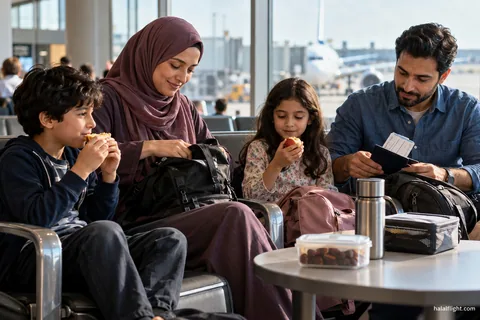
A departure shortly after sunset brings the most direct clash between iftar and boarding. The aircraft may be called to the gate while you are still waiting for the time to break the fast.
Why the gap matters
The advertised departure time is later than the boarding deadline, and queues, gate changes and security can eat into the gap. If you want to eat, pray and reach the gate calmly, you need a margin that allows for something to go wrong.
Practical approach
- Check the exact sunset time for the airport and the boarding time on your pass.
- Plan to break the fast with a date and water the moment it is time, wherever you are.
- Leave the full meal for the cabin or for later, unless the gap is generous.
- Know where the prayer space is, so that you can pray before boarding if time allows.
If the schedule is tight, it can be calmer to choose a flight that leaves later in the evening, giving a real window between iftar and boarding.
Night and overnight departures
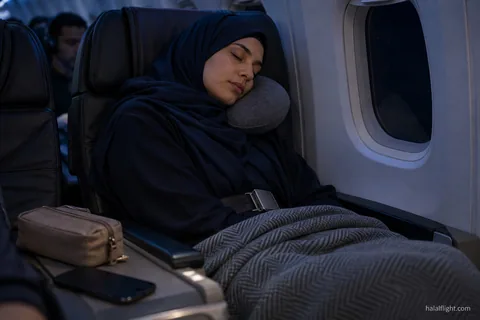
Travelling at night places much of the flight outside fasting hours, and that is often why people choose it. It can reduce thirst and discomfort in the cabin during the fast itself.
Sleep is the trade-off
Night flights can reduce sleep before an early arrival, and in Ramadan sleep may already be shortened by late prayers and suhoor. Compare the rest you can reasonably get with what you must do after landing, such as driving, working or looking after children. The NHS notes that jet lag cannot be prevented but can be eased by resting well before travel, staying hydrated, moving around on the flight and getting daylight after arriving; its advice also suggests limiting caffeine, which is worth remembering if you plan to use it at suhoor.
Suhoor on the move
If the flight crosses the dawn point, think about whether you will need to eat before it and how you will do so on board. Ask the airline about meal timing, and bring dry food for suhoor in case service does not match the fasting window. For the sleep side in more depth, see the separate guide on overnight flights and sleep schedules.
How direction and distance change the answer
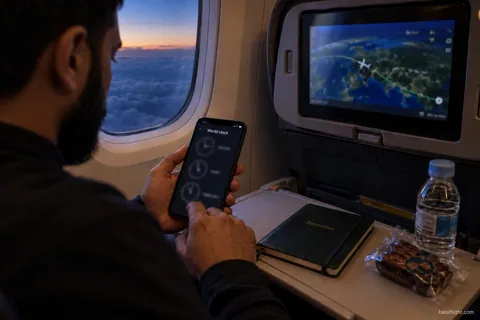
An aircraft does not experience sunrise and sunset in the same way as someone on the ground. Flying west can lengthen the day, and flying east can shorten it, so the fasting day on board may not match the timetable of your departure city.
Short versus long flights
On short flights the effect is small, and planning around the departure and arrival airports is usually enough. On long east–west journeys it can matter, and the timing of dawn and sunset in flight needs thought before you book. Your city’s timetable cannot describe every point along the route.
What to do
- Decide in advance whether you will fast on board and how you will find the relevant timing.
- Ask your airline whether it makes any timing announcement; do not assume that it will.
- For long routes, consult the pages on fasting across time zones and on breaking the fast in flight.
The aim is to choose a departure that does not leave you guessing mid-flight.
Travel concessions and your own situation
Many Muslims ask whether travel allows them to postpone the fast. Dar al-Ifta in Egypt, in a published fatwa, states that a traveller on a journey of at least 83.5 km that is not for a sinful purpose may break the fast, that the concession depends on travel itself rather than on hardship, and that fasting is nevertheless better for a traveller who can do so without difficulty. It adds that fasting is disliked if it may cause harm and that breaking the fast becomes obligatory if a person fears for their life.
Other institutions and schools of thought discuss the distance and conditions differently, and individual rulings belong to a qualified scholar. This page does not decide whether you should fast; it only helps you organise a flight around whichever decision you make.
Health and accessibility
If you have a medical condition, take medication, are pregnant or are travelling with young children or an older relative, speak to your doctor and a scholar before choosing a time that will make fasting harder. Accessibility needs such as wheelchair assistance can lengthen airport time, so add that to your planning.
Checklist and what to do if the plan changes
Before you book or confirm, run through these points.
- List the full journey from leaving home to arriving, and mark which parts fall in daylight.
- Check sunset at your departure airport and your boarding time.
- Leave a margin between iftar and the boarding deadline.
- Decide whether sleep or daylight comfort matters more for you.
- Consider what you must do in the hours after landing.
- Prepare dates, water and a simple snack in your cabin bag.
- Request a Muslim meal where it is offered, and confirm timing with the airline.
- Seek individual religious guidance if your route or health is unusual.
If a delay moves your flight
A late departure can move the flight across sunset or dawn. Recalculate the times for where you will actually be, break the fast when the time is established, and keep your carried food within reach. If the new schedule makes the fast very difficult, ask a qualified scholar about your options rather than deciding in a stressful moment.
Frequently asked questions
Is it better to fly at night during Ramadan?
A night flight places more of the journey outside fasting hours, which many people find easier. The cost is less sleep, particularly if suhoor and late prayers already shorten your night. Compare the rest you will get with the tasks waiting on arrival, and choose according to your own health and obligations.
Should I avoid a flight that leaves just after sunset?
Not necessarily, but it needs a margin. Boarding closes before the printed departure time, so iftar can collide with the gate queue. If you take such a flight, break the fast with dates and water, know where the prayer space is and leave the full meal until later.
Can I break my fast because I am travelling by plane?
Scholars give different answers on the distance and conditions. Egypt’s Dar al-Ifta says a qualifying journey allows the concession, while fasting is better for those who can manage without difficulty. For your own case, ask a qualified scholar, especially if health or an unusual route is involved.
Does flying east or west change my fasting day?
It can. Flying west can lengthen the day and flying east can shorten it, so a departure-city timetable may not match the sun where the aircraft is. On short flights the difference is small. For long routes, plan how you will establish the timing and seek guidance beforehand.
How do I reduce jet lag when fasting?
The NHS advises resting well before travel, shifting sleep gradually, staying hydrated, moving on the flight and getting daylight after arrival. In Ramadan, fit these around suhoor and iftar, and avoid relying on caffeine. If symptoms persist or you have a medical condition, speak to a doctor.