Why cheese needs a closer look than milk
Milk on its own raises few questions, but cheese is a manufactured product. To turn milk into curd, a cheesemaker adds a coagulant, usually rennet or a substitute, together with starter cultures and sometimes extra enzymes that develop flavour. Any of these can come from different sources, and none of them has to be named on a small portion pack.
On a flight this shows up in ordinary places: the cheese square beside crackers, the slice in a sandwich, a cheesecake, a cheese sauce on a hot dish, or a dairy dessert. In each case the visible ingredient is “milk” or “cheese”, while the question that matters sits one step upstream in how the cheese was made.
The American Halal Foundation explains on its dairy page that cheese certification looks at the coagulant, the cultures, rind treatments, shared vats and lines, and lipases used for flavour. That list is a good map of what a careful traveller is really asking when they query a cheese.
The three common sources of coagulant
Animal rennet
Traditional rennet is obtained from the stomachs of young ruminant animals. The American Halal Foundation notes that the slaughter of the source animal is not guaranteed in general, so a certifier verifies it. Under a halal standard, animal rennet from an animal that was not slaughtered in line with that standard is a concern; animal rennet backed by halal slaughter verification is treated differently.
Microbial and plant coagulants
Microbial and plant-based coagulants avoid the animal-slaughter question. The same foundation describes them as usually the cleanest options, although it still checks the fermentation media or plant-source documents behind them.
Fermentation-produced chymosin
Chymosin made by fermentation, sometimes sold as “fermentation-produced rennet”, depends on documentation: the production strain, whether the organism is genetically modified and what it was grown on. Whether genetically modified production is acceptable to you is a question for your own scholar or certifier.
What labels do and do not tell you
Ingredient lists are legally required to name major components, but the coagulant is frequently covered by a general word. You may see “enzymes”, “microbial enzymes”, “rennet” or “cultures”. Each leaves a gap.
- “Enzymes”: no origin is given, so it could be animal, microbial or plant.
- “Microbial rennet” or “vegetarian rennet”: resolves the animal-coagulant question. The American Halal Foundation points out that a vegetarian label covers only the coagulant, not the rest of the cheese.
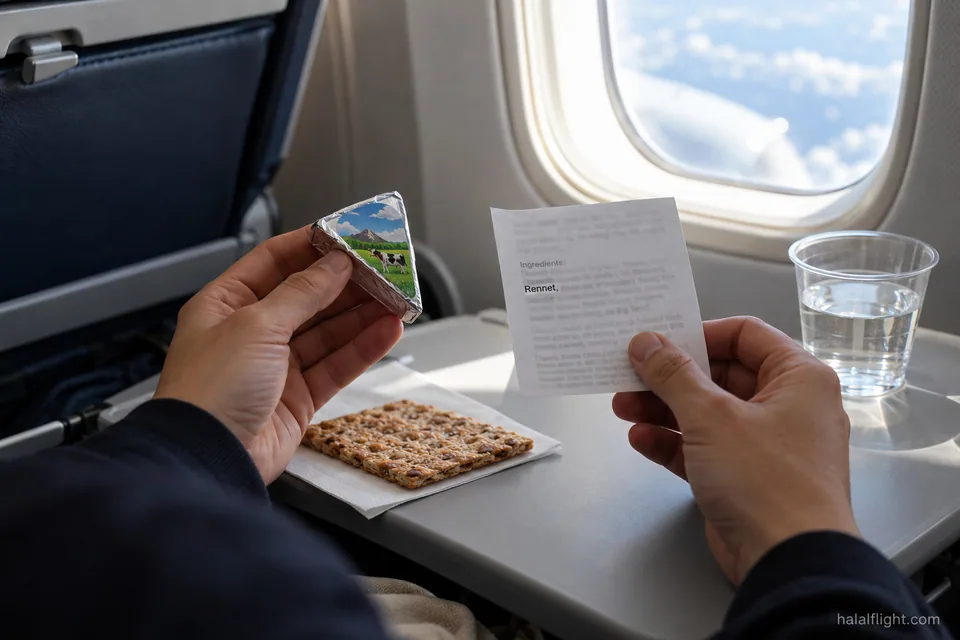
- “Rennet” without a qualifier: traditionally animal, but the label does not say whether it is halal-compliant.
- Halal certificate logo: the most informative marker, because the certifier will have reviewed the coagulant and other inputs.
A cheese labelled suitable for vegetarians is therefore a good sign for the rennet question, but a flavoured or coated cheese can still contain other components that need checking, such as gelatine in a mousse layer or an alcohol-based flavouring.
Whey, cultures and the wider dairy tray
Whey is a by-product of cheesemaking and turns up in biscuits, bars, bread rolls, crisps and powdered drink bases. The American Halal Foundation says whey is halal in itself but, as a by-product, inherits the status of the coagulant used, so upstream documentation is relevant. If you follow a standard that treats the coagulant as decisive, a snack listing whey may be worth a second look.
Starter cultures are also traced back to the medium they were grown on, and certifiers audit culture rooms as part of the process. Travellers cannot check this themselves, which is another reason to rely on certificates over guesswork.
Not every dairy item involves rennet. Yoghurt, butter, cream and liquid milk are made differently, and the cheese question does not automatically apply to them, though flavoured yoghurts and desserts may raise gelatine or colouring questions covered on other pages.
Differences of opinion on rennet
Religious positions on animal rennet are not uniform. Some scholars and certifiers require that animal rennet come from a halal-slaughtered animal, others treat the enzyme as transformed through processing and accept it in some circumstances, and many travellers simply prefer microbial or plant coagulants to avoid the discussion. The American Halal Foundation’s ingredient guide, for instance, states that cheese must use microbial rennet or halal-certified animal rennet.
You do not have to resolve this debate to travel sensibly. What you need is to know which position you follow and to ask for the evidence that fits it. If you are unsure, take the question to a qualified scholar rather than relying on an airline, a manufacturer or this guide.
Getting information from the airline
Airline websites normally describe meal categories, not the coagulant in a cheese portion. Because that detail rarely sits at the front of the organisation, send a specific enquiry and expect to be passed to the catering or special-meals team.
- Name the dish: “cheese portion with crackers”, “cheese sandwich”, “cheesecake”.
- Ask whether the cheese is halal-certified or made with microbial or plant coagulant.
- Ask whether a vegetarian or vegan special meal is available as an alternative when no cheese information exists.
- Ask for the answer in writing so you can show it at check-in.
Where the airline offers a halal meal, do not assume that every dairy component in it has been reviewed to your standard. Confirm what the airline means by its halal label and which certifier it uses. Vegetarian meals are a possible fall-back, though their own cheese may not be checked either, as explained on the sibling page about vegetarian meals.
Using the wrapper and packaging
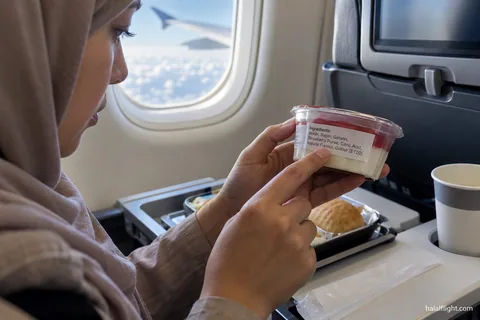
A wrapped portion normally shows the manufacturer, product name, ingredients and sometimes a certification mark. That is enough to look the product up later. Photograph it before you hand the tray back, or keep the wrapper in a pocket, so you have the details if you want to write to the manufacturer.
Unwrapped cheese on a cheese board or in a business-class dessert course is harder. If the crew cannot tell you where it came from, treat it as unverified. A bread roll with butter, fruit or a sealed packaged item may be an easier choice than a cheese whose source you cannot trace.
Customs rules on bringing your own cheese or dairy products into another country are different again and are covered on the page about meat and dairy restrictions.
Checklist and what to do if it goes wrong
Before you fly
- Decide whether you accept animal rennet from halal-slaughtered animals, require microbial or plant rennet, or follow another position.
- Order a special meal early and ask how dairy is handled in it.
- Pack a shelf-stable alternative such as dried fruit or plain crackers.
At the seat
- Read the ingredient line and look for a certificate mark.
- Ask crew for the packaging, not just a verbal reassurance.
- Skip cheese you cannot trace; eat the rest of the meal.
If you ate it and then had doubts
- Record the flight, date and item, and contact the airline’s customer relations for the specification.
- Ask a scholar for guidance on the meal already eaten; do not rely on a travel guide for a ruling.
Frequently asked questions
Is cheese on a flight always made with animal rennet?
No. Cheese can be made with animal rennet, microbial rennet, plant coagulants or fermentation-produced chymosin. A label that only says “enzymes” does not tell you which. A halal certificate, a vegetarian-rennet statement or a written reply from the manufacturer is the way to find out for a particular portion.
Does vegetarian cheese mean it is halal?
A vegetarian label usually means no animal rennet, which answers the coagulant question. The American Halal Foundation notes that it covers only the coagulant. Other ingredients such as flavourings, coatings or gelatine in the same product may still need checking, so it is a helpful sign rather than full confirmation.
Can I ask the crew what rennet a cheese contains?
You can ask, but crew rarely have manufacturing details. They can show the packaging, which names the producer and may carry a certificate mark. For an answer about the coagulant, contact the airline before the flight or the cheese manufacturer afterwards, quoting the product name from the wrapper.
Is whey in snacks a problem if I avoid animal rennet?
Whey comes from cheesemaking, so under some standards it carries the status of the coagulant used. The American Halal Foundation says whey is halal in itself but inherits the coagulant’s status. If this matters to you, look for a certificate on the snack rather than guessing.
What should I eat if I cannot confirm the cheese?
Choose items you can assess, such as sealed packaged snacks with a clear ingredient list, fruit or bread. You can also request a vegan or other special meal in advance, though you should still ask what it contains. Carry a small shelf-stable snack so you are never forced to eat something unverified.