Why dessert needs its own check
Most travellers focus on the main course. The dessert, the biscuit with coffee and the chocolate handed out before landing receive far less attention, yet they are often the items with the longest ingredient lists. Sweets rely on flavourings, colourings, setting agents and glazes, and any of these may come from sources that raise a halal question.
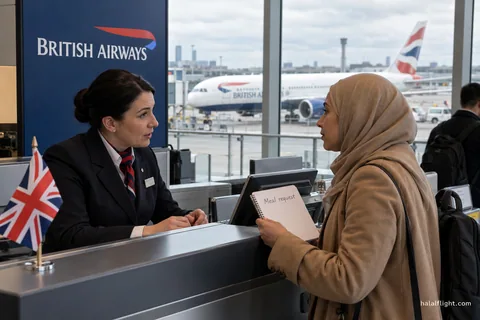
A second difficulty is logistics. A Muslim meal is normally loaded as a labelled tray, but a cake, a packaged biscuit or a bowl of chocolates may come from a different supplier and a different trolley. The status you confirmed for the main dish may not extend to them.
- Check the tray label to see what is part of your special meal.
- Check the ingredients of anything served separately.
- Ask the crew what is part of the confirmed meal and what is a general snack.
Gelatin: the animal name is not enough
Mousse, jelly, cheesecake, yoghurt desserts, marshmallows and some gummy sweets can contain gelatin. Gelatin may come from cattle, pigs or fish, and a product that lists only "gelatin" does not say which. Even when the animal is named as bovine, that identifies the species but does not itself show that the animal was slaughtered in a way the person eating it accepts.
Recognised halal certification can provide information that a short description cannot. Where a product has no certificate and the source is unclear, many travellers choose a different item. Scholars differ on the treatment of gelatin that has been chemically transformed, so your own position is a matter for a qualified scholar. A dedicated page on this site deals with gelatin in more depth.
Flavourings and alcohol
Vanilla extract, rum or brandy flavouring, liqueur centres and some glazes are made with ethyl alcohol as a carrier or ingredient. Religious bodies have set out different conditions for when trace ethanol in flavourings is acceptable, and views differ between schools and organisations. Because the airline label rarely states the alcohol content, there is usually little to go on.
Clues in the description
- Words such as rum, brandy, kirsch, amaretto or liqueur in a dessert name point to alcohol.
- "Natural flavour" or "flavouring" may or may not include an alcohol-based carrier.
- Tiramisu, trifle and some fruit cakes are traditionally made with alcohol.
If you are unsure, ask the crew whether the airline has an ingredient sheet, and consider choosing a simpler item. Cutting through every doubt is not always possible on board, so a plain option is often the practical answer.
Chocolates, fillings and premium-cabin boxes
A box of assorted chocolates can look uniform while containing pieces with liqueur, cream, praline or compound flavourings. Do not assume every piece shares the same recipe because they were served together in a premium cabin.
- Read the leaflet or lid, which often lists pieces and allergens.
- Pick plain pieces and avoid centres you cannot identify.
- Remember that dark and milk chocolate may differ in dairy content and emulsifiers.
Bread, pastry and chocolate also contain emulsifiers and fats, which a separate page on this site covers. Here the practical rule is to identify the product rather than judge it by how it looks.
Dairy, rennet and other less obvious points
Cheesecake, custard and cream desserts raise a different question: the enzymes used in making the dairy ingredients. Cheese is often made with microbial or animal rennet, and the label rarely says which. Opinions among scholars vary on animal-derived enzymes, and products carrying a halal certificate give you more information than an uncertified one.
The Halal Monitoring Committee in the UK notes that it deals only with meat and poultry, which illustrates a general point: a certifier's scope may not cover desserts at all. A certificate from a body that certifies only meat tells you nothing about the cake.
- Look for a recognised halal logo on packaged items.
- Check whether the logo belongs to a body whose scope includes confectionery.
- If there is no logo and no ingredient list, treat the item as unverified.
Fruit and simpler alternatives
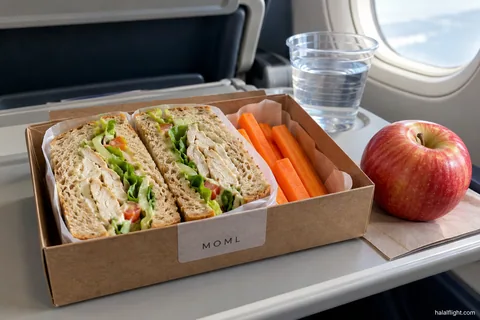
A whole piece of fruit sidesteps most questions about processed ingredients. Cut fruit, fruit salad and fruit in syrup deserve a closer look, because additions such as liqueur, glaze or gelatin-based coatings are possible.
Ask what is actually available rather than assuming a fruit replacement is always possible. Once meals are loaded, the crew can only offer what is on board, so asking early, or requesting a fruit-based meal at booking where the airline offers one, improves the odds.
Other lower-risk choices can include plain nuts, plain crackers, dried fruit and plain bread, though you should still read labels, since products can include coatings or glazes.
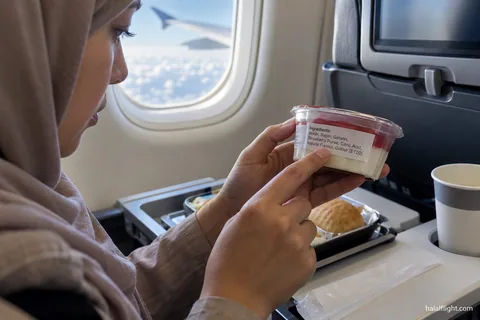
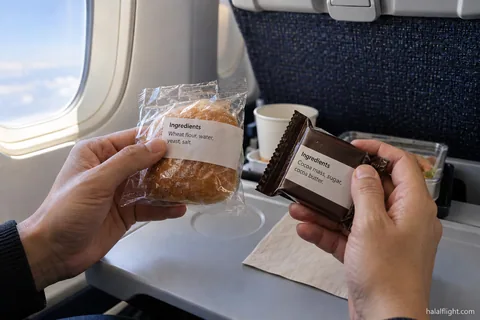
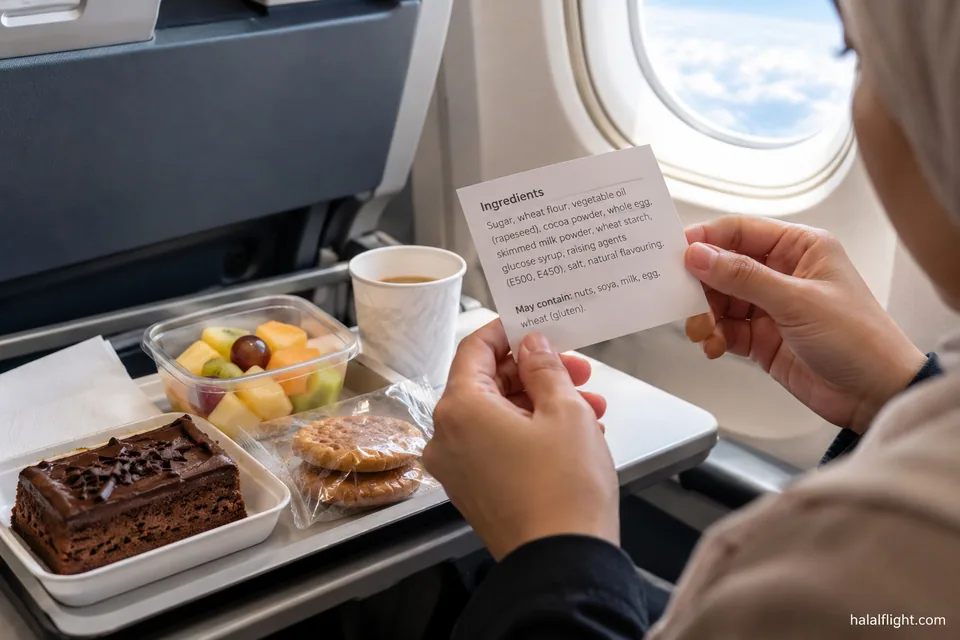
Packaged biscuits and cakes from known brands usually carry a full ingredient list in small print. Reading it takes a minute and tells you far more than the name on the front, so make it a habit to turn the pack over before opening it.
Use the wrapper
If a sweet lacks enough detail, keep the wrapper or photograph the brand name and ingredients panel. A manufacturer or a certifier can assess an identifiable product far more effectively than a vague description of "a chocolate cake with cream".
- Photograph the front of the pack, the ingredient list and any logo.
- Note the airline, flight number and date.
- Send the photographs to the manufacturer and ask for the gelatin, alcohol and enzyme sources.
- For general certification questions, a certifier such as IFANCA publishes FAQs and contact routes.
Checklist and what to do if you cannot verify
Before the flight:
- Request a Muslim meal if the airline offers one, and ask whether dessert is included in the definition.
- Pack a sealed snack whose ingredients you know.
- Decide in advance which doubts you are willing to accept, ideally after speaking with a qualified scholar.
On board:
- Check the tray label first.
- Ask the crew about separately served sweets.
- Read the pack, or photograph it.
- If the status is unclear, leave it or choose fruit.
After the flight, contact the airline and the manufacturer if you want a clear answer for next time.
Frequently asked questions
Are airline desserts halal if my main meal is a Muslim meal?
Not necessarily. Cakes, biscuits and chocolates are sometimes supplied separately from the Muslim meal tray, so the confirmed status may not apply. Check the tray label, ask the crew what forms part of your meal, and read the ingredients of anything served on its own.
Does bovine gelatin mean a dessert is halal?
Not by itself. Bovine identifies the animal, not whether it was slaughtered in a way you accept. Recognised halal certification gives more information. Scholars also differ on how processed gelatin is treated, so a qualified scholar is the right person to advise on your own position.
Can airline cakes contain alcohol?
Some can. Rum, brandy or liqueur flavourings, and traditional recipes such as tiramisu or trifle, may include alcohol. Airline labels rarely state this, so ask whether an ingredient sheet exists, look for alcohol words in the name, or choose fruit or a simpler item.
Is fruit a safe dessert choice on a flight?
Whole fruit avoids most processed-ingredient questions. Cut fruit, fruit salad and fruit in syrup may contain added glazes, liqueur or gelatin-based coatings, so ask what is served. You cannot always get a fruit replacement once meals are loaded, so ask early.
What should I do with a sweet whose ingredients I cannot read?
Photograph the pack, brand and any logo, or keep the wrapper, and note the flight details. Send these to the manufacturer and ask about gelatin, alcohol and enzyme sources. Until you have an answer, many travellers leave the item uneaten or choose fruit instead.