Start with drinks you can read
On a flight you cannot see how a drink was made, so the most reliable choice is one with a short, visible ingredient list. Sealed bottled water, a sealed carton of juice, plain tea made from a bag and black coffee all fit that description. The more a drink has been mixed, flavoured or poured from an unlabelled container, the more questions it raises.
This does not mean mixed drinks are forbidden. It means the traveller who wants no alcohol in any form has to rely on information, and the crew can only give information about what they can see. A packaged item with a printed label gives you something to check. A glass poured from a jug does not.
Religious views differ on some of the finer points discussed below, for example on trace alcohol from natural fermentation or flavour extracts. Many scholars address these cases differently, so a ruling for your own situation belongs to a qualified scholar rather than to this page.
Easy choices and the checks that go with them
Water, tea and coffee
Water is the simplest option. Tea and coffee are usually unproblematic, but flavoured teas and coffee with syrups or liqueur-style flavouring deserve a glance at the ingredients. Ask for the plain version if you are not sure.
Juices and soft drinks
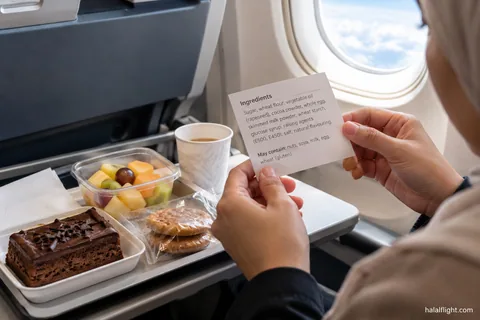
A single-fruit juice in a sealed pack is easy to verify. Blended juice drinks, cordials and flavoured fizzy drinks have longer lists, which may include flavourings. The ingredients are printed on the pack, so ask to see the pack or read it when it arrives.
Milk-based and hot drinks
Hot chocolate, milk and yoghurt drinks are generally straightforward, but flavoured sachets and syrups should be checked in the same way as other flavoured items.
- Ask for the can, bottle or carton rather than a pre-poured cup.
- Choose a drink with fewer ingredients when two options look equal.
- Keep your own sealed bottle for the times when nothing else is clear.
Mocktails and mixed drinks
A mocktail name tells you nothing about its contents. A drink described as alcohol-free may still use bitters, flavour extracts, a premixed cocktail base or a syrup that was made with alcohol, and bar crew may not know what is in a bottle supplied by a catering company.
Ask these questions in order, and stop when you have a clear answer:
- Is any ingredient a spirit, wine, beer or liqueur, or a product made from one?
- Does the drink use bitters or a premixed base, and does the label say what they contain?
- Was it mixed from the same equipment used for alcoholic drinks?
If the answers are unclear, switch to a simpler sealed drink. Declining a mocktail is easier than discovering later that it contained something you would have avoided.
Reading alcohol-free, dealcoholised and non-alcoholic labels
These terms are not interchangeable. In the UK, the government has consulted on whether the descriptors alcohol free, de-alcoholised, non-alcoholic and low alcohol should be set in regulation, which shows that the definitions have been a matter of public debate. Other countries use their own thresholds, so a product bought in one market may follow different rules from the same brand elsewhere.
For a Muslim traveller, the question that matters is not the marketing word but the stated strength on the label and the standard you personally follow. A drink that is made by removing alcohol from beer or wine may carry a small residual amount even when described as zero or near zero, and different scholars and certifiers treat those products differently.
What to do
- Read the strength in percent by volume on the label, not just the front-of-pack wording.
- Check whether the product has halal certification from a body you trust.
- If the label has no strength or certification, treat it as unconfirmed.
- For your own rule on residual alcohol, ask a qualified scholar in advance and apply it consistently.
Fermented drinks, malt drinks and flavoured sodas
Some drinks are alcohol-free in the sense that no alcohol is added, yet are produced by fermentation, such as kombucha or traditional kvass-type drinks, and can contain small amounts as a natural result. Malt drinks and non-alcoholic beers are brewed products and may be treated differently from fruit juice.
Beverage certification bodies assess these points, including the use of flavour carriers and fermentation. A certification mark from a halal certifier you trust can be a faster guide than the ingredient list alone, though you should still check which product the certificate covers. Halal Food Authority, for instance, states that it certifies a range of products including beverages.
For an alcohol-based flavouring in food rather than in a drink, see the separate page on alcohol-based flavourings in airline food, which deals with that topic in full.
Food policy and drinks policy are not the same
An airline can supply fully halal food and still serve alcohol in the cabin. Check the two policies separately, using the airline's own wording.
Royal Brunei Airlines states on its family travel page that it is a fully alcohol-free airline, and says its meals are halal. Most airlines do not take that approach, so on other carriers an alcohol-free drink may be prepared at the same trolley, with the same equipment and the same ice as alcoholic ones.
That matters to different travellers in different ways. Some are comfortable as long as their own glass contains no alcohol. Others prefer a cabin with no alcohol service at all, or sit away from service areas. If that matters to you, check the airline's beverage statement before booking, not when you board.
What to say to the crew
Be specific and polite. Saying you do not drink wine invites the crew to offer another alcoholic option. Say instead that you want a drink with no alcohol in it at all, including cooking wine, bitters and flavour extracts, and ask what they have that is sealed.
Keep medical requests separate. If you also need to avoid sugar, caffeine or an allergen, mention it as a different point, so the crew do not mix up a question about sugar with one about religious restrictions.
- Ask for the original packaging when possible.
- Ask whether a drink has been prepared in advance.
- Say clearly if you will not accept a drink from a shared jug or shaker.
- Thank the crew when they check, and ask them to note it for the next service.
Checklist and what to do if you are unsure
Before the flight
- Look at the airline's beverage and special-meal pages, and note anything on alcohol service.
- Decide your own standard for residual alcohol and trace fermentation, with a scholar if needed.
- Pack an empty bottle to fill after security, and a few sealed drinks if the rules at your departure point allow.
On board
- Choose sealed or single-ingredient drinks first.
- Ask the three mocktail questions, and stop when answers are vague.
- Keep water as your fallback.
If you are unsure after drinking
If you later learn that a drink contained something you would have avoided, do not panic. Many scholars distinguish between knowing and unknowing consumption, and the right course of action is a question for a qualified scholar rather than for a travel guide. Make a note of the drink and the flight so that you can describe it accurately, and ask the airline for ingredients for next time.
Frequently asked questions
Are all non-alcoholic drinks on planes halal?
No. Non-alcoholic describes strength, and the definition varies by country. A drink can still contain flavourings, bitters or small amounts of residual alcohol. Read the label, look for certification you trust, and ask a qualified scholar how you should treat trace alcohol in your own case.
Is it safe to order a mocktail on a flight?
Only if you can find out what is in it. Mocktails can use bitters, syrups or premixed bases that were made with alcohol. Ask the crew to name the ingredients and show packaging. If they cannot, choose a sealed juice, water or plain tea instead.
Does an airline that serves halal food also serve alcohol?
Often yes. Halal food policy and alcohol policy are separate. Some airlines serve fully halal meals and still sell alcohol, while a few, such as Royal Brunei Airlines, say they are alcohol-free. Check the airline's own statements for both before booking.
What does dealcoholised mean on a drink label?
It generally means alcohol was removed after brewing or fermentation, and a small amount may remain. Legal definitions differ between countries, and the UK has consulted on its descriptors. Look at the stated percentage and ask a scholar whether your standard permits it.
Can I bring my own drinks through security?
Liquid limits at security apply to what you carry, and rules differ by airport. A common approach is to bring an empty bottle and fill it after the checkpoint. Check the guidance of each airport on your route rather than assuming the rules are the same everywhere.