Why red meat needs more than a label on the tray
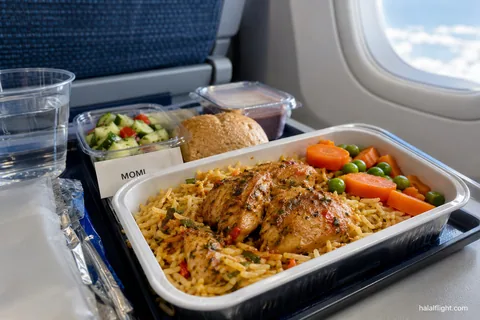
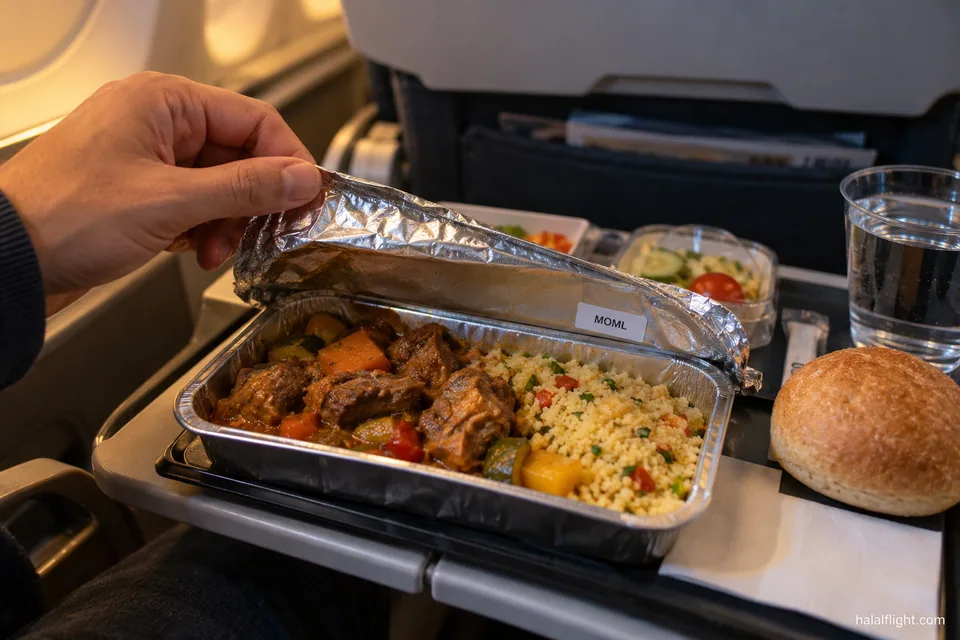
Beef and lamb are permitted foods in principle, yet permitted species is only the first question. For a Muslim traveller the meat also has to come from an animal slaughtered in a way that the traveller, or the scholar they follow, accepts. A foil tray gives no clue about that. The words on a menu card, such as braised lamb or beef casserole, describe a recipe, not a slaughter method.
That is why the useful question is not whether the airline serves beef or lamb but what evidence stands behind the meat on your particular flight. Evidence can be a statement in the airline's own meal description, a certificate held by the caterer, or a certifier's stamp on the meat before it reaches the galley. Each of these can be asked about politely and in writing before departure.
This page deals with red meat only. Poultry, fish and the wider debate about stunning have their own guides on this site, and the sections below mention them only where they change what you should do with beef or lamb.
Reading the airline's own meal description
Airlines describe their Muslim meal in different ways, and the differences matter for red meat. Air Mauritius, for example, states on its special meals page that its Muslim meal (MOML) is halal and mainly includes lamb, chicken and fish, while excluding beef, pork, their derivatives and any trace of alcohol. It also says that preparation and cooking style may vary across flights. So on that carrier a traveller who orders the Muslim meal should expect lamb rather than beef, and should not be surprised by the absence of a beef dish.
Other airlines say nothing about which species appear. Their page may only say that meals contain no pork and no alcohol, or that the meat is halal certified. Both are useful, but they are different statements. No pork says what is absent; halal certified says something about the meat that is present.
Questions to put to the airline
- Does the Muslim meal on my route include beef, lamb, both, or neither?
- Is the red meat halal certified, and does that apply to flights leaving from my departure airport as well as the airline's home base?
- Is the meat on the return sector sourced separately?
Keep the reply. If the answer is vague, treat the meal as unconfirmed and plan a backup.
Slaughter evidence and the role of certifiers
Meat that is sold as halal usually passes through a certifier, an independent body that inspects the slaughterhouse and checks the supply chain. Certifiers do not all work to identical rules, so two items both described as halal can rest on different standards.
The Halal Monitoring Committee (HMC) gives a clear picture of how one such body operates. In its published answers it says that its trained inspectors inspect the abattoirs and that regular spot checks are also carried out at certified butchers. It lists fresh beef and lamb or sheep meat among the products it certifies, and it says that red meat is stamped with the HMC moulded stamp. A stamp on the meat itself is a tangible form of evidence, but it is visible only before the meat is portioned and cooked. On an airline tray there is nothing to inspect, which is why the paperwork upstream matters.
What a traveller can reasonably do is ask the airline or its caterer two things: which body certifies the beef and lamb, and whether that certification covers the loading station for your flight. Many airlines use different caterers at different airports, so a statement made about the home hub does not automatically cover an outstation.
Stunning: a point where certifiers differ
Whether an animal may be stunned before slaughter is one of the best-known areas of disagreement between halal bodies. HMC states in its published answers that part of its criteria is that animals are not stunned, and it declines to certify stunned meat or poultry. Other certifiers apply their own criteria, and some accept certain stunning methods under conditions.
For a traveller this produces a practical rule. If stunning matters to you, a general sentence such as our meat is halal will not settle the question, because the word halal covers more than one position. Ask the airline or caterer for the name of the certifier and then read that certifier's published policy. Where no answer comes back, the sensible conclusion is that the meal is unverified for your purposes, not that it is acceptable.
Differences between schools of thought and between certifiers are real, and a personal ruling on which standard to follow belongs to a qualified scholar. A separate guide on this site covers slaughter and stunning standards in more depth; here the point is only to link that question to the beef or lamb in front of you.
Sauces, stocks and the rest of the dish
Even with acceptable meat, the dish around it can cause problems that the eye cannot detect. A beef casserole or lamb curry is built on stock, seasoning and cooking fat, and a wine-based sauce is a classic way to finish braised red meat.
What can hide in a red meat dish
- Wine, beer or spirits used in a gravy or marinade.
- Stock made from bones or fat whose source is not stated.
- Gelatine used as a thickener in sauces and glazes.
- Seasoning blends and flavourings that contain alcohol as a carrier.
A Muslim meal is meant to exclude these, which is one more reason to order it rather than choose the regular menu item that happens to look suitable. If you are on a flight without a pre-ordered meal and the choice is between a beef dish and a vegetarian one, the vegetarian dish may be the safer reading, though vegetarian does not guarantee absence of alcohol-based flavourings either.
Hindu non-vegetarian and other lookalike meals
Passengers who want to avoid pork sometimes pick a different special meal because it is easier to find on the booking page. The Hindu non-vegetarian meal is a frequent choice. It may contain lamb or poultry, but it follows different dietary requirements, so the meat in it carries no halal assurance.
Treat it as a separate meal with a separate purpose. If your requirement is halal, the Muslim meal is the correct request, and a Hindu meal is not a substitute for it. Choosing it only because the Muslim meal option is missing leaves you with lamb or poultry of unknown slaughter, which is the very thing this page is trying to help you avoid.
The reverse is also true. A meal that excludes beef, as the Air Mauritius Muslim meal does, may suit a traveller who avoids beef for personal or health reasons, but the exclusion of one species should not be read as a statement about the method of slaughter of what remains.
Ordering, timing and what can change
Most airlines that offer a Muslim meal ask for the request in advance. Air Mauritius says to select the meal at the time of booking and no later than 24 hours before departure, at no cost, and adds that it does not guarantee availability and accepts no liability if a pre-ordered meal is unavailable for any reason. That wording is a useful reminder that even a confirmed request can fail on the day.
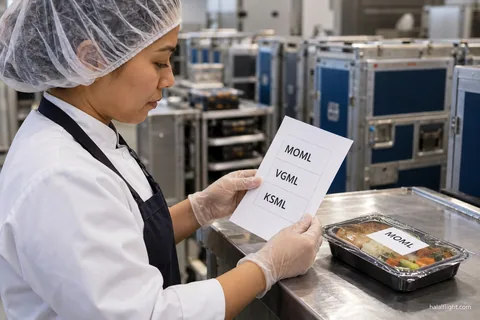
Substitutions are the most likely failure. A caterer short of lamb may replace it with chicken, or change the accompaniment, without the passenger being told before boarding. Ask the cabin crew to read the meal label rather than the menu, and say clearly if a particular species matters to you.
- Request the Muslim meal when booking, or as early as the airline allows.
- Check the booking page again a few days before departure to see that the request is still listed.
- At the gate, mention the pre-ordered meal to staff.
- On board, ask the crew to confirm the meal for your seat before the service starts.
Times and channels differ by airline and route, so confirm them on the airline's own page for your flight.
A checklist, and what to do if the meat is in doubt
Before you travel, work through a short list.
- Read the airline's description of its Muslim meal and note whether it names beef, lamb or neither.
- Ask which body certifies the red meat and whether that covers your departure airport.
- If stunning matters to you, read that certifier's published position.
- Ask whether sauces contain wine, stock of unstated origin or gelatine.
- Keep any written reply from the airline.
If it goes wrong on board
If the tray does not match what you ordered, or the crew cannot say what the meat is, do not eat on the assumption that it will be fine. Ask whether a different special meal remains aboard, and say plainly that you need a halal option. If nothing suitable exists, fall back on permitted food you have packed yourself, such as dry snacks, fruit or a sealed vegetarian meal, within the security and customs rules for your route.
Afterwards, report the failure to the airline in writing with the booking reference and flight number. A complaint with a date and a seat number is more likely to reach the catering team than a general remark.
Frequently asked questions
Is lamb on a flight automatically halal?
No. Lamb is a permitted species, but halal also depends on how the animal was slaughtered and what the dish contains. An airline statement such as halal certified, or a named certifier, is stronger evidence than the dish name. If no statement exists, ask the airline before you travel and carry a backup meal.
Why does the Muslim meal on some airlines contain no beef?
Menu choices are set by the airline and its caterers. Air Mauritius, for instance, says its Muslim meal mainly includes lamb, chicken and fish and excludes beef. The reason is not given on its page, so ask the airline if you want to know. The absence of beef does not by itself say anything about slaughter method.
Can I order a Hindu non-vegetarian meal instead of a Muslim meal?
It is not a like-for-like swap. A Hindu non-vegetarian meal may contain lamb or poultry and follows different dietary requirements, so it carries no halal assurance. If your requirement is halal, request the Muslim meal, or check the airline's policy if all meals are halal on your flight.
Does HMC certification mean the meat is not stunned?
HMC states in its published answers that part of its criteria is that animals are not stunned, and that it does not certify stunned meat or poultry. Other certifiers set their own criteria, so the answer depends on which body certified the meat. Ask the airline for the certifier's name and read its policy.
What should I do if the crew replaces lamb with another meat?
Ask the crew to read the meal label and say clearly what you need. If the replacement cannot be confirmed as suitable, ask whether another special meal is aboard, then rely on food you packed. Report the substitution to the airline afterwards with your booking reference and flight number.