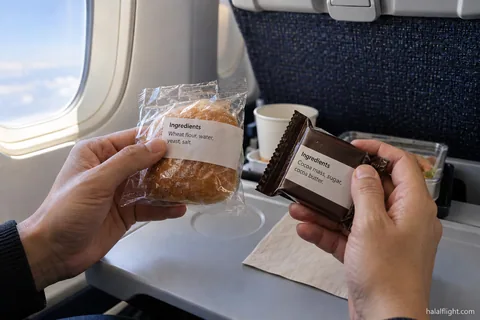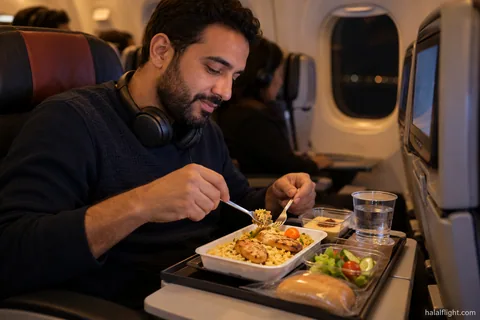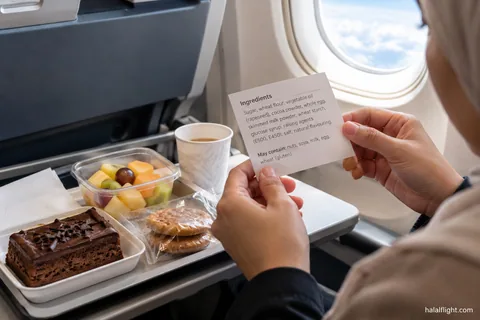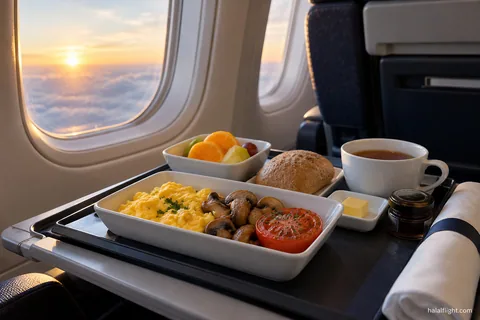
A cold meal is a complete recipe, not a single filling
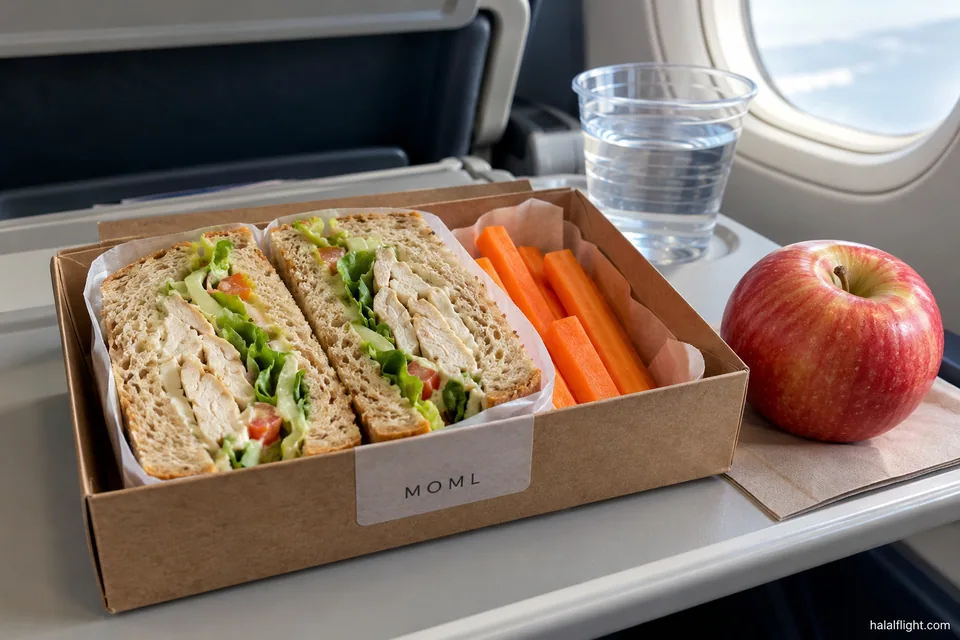
When a menu offers a chicken sandwich or a cheese wrap, it is natural to focus on the filling. For a halal check, though, a sandwich is at least four separate products assembled together: the bread, the filling, a spread or sauce, and often cheese. A halal filling does not on its own establish that the cheese enzymes, the flavourings or the bread recipe around it are suitable.
Treat the sandwich the way you would a hot dish with several components. Ask what each part is, read whatever label or catering tag is available, and decide on the whole item. Details about bread additives and chocolate are covered on a separate page; this one looks at the sandwich as an assembled product and at the practical side of cold meals on a flight.
Fillings: meat, fish, egg and vegetables
The filling is where the most obvious question sits. For meat or poultry, the same questions apply as for a hot meal: how it was slaughtered, which certifier or standard applies, and whether processed slices have extra ingredients. Cold cuts and sliced meats are processed products, so the certificate for the raw meat does not automatically cover the finished slice, which may contain added flavourings or preservatives.
Common filling questions
- Chicken or turkey slices: is the product itself certified, not just the meat it came from?
- Tuna, salmon or egg: the base ingredient is usually straightforward, but the mayonnaise or dressing needs its own check.
- Vegetable fillings: look at the sauce, the glaze and any added fat.
Cheese, spreads and the vegetarian label
Cheese is one of the less visible issues in a sandwich. Traditional cheese-making uses rennet, an enzyme preparation that may be of animal origin. The Vegetarian Society describes animal rennet as made from the lining of the stomachs of ruminant animals and notes that it can appear on labels as traditional rennet, pepsin or animal enzymes. It also advises always checking the label, because it is not always obvious which cheeses are vegetarian, and asking the manufacturer if the label is unclear.
For a halal check, the source of the enzyme and the way the animal was slaughtered can both matter, and scholars differ in how they treat rennet. That makes it a question for your own scholar, but the practical step is the same for everyone: do not assume that a cheese in a sandwich is suitable because the filling is.
- Look for a vegetarian or microbial-rennet statement and a halal mark on the cheese component, where the packaging shows one.
- Check spreads, pesto and dressings for flavourings, wine or other alcohol-based ingredients.
- If nothing is stated, consider a sandwich without cheese or a different cold item.
Why a removed slice does not fix the problem
It can seem simple to take out the unwanted slice and eat the rest. A sandwich assembled in a factory kitchen is made on shared surfaces, and cheese or meat that has been in contact with the bread, butter or spread has left traces behind. Removing a slice after assembly does not document what the original preparation was, and it does not tell you how the rest was produced.
Product labels and current supplier information tell you far more than appearance does. If the sandwich is not labelled with ingredients, treat it as unverified and ask the airline for the product name and supplier before the flight, or choose a different item.
Pre-order versus what is left in the trolley
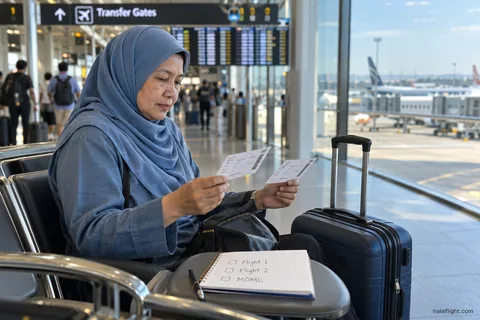
Many airlines, especially on short and low-cost routes, separate the choices you can book ahead from a more limited selection sold or served onboard. Air Arabia, for instance, distinguishes advance choices from its onboard selection, and the menu varies by region and operation. That means you should look at the menu for your own route rather than a general list, and confirm that a suitable item exists before depending on it.
Malaysia Airlines states that if no meal is pre-ordered, passengers are served the standard meal onboard, and it recommends pre-booking because a preferred option may not be available in the cabin. It also states that a pre-ordered meal cannot be swapped for a different full meal onboard. The general lesson applies widely, even though each airline's windows and rules differ.
- Check the pre-order or special-meal page on the airline site.
- Order by the stated deadline.
- Read the ingredient or description line for each cold item.
- Keep a screenshot of the confirmation.
Storage and timing on the aircraft
A cold meal is perishable. Do not assume the cabin offers refrigeration for a sandwich you have kept, and avoid carrying a perishable item in a warm bag for hours. Follow the storage instructions printed on the pack, and eat it during or soon after the service it was given with.
If you cannot eat at service time, for example because of fasting, sleep or a delayed flight, ask the crew what they can do rather than expecting the item to stay fresh. UK government food-safety guidance on chilling, freezing and defrosting food is a useful general reference for how long chilled food should stay out of the fridge.
If you are fasting
Cold, packaged meals suit travellers who need to eat at a specific time, such as after sunset. Ask the crew whether the meal can be held and served later, and keep sealed items in the coolest place available, avoiding sunlight at the window.
Taking leftovers off the aircraft
A sandwich that is acceptable onboard may contain meat or dairy that is restricted at your destination. Many countries limit or ban meat and dairy brought in by passengers, and the rules differ by origin and by country. Check the arrival rules before you keep leftovers in your bag, and declare or dispose of food as the receiving country requires. A single sandwich is not worth a fine or a delayed clearance.
The same applies in reverse when you pack your own halal sandwich: check the airline's carry-on policy, the airport security rules and the entry rules of the destination before you leave home.
Checklist before you choose a cold meal
- Find the airline's menu for your route and operation, not a general one.
- Pre-order by the stated deadline and keep the confirmation.
- Read the whole description: bread, filling, cheese and spread.
- Look for a vegetarian or halal statement on cheese and spreads.
- Do not rely on removing a slice after assembly.
- Follow the storage label and eat at service time where possible.
- Check destination rules before carrying leftovers through arrival.
- Ask a qualified scholar about any personal ruling, for example on rennet.
Frequently asked questions
Is a vegetarian sandwich on a plane automatically halal?
No. A vegetarian label addresses meat, not every halal issue. The cheese may have been made with enzymes of uncertain origin, and spreads or dressings may contain flavourings with alcohol. Check each component and the airline's description, and ask the airline if the sandwich is not labelled.
Can I take the cheese out of a sandwich and eat the rest?
Removing cheese after assembly does not show how the sandwich was prepared, because the bread and spread have been in contact with it. If cheese is the concern, choose a sandwich made without it, or another cold item whose ingredients you can read.
Should I pre-order a cold meal or buy one onboard?
Pre-ordering is safer where the airline offers it. Airlines such as Malaysia Airlines say preferred options may not be available onboard, and Air Arabia separates advance choices from its limited onboard selection. Check your own route's menu and order before the deadline.
How long can I keep an airline sandwich in my bag?
Airlines do not guarantee refrigeration for a sandwich you keep. Follow the storage instructions on the pack and eat it soon after service. If you cannot eat it in time, ask the crew for an alternative instead of saving a perishable item for hours.
Can I bring a leftover sandwich through arrivals?
It depends on the country. Many restrict meat and dairy brought by passengers. Check the destination's border or agriculture authority before you land, and declare or dispose of the food as required instead of hoping it will not be noticed.