Why a lid is not refrigeration
Many travellers pack a home-cooked meal because it is the one way to be sure of the ingredients. That is a sound reason, but it creates a second responsibility: keeping the food safe for the hours between the kitchen and the seat. A sealed container prevents spills. It does nothing to hold temperature.
Treat any cooked meat, rice dish, dairy-based sauce or cut salad as temperature-sensitive for the whole trip. That includes the time you spend in the taxi, the check-in queue, the security line and at the gate, not only the hours in the air. A journey of three hours from the front door to the aircraft seat can use up most of a safe window before take-off.
The guidance below is general food-safety practice from public health sources. It cannot give a guaranteed safe storage time for a particular dish, because that depends on the food, its starting temperature, the container and the weather. When in doubt, choose a simpler meal.
Prepare and chill before you pack
Safe travel food starts at home. GOV.UK guidance on chilling food advises that a fridge should be set between 0 and 5 degrees Celsius, and that chilled food should be out of the fridge for the shortest time possible during preparation, with a maximum of four hours. The same guidance recommends cooling cooked food and refrigerating it promptly, ideally within a couple of hours, and notes that dividing food into smaller portions helps it cool faster.
Practical steps the night before
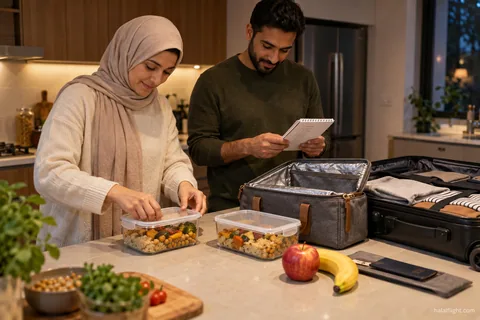
- Cook the dish fully, then cool it quickly in shallow containers.
- Refrigerate overnight so the food starts the journey properly cold.
- Chill the insulated bag and cooling packs as well; a warm bag warms the food.
- Pack the food straight from the fridge, just before you leave.
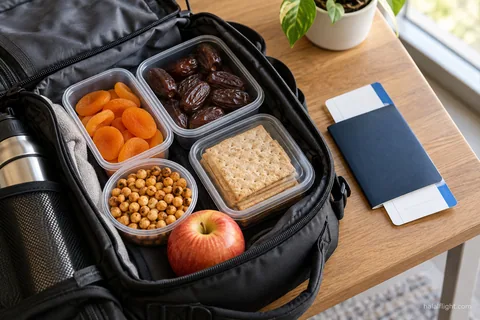
Cooked rice, meat and dairy dishes deserve the most care. Dry or shelf-stable foods, such as plain bread, nuts or sealed dried fruit, are far more forgiving and make a good second layer in your bag.
Packing with cold sources
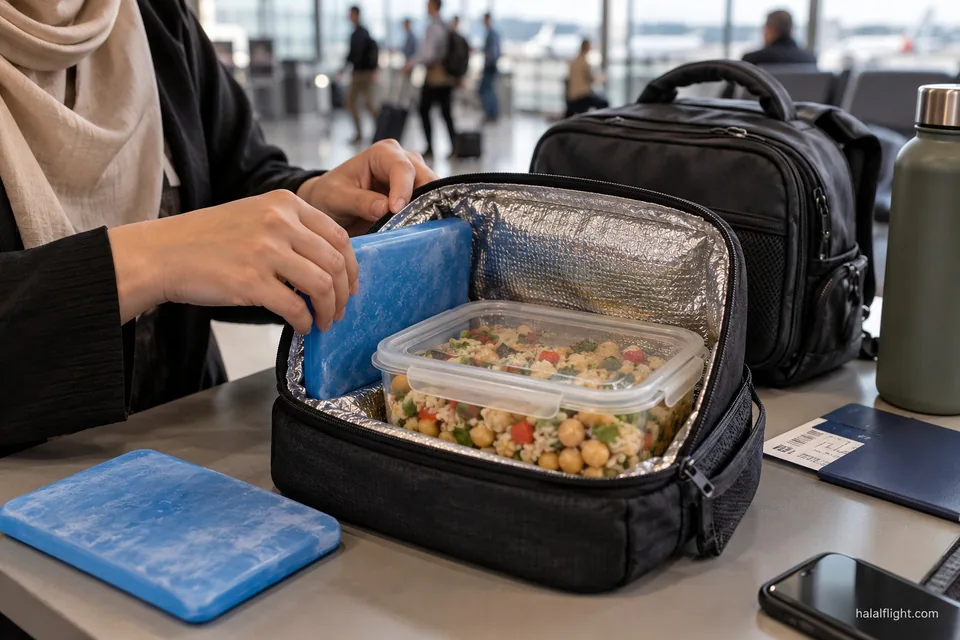
An insulated bag slows the rate at which food warms. It does not cool anything. For that you need cold sources, such as frozen gel packs or a frozen water bottle, placed around and above the food. Public food-safety guidance for packed lunches commonly recommends more than one cold source, and packing the container in the middle of the bag helps.
A layout that works
- Frozen pack at the bottom of the bag.
- Food containers in a single layer, close together so there are few air gaps.
- A second frozen pack on top, then close the bag fully.
- Keep drinks and snacks you want to reach often in a separate outer pocket, so the main compartment stays shut.
Use rigid, leak-proof containers and keep ready-to-eat food apart from anything raw. Pack cutlery and wipes so you can eat without relying on a washroom sink. A cold bag that is repeatedly opened loses its chill quickly, which is why a separate snack pocket matters.
Check screening rules for ice packs and frozen items
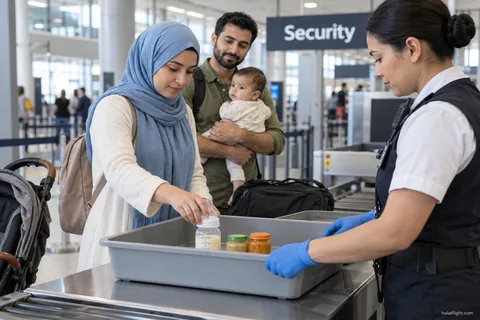
Cooling packs raise a screening question that rules for ordinary food do not. Some security authorities treat frozen gel as a liquid or gel, and some require that frozen items are solid when presented. Rules differ between countries, between airports and between flights that involve a transfer. The Canadian security authority, for instance, states that food which is normally a liquid or gel but is frozen solid is not allowed in carry-on baggage, and lists gel and ice packs for medical or infant-food purposes among its exemptions. That is one authority's rule, not a global one.
Do not assume what applies at your departure airport applies at the connecting one. Look up the official security pages for each airport on your itinerary, and if a rule is unclear, ask the airline or the airport before travelling. If your cooling method may not pass screening, change the food plan rather than hoping for the best. A meal that does not need cooling is easier than a cold chain that depends on a security officer's decision.
For how liquids, sauces and soups are treated at checkpoints, see the page on liquids, sauces and soups at airport security.
Handling the food in transit
Wash your hands or use sanitising wipes before touching food. Open the bag only when you are ready to eat, take out one portion at a time, and close it again straight away. Do not leave the meal on a tray table or in a warm cabin while you wait for a drink service.
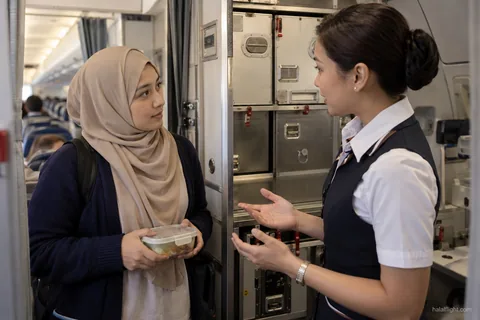
Do not count on the aircraft for refrigeration or heating. Whether crew will chill or warm a passenger's own food is the airline's decision and varies, so treat any such help as a bonus. The page on whether cabin crew can heat or refrigerate your food covers that question separately.
Plan to eat perishable items early in the journey and keep the sturdier items for later. It is wiser to eat the cooked dish first, while the cold sources are still doing their job, and to leave dry snacks for the end of a long trip or a delay. For more on what to bring and how much, the page on packing halal food for long-haul flights is the better guide; this page concentrates on keeping the food safe.
Foods that travel well and foods that do not
Some foods are far less demanding than others. Choosing the right menu is the easiest food-safety measure.
Lower-risk choices
- Bread, flatbreads and plain rolls with a dry filling.
- Nuts, seeds and dried fruit in sealed packs.
- Hard biscuits and dry baked goods.
- Firm fruit that can be washed and eaten whole.
Higher-risk choices
- Cooked rice and pasta dishes.
- Meat, poultry and fish dishes with sauce.
- Dairy-based desserts, creamy dips and yoghurt.
- Cut salads and anything with mayonnaise.
The World Health Organization notes in its food-safety fact sheet that Listeria can grow at refrigeration temperatures, so keeping something cold reduces some risks but does not remove them. That is another reason to avoid depending on a refrigerated dish for a long journey, particularly for pregnant travellers, older passengers and young children, who should ask a doctor or pharmacist about food-safety precautions that suit them.
Customs and arrival: do not forget the destination
A meal that passes security can still be a problem at arrival. Many countries restrict meat, dairy and other animal products brought in by travellers, and the rules apply to home-cooked food as well as shop-bought food. Eat perishable items before landing where possible, and read the destination's official guidance before you pack. The page on meat and dairy customs restrictions explains how origin and declaration rules work.
If you have leftovers when the plane lands, do not carry them through border control unless you have checked the rules and are ready to declare them. Discarding food in a bin provided for that purpose before the checkpoint is often simpler than a declaration, and your own rules on wasting food remain a matter for you and a scholar.
Keep the container labels, if any, so that an officer can see what the product is. A short written list of the contents in the language of the destination can also help in a conversation at the desk.
Checklist, and what to do if storage fails
Run through this list before leaving.
- Food cooked, cooled in small portions and refrigerated overnight.
- Insulated bag and frozen packs chilled before packing.
- Food packed last, straight from the fridge, with cold sources above and below.
- Screening rules checked for every airport on the route, including transfers.
- Cutlery, wipes and a spare sealed bag for rubbish.
- A shelf-stable backup meal in a separate pocket.
- Perishables planned for the first part of the journey.
If the cold chain breaks
Smell and appearance do not reliably show whether mishandled food is safe, and reheating does not repair food that has been stored badly. If the packs have thawed, the bag was left in the sun, the delay was long or you simply do not know the food's history, do not eat it. Use the backup, buy something sealed in the terminal, or request a meal from the airline. A wasted container is a small cost compared with a day of illness while travelling.
Frequently asked questions
How long can homemade food stay safe in an insulated bag on a flight?
No honest single figure exists, because it depends on the dish, its starting temperature, the cold packs and the weather. GOV.UK advises keeping chilled food out of the fridge for the shortest time possible. Start fully chilled, limit opening the bag, eat perishables first and use a shelf-stable backup for later.
Can I take ice packs through airport security to keep my halal meal cold?
It depends on the airport and country. Some authorities treat frozen gel as a liquid or gel, and some do not allow normally liquid food frozen solid in carry-on bags. Check the official security page for every airport on your route, including transfers, and change the food plan if the cooling method is doubtful.
Is it safe to reheat homemade food that was not kept cold?
Do not rely on reheating to fix poor storage. Mishandled food can look and smell normal while still being unsafe. If you are unsure how long the dish was warm, discard it and eat a backup. Reheating is for food that has been kept cold properly, not a rescue for food that has not.
What homemade halal foods are best for a long journey?
Dry or low-moisture foods keep best: plain bread or flatbread with a dry filling, nuts, seeds, dried fruit, sealed dried snacks and firm whole fruit. Avoid cooked rice, creamy sauces, dairy desserts and cut salads on long trips unless you can keep them reliably cold the whole way.
Should I eat my homemade meal before landing?
Where practical, yes. Many countries restrict meat, dairy and other animal products brought in by travellers, even if home-cooked. Eating perishables on board avoids a declaration at the border. Check the destination's official customs guidance before you pack, and declare anything you are unsure about.