What airlines actually say about personal food
The answer from the airlines that publish a policy is consistent: bring food that does not depend on the crew. The wording differs, so it helps to see what is written down rather than guess.
- Cathay Pacific states that crew will not be able to re-heat or chill personal food items, and gives hygiene as the reason.
- Qatar Airways says it will not heat a passenger's own meal because of limited aircraft facilities, and that such meals cannot be refrigerated.
- Singapore Airlines says passengers may bring their own food and recommends food that does not require chilling or heating because of operational restrictions.
- TUI, a leisure airline, says it cannot provide heating facilities on board and suggests low-risk food that can be eaten cold.
One policy should not be stretched to cover every airline. Where the page is silent, as TUI's is on refrigeration, that is a gap in the answer, not permission. Ask the carrier.
Why the galley is not a personal kitchen
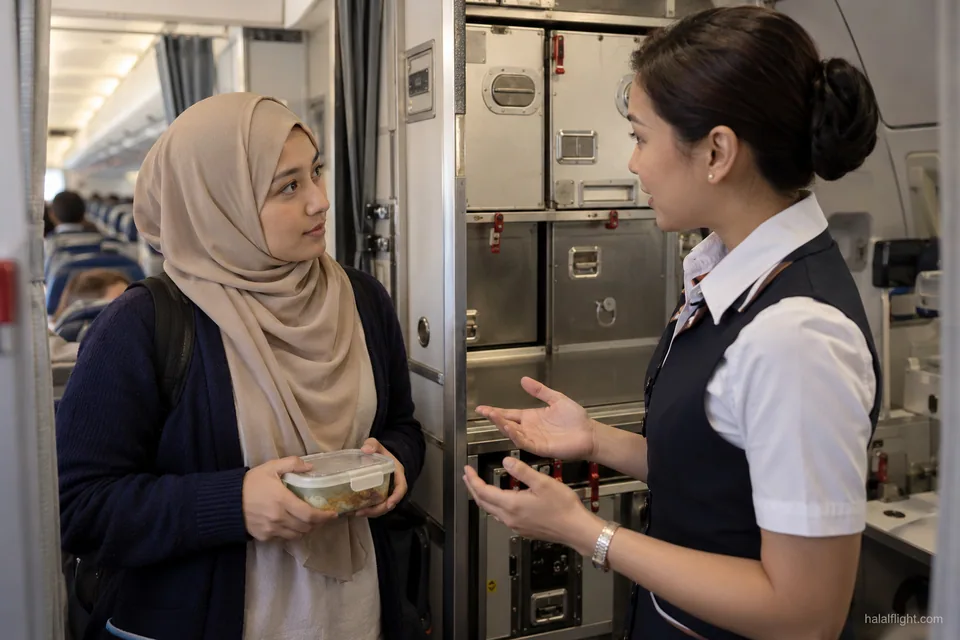
A galley is a small, tightly planned workspace. Ovens, chillers and trolleys are loaded for the meals the airline has catered, and the crew have safety duties, service timings and hygiene routines that leave little room for individual requests. Storage space is also limited, and a bag of someone else's food in a chiller can mix with catered items.
Hygiene is the point airlines emphasise. Crew cannot see how a home-cooked dish was prepared or how long it sat before the flight. Heating it on board does not repair an unsafe history, and keeping it in a shared chiller carries risks for other people's meals. Qatar Airways adds a further reason in its allergy guidance: refrigerating outside food could contaminate meals prepared as allergen-free.
That is why a ticket that includes a catered meal gives no right to the use of the oven for another meal. Treat any help the crew offer as a courtesy, not as part of the service.
Infant milk and baby food are treated differently
Babies are the usual exception, but the exception is narrow. TUI, for instance, says crew can warm infant milk bottles in hot water, while saying it cannot provide heating facilities for other food. Policies for baby food, formula and sterilised water vary, and an airline that helps with a bottle has not promised to reheat an adult's lunch.
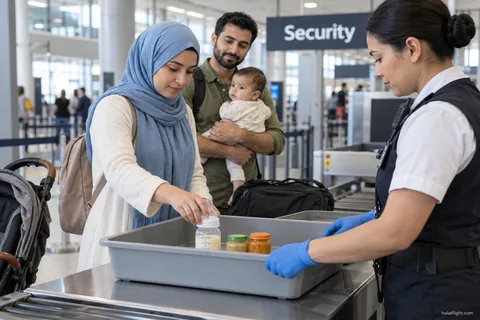
If you are travelling with an infant, ask the airline before the day what assistance exists, how much service time to allow and whether the crew can supply hot water. Flavoured or cooked purees may be treated differently from milk. Rules for carrying liquids and baby food through airport security are a separate matter and are covered on their own page, as is the packing of homemade halal food.
Asking before you rely on any help
If a particular piece of handling really matters to you, such as a medical diet, a long ultra-haul sector or a child with strict feeding times, contact the airline well before the day of travel. A reply written down on a booking record is much stronger evidence than a remark at the boarding gate.
What to say
- The flight number, the date and the cabin.
- What the food is, how it is packed and how long it will be out of refrigeration.
- Exactly what you are asking the crew to do: warm it, keep it cool or hold it.
- That you have a backup meal if the answer is no.
A general customer-service answer may not reflect the aircraft you will actually fly. The operating airline's rules apply, not those of the airline that sold the ticket, so ask the operator on codeshare itineraries. Treat any "we will try" as a possibility, not a guarantee.
Customs, quarantine and smells
Even food that the airline allows may not be allowed to land with you. Cathay Pacific notes that strict customs rules at some destinations may require passengers to leave food and drink items on board. Qatar Airways says some countries require food brought on board to be consumed on the flight or left behind. Singapore Airlines advises checking quarantine rules for each leg of a multi-segment journey, since certain countries do not permit some foods in transit.
Meat, dairy, fruit, honey and plant products are the usual items that border agencies restrict, and the rules can differ even between neighbouring countries. Read the official guidance of every country on the route, including the transit country.
Qatar Airways also asks that meals be free from strong odours to avoid disturbing other passengers. For a long flight in a tight cabin, mild food is considerate. Strong fish, fermented sauces or raw onion are better saved for arrival.
Packing food that works without help
The simplest answer to the galley problem is to bring a meal that needs nothing from the crew.
Choose food that is safe at cabin temperature
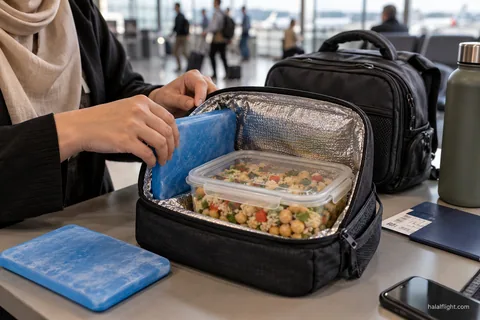
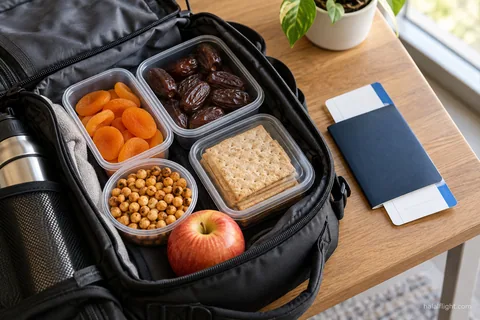
Shelf-stable and low-moisture items are the most forgiving: bread, wraps, nuts, dried fruit, plain biscuits, hard cheese kept sealed, and sealed vegetarian meals. Be careful with cooked rice, meat, egg and creamy dishes, which are higher risk when left warm. If you do bring something perishable, pack it properly chilled at the start, keep it insulated and eat it early in the journey.
Packing tips
- Use leak-proof, lidded containers and carry a small bag for rubbish.
- Take cutlery, a napkin and a hand wipe, because plastic items on board can be limited.
- Keep liquids and gels within the security rules of every airport you pass through.
- Label halal-certified packaged items so the ingredients are easy to check.
Never hand perishables to a crew member unless they have clearly accepted them, and never leave food in a seat pocket for hours.
What a halal traveller can still ask the crew for
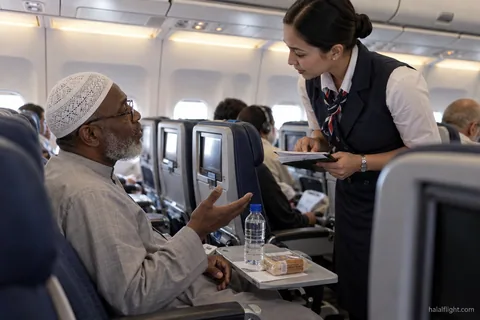
Not being able to use the galley does not leave you without options. The airline's own meal is normally prepared for that flight, and the crew can often help with items they carry. If you booked a Muslim or halal meal, tell the cabin crew early so that it can be located, and ask about hot water for tea or a drink. Some carriers also keep spare bread, fruit or snacks, though availability varies.
Whether the airline serves only halal food or provides a separate Muslim meal, the booking page for your operator explains which. If a booked meal fails to arrive, there is a separate guide on what to do onboard. Questions about whether a particular dish meets your own standard are for a qualified scholar; the crew can only tell you what the catering label says.
Checklist: before and during the flight
- Read the operating airline's page on personal food and check it for any mention of heating or chilling.
- If anything is unclear, email or call the airline and keep the reply.
- Check customs and quarantine rules at the destination and at any transit stop.
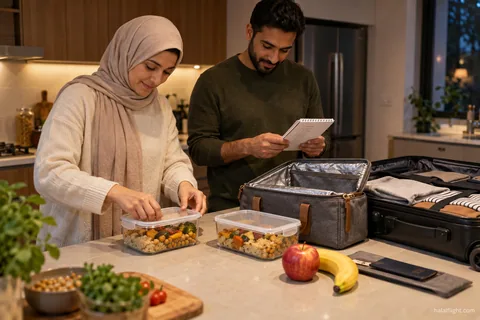
- Pack food that can be eaten as it is, in sealed leak-proof containers.
- Keep chilled items insulated and eat perishable food early.
- For infants, ask separately what help exists for bottles and food.
- Carry a snack that needs no preparation in case the booked meal is missing.
- If a problem arises onboard, speak calmly to the crew early and ask for the closest halal-suitable alternative.
If the crew decline a request, accept the answer without argument; they are applying hygiene and safety rules, and the decision is usually final for that flight.
Frequently asked questions
Can flight attendants microwave my homemade food?
Airlines that publish a policy say no. Cathay Pacific says crew cannot re-heat personal food, and Qatar Airways says it will not heat such meals because of limited aircraft facilities. Some aircraft have no microwave at all. Plan on eating your food at cabin temperature, and ask the operating airline if you need anything different.
Can the crew put my food in the fridge or chiller?
Do not count on it. Cathay Pacific says crew cannot chill personal food, and Qatar Airways says passengers' meals cannot be refrigerated. Galley chillers are loaded with the airline's own catering. Bring an insulated bag with ice packs if you carry perishables, and eat them early in the flight.
Will the airline warm baby milk or baby food?
Some do, within limits. TUI says crew can warm infant milk bottles in hot water, although it provides no general heating for food. Other airlines have their own rules, so ask before the flight what help is available, how long it takes and whether it applies to formula, puree or only milk.
Is it safe to carry cooked halal meals for a long flight?
It depends on the dish and the journey. Cooked rice, meat, egg and creamy sauces are higher risk once warm, so pack them chilled in an insulated bag and eat them early. Shelf-stable food is safer on long sectors. Remember that customs may stop meat or dairy at the border.
Do I have to throw away my food when I land?
Possibly. Cathay Pacific says customs rules at some destinations may require food to be left on board, and Qatar Airways says some countries require food to be eaten on the flight or left on the aircraft. Check the destination's official rules and eat or discard food before declaring it where necessary.