Halal status and pregnancy safety are different questions
A halal meal tells you how the meat was sourced and that certain ingredients are excluded. It says nothing about whether a chicken portion was cooked through, whether a cheese was pasteurised, or whether a sandwich was kept cold. Pregnancy guidance deals with exactly those points, and they apply whatever the meal is called.
The practical consequence is simple: do the two checks one after the other. First confirm the meal meets your halal requirement. Then look at what is actually on the tray and ask whether each item is one you would eat at home during pregnancy.
This page uses the NHS guidance as its reference because it is clear and publicly available, but pregnancy advice differs between countries. Follow the guidance of your own midwife or doctor wherever it differs, and treat anything here as general information rather than personal medical advice.
Meat and eggs on the tray
Cooking
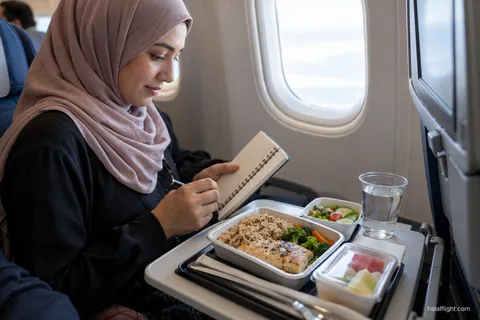
The NHS says poultry, lamb and other meat are fine when cooked all the way through, with no pink and no blood, and advises avoiding raw or undercooked meat. Airline hot meals are reheated from chilled or frozen, so look at the middle of a portion rather than the outside. If a piece is pink, cold in the centre or looks undercooked, leave it and ask for another item.
Liver and liver products
The NHS advises avoiding liver and liver products because of their high vitamin A content. Halal menus sometimes include liver in pates or spreads, so read the description of any starter or spread.
Eggs
The NHS says British Lion hen eggs, or eggs marked Laid in Britain, can be eaten raw or runny, while other eggs should be cooked until firm. You cannot normally tell the origin of an egg in an airline omelette or a dressing, so cooked-through egg dishes are the safer choice. Raw egg in mayonnaise or desserts is worth asking about.
Cheese, dairy and listeria
Listeria is the main reason the NHS advises caution with certain ready-to-eat foods. It names unpasteurised or soft ripened dairy, cold cured meats, smoked fish and some prepared foods as possible sources, and says listeriosis can cause miscarriage or stillbirth.
On the NHS list, pasteurised soft cheeses such as feta and mozzarella are fine, as are hard cheeses such as cheddar and parmesan, and any cheese cooked until steaming hot. Soft mould-ripened cheeses such as brie and camembert, and soft blue cheeses, should be thoroughly cooked, and unpasteurised cheese avoided unless cooked.
Airline menus rarely say whether a cheese is pasteurised. The usual way to deal with that is to ask the crew to read the packaging, and to skip a cheese portion if nobody can tell you. A cheese roll served cold from a packet is a different proposition from cheese baked into a hot dish.
Fish, tuna and cured items
The NHS says cooked fish and cooked shellfish are fine, and advises avoiding raw fish and shellfish, including sushi made with raw fish. It also advises avoiding swordfish, shark and marlin, and limiting tuna and oily fish such as salmon and mackerel to set weekly amounts.
Smoked salmon and cold prawns should be cooked until steaming hot according to the NHS list. For a flight, that means that a cold seafood salad or a smoked fish starter is best left alone unless you can confirm how it was prepared.
- Hot, thoroughly cooked fish dishes are the most straightforward.
- Cold cured meats such as salami, where a menu offers them, should be cooked until steaming hot to match NHS advice.
- If a dish is a mixed cold plate, ask what each item is before eating it.
Chilled food, sandwiches and your own snacks
The NHS notes that pre-packaged sandwiches and salads containing cheese, meat, fish or eggs should be kept chilled and eaten before the use-by date. The risk is described as low, but these foods can carry listeria.
That has two implications for travel. First, a tray that sat out before service is not the same as one kept cold, so be cautious with a cold item if it feels warm. Second, food you bring yourself is only as safe as the way you store it. Choose snacks that do not need refrigeration, such as fruit, plain nuts, or sealed biscuits whose ingredients you have read, rather than a sandwich that has been in a bag for hours.
Halal checks for your own snacks
- Read the label for gelatine, alcohol-based flavourings and animal-derived additives.
- Prefer sealed, dated packs over open or homemade items for a long journey.
- Keep a small reserve for delays so you are not forced into an unsuitable meal.
Drinks, caffeine and water
The NHS advises limiting caffeine to 200 mg a day and gives approximate amounts: instant coffee about 100 mg a cup, tea about 75 mg, cola about 40 mg a can and an energy drink about 80 mg per 250 ml can. Filter coffee can contain more. Tea and coffee rounds on a long flight add up quickly, so count them.
The NHS travel page also advises drinking plenty of water during a flight. Take an empty bottle through security and fill it after the checkpoint, or ask the crew to refill it. Ask whether the water you are given is bottled; if you are unsure of a source, choose sealed bottled water.
Alcohol-free drinks are a separate subject for a halal traveller, and are covered in the page on alcohol-free beverages.
Airline rules, timing and your own care
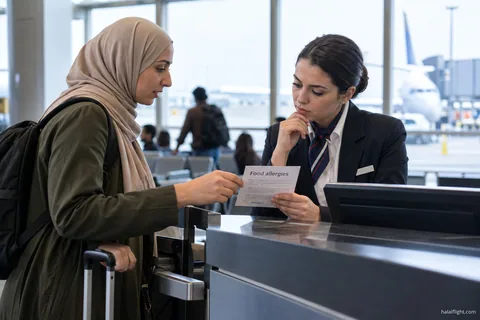
The NHS says flying is not harmful to you or your baby, but advises talking to your midwife or doctor first if you have health issues or pregnancy complications. It also notes that some airlines do not allow travel late in pregnancy, and that after 28 weeks an airline may ask for a letter confirming your due date and that you are not at risk of complications. That letter may cost money and take time to arrange.
The NHS also mentions a small risk of blood clots on flights over four hours and suggests moving about regularly and considering compression stockings. Many women find mid-pregnancy the most comfortable time to fly, though that is a personal and medical judgement.
For food, raise any special needs with your midwife, such as gestational diabetes, nausea or iron supplements, before choosing a meal. If a diet is prescribed, the airline's published special-meal categories may not allow a custom combination, so ask what is possible and bring your own reserve.
Checklist and what to do if something is wrong
Before you fly
- Read the NHS foods-to-avoid page and note the items you most often meet on trays.
- Ask your midwife or doctor about the flight and any dietary needs.
- Check the airline's pregnancy policy, and whether you need a letter.
- Request your halal meal by the airline's deadline and confirm what it contains.
- Pack sealed snacks, an empty water bottle, and any medicines.
On board
- Check the middle of hot items and skip anything undercooked.
- Ask the crew about cheese, eggs and cold items rather than assuming.
- Move about regularly and keep drinking water.
If you eat something you should have avoided
The NHS says a small amount is unlikely to affect your baby if you do not become ill. If you feel unwell, or have vomiting or diarrhoea lasting more than 48 hours, or symptoms of listeriosis or toxoplasmosis, it advises contacting NHS 111 or your own local health service.
Frequently asked questions
Is a halal airline meal safe to eat when pregnant?
Halal status does not settle that question. The meal still needs to be cooked through, kept at a safe temperature and free of items your midwife has told you to avoid, such as liver or unpasteurised cheese. Check the actual items on the tray and skip anything you cannot confirm.
Can I eat the cheese and sandwiches served on a flight while pregnant?
It depends on the cheese and how the sandwich was stored. NHS advice allows pasteurised soft cheeses and hard cheeses, but says to avoid unpasteurised ones unless cooked. Pre-packed sandwiches should be chilled and within date. If the crew cannot tell you, choose a different item.
Should I tell the airline I am pregnant when ordering a halal meal?
The meal request and the pregnancy policy are separate. You only need the airline's pregnancy rules to decide whether you may fly and whether a letter is needed. Mention a medical diet if you have one, and ask whether a halal version is possible.
How much caffeine can I have on a long flight while pregnant?
The NHS advises limiting caffeine to 200 mg a day from all sources, including tea, coffee, cola and energy drinks. A cup of instant coffee is about 100 mg and tea about 75 mg, so a few rounds of hot drinks can reach the limit. Switch to water between cups.
What if I am given food I think is unsafe in pregnancy?
Do not eat it. Tell the crew you are pregnant and ask for another item, or eat from your own reserve of sealed snacks. If you have already eaten something and feel unwell, follow your midwife's guidance or contact your local health service promptly.