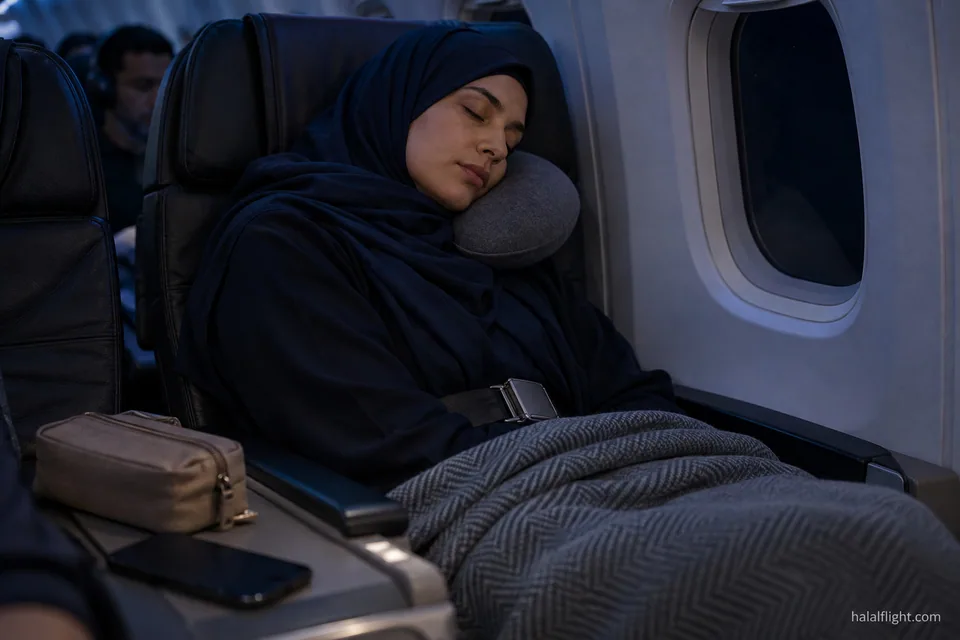
Work out how much sleep the timetable really allows
An overnight ticket suggests a night of sleep, but the timetable says otherwise. Boarding can begin an hour or more before departure, the aircraft needs time to climb and level off, and a meal service often follows. At the other end, the cabin lights come up before landing, and the descent, taxiing and disembarking add further disturbance. On a flight of seven hours, the stretch of uninterrupted sleep may be three or four.
In Ramadan the same night also has to hold the pre-dawn meal, and possibly the dawn prayer. Write the flight down as a sequence of blocks rather than a single stretch of rest.
- Departure time and time at which the cabin settles.
- Expected meal service and whether it falls before or after the break of the fast.
- Time of the pre-dawn meal and dawn at your position or departure city, as your guidance requires.
- Expected landing time and the likely time you leave the airport.
The gaps between those blocks are your real sleeping windows. Plan to use them rather than hoping for one long sleep.
Before the flight: shift your routine gently
The US Centers for Disease Control and Prevention suggests that travellers can begin adjusting a few days before departure, going to bed one to two hours earlier when flying east and later when flying west. That is not always practical during Ramadan, when nights are already broken by meals and prayers, but small shifts help. A short nap in the afternoon, kept to 15 to 20 minutes according to the same advice, can reduce the sleep debt without spoiling the night.
Avoid heavy tiredness on departure day. If you can, finish packing the evening before and keep the day clear. Arriving at the airport already exhausted makes a short night on board harder to recover from.
What to do with caffeine
The NHS advises that tea, coffee and some soft drinks contain caffeine that can keep you awake. In Ramadan you will probably take caffeine at the pre-dawn or evening meal, so avoid drinking a strong cup shortly before you try to sleep.
Preparing your seat for rest
The NHS recommends a quiet, dark and cool sleeping space, earplugs or soft background sound to mask noise, and an eye mask if light gets in. You cannot control the cabin, but you can bring the means to approximate those conditions.
- An eye mask and earplugs or noise-reducing earphones.
- A scarf, light jumper or blanket, since cabins can feel cool when you are still.
- A small neck support if you use one, subject to the cabin's rules.
- Comfortable clothing and socks, with shoes that can be loosened.
- A phone set to flight mode with alarms that you have tested.
The NHS also advises stopping screen use about an hour before bed, because the blue light from phones and tablets can make it harder to fall asleep. On a flight that means putting the entertainment screen away before you try to rest, rather than watching until you drop off.
Follow crew instructions at all times, particularly for the seat position during take-off and landing, and for seatbelts. Keep the belt visible over a blanket so that crew do not need to wake you.
Waking for suhoor on board
Cabin crew serve meals on the airline's schedule, not on a religious one, and no airline page promises a wake-up for a pre-dawn meal. If you want to eat at a particular time, set your own reminder, tell the crew politely when you board if you expect to be asleep, and check what the airline offers. Whether a meal can be served early, kept for later or replaced by a snack is a matter for the airline, so ask before the flight where you can. Arranging suhoor boxes is covered on its own page.
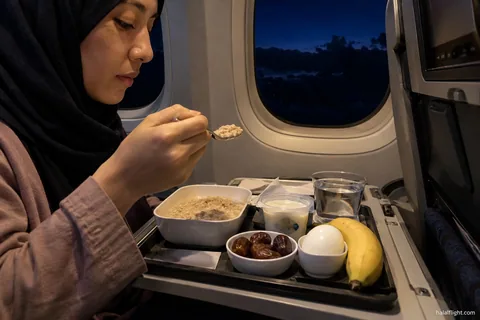
Do not plan on the assumption that a meal will certainly be available at the moment you wake. Carry something you can eat quickly, such as dates, bread or a bar, subject to security and food import rules. Eating something light and drinking water in good time helps more than rushing a heavy meal while half awake.
If sleep and suhoor collide
Sometimes the only choice is between a longer sleep and a meal. Think about it before boarding rather than deciding when tired. A very short sleep window should not be the basis for a religious decision made at the last minute.
It is also worth being clear about what a missed meal means. Egypt's Dar al-Ifta has ruled that missing suhoor alone is not a valid reason for abandoning an obligatory fast, although real hardship is treated differently. Whether a travel concession applies to you is a separate question that depends on your journey and on the guidance you follow; the page on travel and fasting explains the usual conditions. Do not combine the two and conclude that tiredness equals permission.
If you expect real difficulty, discuss it with a qualified scholar before you travel, and with a doctor if you take medication or have a health condition.
Time zones, jet lag and prayer times
Crossing time zones is what turns a tiring night into jet lag. The CDC advises that if you cross more than three time zones, you should adopt the destination's sleep and wake schedule as soon as you arrive, spend daytime hours in bright light to help reset the body clock, and drink plenty of fluids during the journey. Fluids matter more when you are fasting, so plan drinking around the evening and night hours when it is permitted.
Keep the two ideas separate. Jet lag advice is about sleep. It does not set prayer times, fasting times or the question of whether a travel concession applies. Prayer times in the air and across zones are covered on a separate page, so here it is enough to say that you should note when each prayer falls relative to your rest blocks and decide in advance how you will pray.
The day after you land
A night flight in Ramadan can leave you short of sleep and hungry at the same time. Keep the first day light, especially if you are fasting. Avoid booking an early meeting or a long transfer if you can.
- Keep naps short, around 15 to 20 minutes, so that night sleep is not spoiled.
- Get outdoor light in the daytime if it is safe to do so.
- Do not drive if you are very sleepy; ask someone else or take a taxi or train.
- Eat and drink sensibly at sunset and before dawn, and avoid caffeine in the evening.
- If you have a chain of connecting flights, build in rest between them.
If you are still sleeping badly after several days, or you are thinking about sleeping aids, speak to a doctor or pharmacist. The CDC page itself tells travellers who cannot sleep to ask a doctor about medication.
Checklist and what to do if the night goes wrong
Before you fly
- Rest blocks and meal times written down for the whole flight.
- Eye mask, earplugs, layers and a tested alarm in your hand luggage.
- Dates, bread or a snack for the pre-dawn meal, and water.
- First-day plan with nothing demanding.
If it goes wrong
If the cabin is noisy and you cannot sleep, rest with your eyes closed anyway; quiet rest is better than none. If you miss a meal service, ask the crew politely whether something can be provided, and eat what you carried. If you feel unwell, tell the crew rather than waiting. On arrival, keep to simple tasks, sleep in short blocks, and take medical advice for any symptoms that worry you.
Frequently asked questions
How much sleep can I realistically get on an overnight flight?
Usually less than the flight length suggests. Boarding, take-off, meal service and the descent break the night, so a seven-hour flight may offer three or four hours of rest. Write down the timetable, find the quiet blocks and prepare an eye mask and earplugs to make the most of them.
Will the crew wake me for suhoor?
Do not rely on it. Crew follow the airline's service schedule, and airline pages do not promise a wake-up for a pre-dawn meal. Set your own alarm, tell the crew when you board if you want to eat at a certain time, and carry something to eat.
Can I skip the fast if I only slept for two hours?
Poor sleep alone is not described as a reason to abandon a fast. Dar al-Ifta states that even missing suhoor does not excuse an obligatory fast, apart from real hardship. If you are worried, ask a qualified scholar before you travel and a doctor if you have a health condition.
Should I change my sleep pattern before the flight?
Small changes can help. Travel advice from the CDC suggests going to bed one to two hours earlier before flying east and later before flying west, and keeping daytime naps to 15 to 20 minutes. In Ramadan, adjust only as far as meals and prayers allow.
What should I do the day after landing?
Keep the day light, get daylight outdoors if safe, take short naps and avoid driving when very sleepy. Drink water when you are able to, avoid caffeine in the evening, and see a doctor if poor sleep continues for several days.