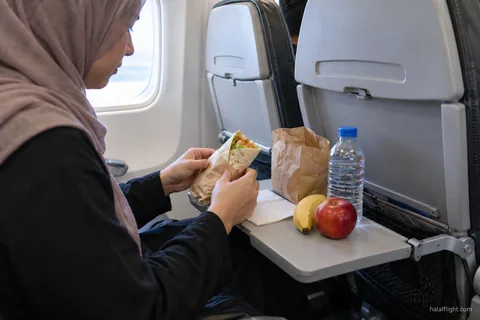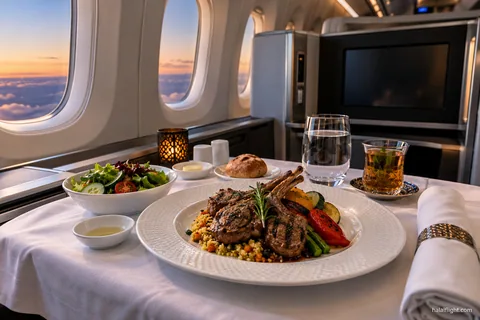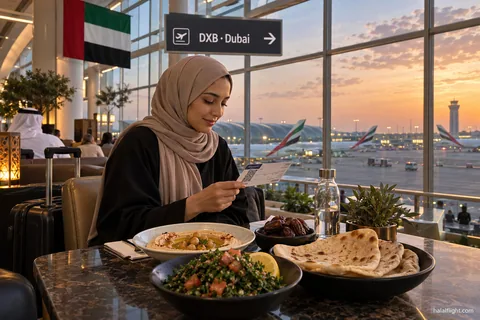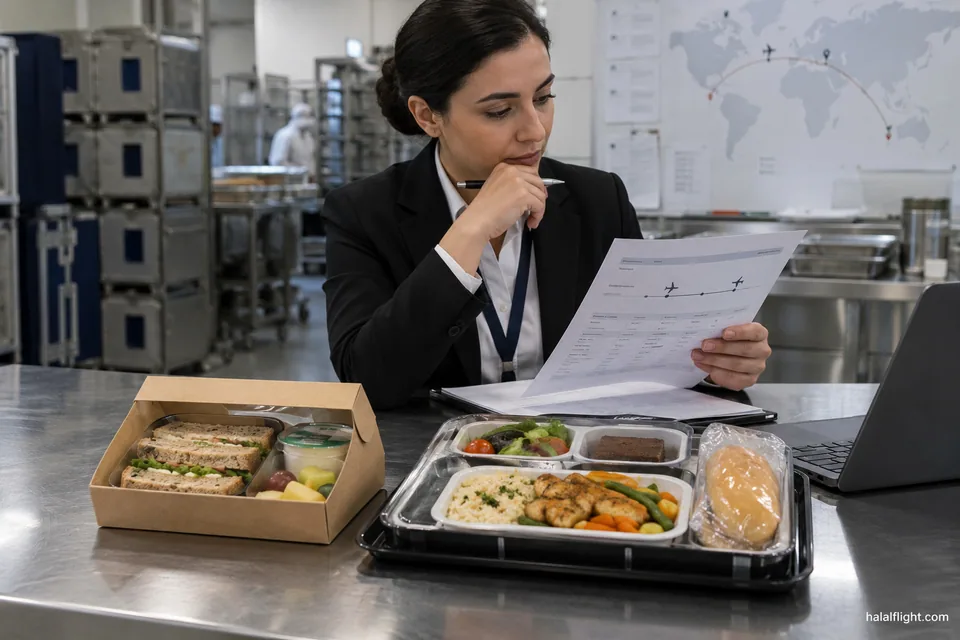
The core difference between short and long flights
Two questions separate a short flight from a long one for a traveller who needs halal food. On a short flight the question is whether the airline serves any food, and if so whether it is covered by a special-meal request. On a long flight the question is how many services there are and whether the request applies to each of them.
Many travellers carry one expectation from a long-haul trip into a short one, and it often fails. The same airline can offer a pre-ordered Muslim meal on an intercontinental route and nothing of the kind on a one-hour regional hop. Treat each flight as its own service and check the rules for that route and cabin before planning what to eat.
- Short flight: may have a sale-on-board service, a snack, or a light meal.
- Long flight: may have a main meal, a second service and extra refreshments.
- Neither guarantees halal food unless the airline says so for that flight.
Why special meals can disappear on short routes
Airlines load pre-ordered meals from catering kitchens, and a short flight with a quick turnaround leaves little room for extra items. Some airlines respond by limiting which special requests they accept on shorter routes. Etihad, for example, limits certain dietary requests on shorter flights, and British Airways does not provide special meals in its short-haul Euro Traveller cabin. The details differ by carrier, and the rules change, so confirm them on the airline's own page before you fly.
What this means when booking
Do not assume that a long-haul meal option will appear on the same airline's regional sector. Look for the special-meal option in the booking process; if it is missing, read the airline's page for the cabin and distance, and ask customer service before you travel.
When the airline treats all meals as halal
A few airlines state that every meal on their flights is prepared according to Islamic dietary rules. Turkish Airlines, for example, says that under normal circumstances all meals served on its flights are prepared in accordance with Islamic dietary laws, and its page lists no restriction by flight duration. Even then, the airline notes that menus can differ between economy and business class, so check the cabin you are booked in.
What a long flight adds
A long flight usually means more than one food service: a main meal soon after departure, perhaps a snack midway, and a breakfast or second meal before landing. Special meals ordered in advance normally replace the main meals, but extra items handed out separately may come from a different box or galley supply.
Check the whole sequence
When you order, ask how the request covers the sequence. Then, on board, check the packets distributed outside your tray, such as a cake, a sandwich or a bar. Your main meal may be correct while a snack contains gelatine, lard or an alcohol-based flavouring.
Ask early in the flight
If a meal is missing, tell the crew before service reaches your row, not after it has passed. Crew are more able to help while the galley still has items to offer. On a long flight a missed first service is a longer wait than the same gap on a short hop.
Connections can matter more than flying time
A journey made of two short flights with a long wait between them can leave a bigger food gap than one direct long flight. A three-hour transfer at an airport where you cannot find suitable food, followed by a second flight with no meal, may add up to eight or ten hours without a proper meal.
Plan the whole trip as a timeline, not as a list of flights. Write down departure and arrival times, the length of each transfer, and which flights serve food. Mark the gaps and decide in advance how you will fill them.
- Check the transfer airport's food options before you leave, using the airport operator's own information.
- Find out whether the second flight is operated by a different airline with different rules.
- Request the special meal separately for each flight that serves food.
- Keep the confirmation for every sector.
Delays and the right to refreshments
Longer waits are not always planned. For flights covered by European passenger-rights rules, the right to meals and refreshments in proportion to the waiting time applies once a delay passes a threshold set by the distance of the flight: two hours or more for flights of 1,500 km or less, three hours or more for longer intra-EU flights and other flights up to 3,000 km, and four hours or more for the rest, according to the European Union's passenger-rights information. These rules say nothing about halal food, and the airline may offer a voucher or a standard meal.
If you are given a voucher, check that the food available at the airport suits you. Keep receipts if you have to pay for food yourself, because necessary and reasonable expenses can be claimed in some cases. Ask the airline or the relevant consumer body whether your flight is covered, since the rules depend on where you fly from and with whom.
Packing backup food by route length
On a short flight a small reserve is enough: a sealed snack and a bottle bought after security. On a long journey, with transfers, plan a more deliberate supply. Do not assume that cabin refrigeration will be available throughout several flights and the transfers between them.
What travels well
- Dates, nuts and dried fruit in sealed packs.
- Plain crackers or biscuits with a clear ingredient list.
- Sealed fruit or cereal bars.
- Tinned or vacuum-packed items only where the destination permits them.
What to avoid
Avoid fresh meat, dairy and anything that spoils in a warm bag. Many countries restrict the import of meat and dairy products even for personal use, and security staff may ask you to remove liquids or gels. Check the rules of every country on your route.
Reading labels on small packaged items
On short flights the food is often a packaged snack, and the ingredient list is then your main source of information. Look for gelatine, lard, animal shortening, carmine, alcohol-based flavourings and unspecified emulsifiers. Some of these are labelled by code or by a general term, and a label may not state the animal source. Differences of view exist among scholars about some of these ingredients, and a qualified scholar can guide you on your own position.
If the label is missing or in a language you cannot read, ask the crew whether there is a leaflet or a box with the information. If nothing is available, the choice between eating it and keeping to your own food is yours.
Checklist: what to ask and what to do if it goes wrong
Before you book or fly
- Find out whether each flight serves food, and what kind.
- Look for the special-meal option for that route and cabin; if absent, ask the airline.
- Note which flights are operated by another airline.
- Order the meal separately for each eligible flight and keep confirmations.
- Map the gaps between flights and pack accordingly.
If the food is not what you ordered
- Tell the crew at once, showing your confirmation.
- Ask which items contain no pork, animal fat or alcohol, and read the labels.
- Fall back on your own food if nothing is suitable.
- After the trip, contact the airline with your flight details and record.
Frequently asked questions
Can I get a halal meal on a short flight?
Only if the flight serves food and the airline accepts special meals on that route. Some carriers limit special meals on shorter flights or in short-haul economy cabins. Check the airline's special-meal page for your route and cabin, and ask customer service if you cannot tell.
Do airlines serve more halal food on long flights?
Long flights usually have more than one service, but halal food is not guaranteed unless the airline offers it. Ordering a Muslim meal in advance normally covers the main meals. Check snacks handed out separately, because they may not be part of the same request.
Do I need to order a halal meal separately for each flight?
Yes, in most cases. Each flight is a separate service, and a connecting flight may be operated by another airline with its own rules. Request the meal for every eligible sector and keep the confirmation for each one.
Are all meals halal on some airlines?
Some airlines say so. Turkish Airlines states that under normal circumstances all meals on its flights are prepared in accordance with Islamic dietary laws, though menus vary between cabins. Read the airline's own wording for your flight and confirm before you travel.
What food should I bring for a long journey with connections?
Bring sealed, non-perishable items such as dates, nuts and plain biscuits with clear labels. Avoid fresh meat and dairy, which may be restricted at borders and can spoil. Check the rules of each country on your route before packing.