Where Jeju Air stands for halal travellers
Jeju Air sells food as an add-on, in the manner of most low-cost airlines. Its preorder pages publish what each dish contains. That openness is useful, because it lets a traveller reject a dish at the booking stage. It also shows why the dish title alone is not enough: some items that sound harmless include ham or pork.
The pages reviewed for this guide do not present a general halal-certified meal programme. One product is labelled differently: a Halal Cup Noodles item appears on the preorder list, with a note that it is unavailable on some routes and depends on stock. Everything else has to be judged from the ingredient information.
- What you can do: read the ingredient list, preorder, or carry your own food.
- What to avoid assuming: that a chicken or beef label means the dish is free from pork.
- What to confirm: route, departure airport and stock for any item you want.
Reading an ingredient list like a label
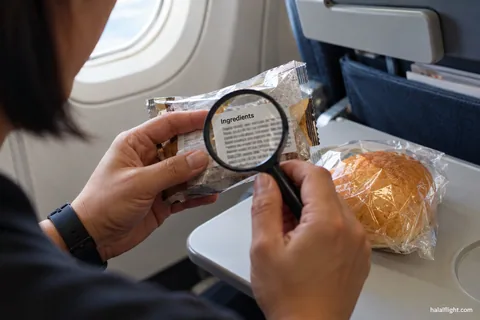
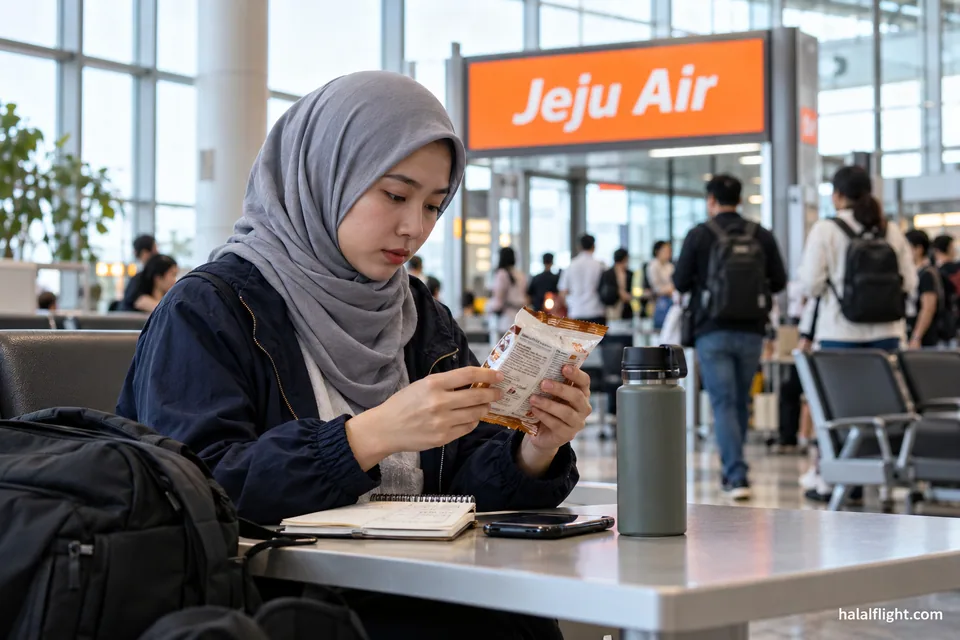
Jeju Air’s menu shows the contents of each dish. Two examples show how misleading a name can be. The chicken and ricotta salad selection includes ham, and some beef dishes also list pork among their ingredients. A reader who picks by the main protein could end up with a meal that contains pork.
A quick method
- Open the dish page, not just the menu thumbnail.
- Read every component, including sauces, patties, toppings and bread fillings.
- Look for ham, bacon, pork, lard, gelatine, alcohol-based seasoning such as cooking wine, and unnamed meat extracts.
- Leave the dish if any line is unclear, and contact Jeju Air before booking.
The neighbouring guide on pork and lard in airline food explains how those ingredients hide in products, and applies to any carrier.
Even a clean ingredient list is not the same thing as halal certification. A dish without pork may still come from a kitchen or supplier that the traveller cannot assess. Whether that is acceptable is a personal religious question for a qualified scholar.
The vegan bibimbap option
The menu includes Jeju Wild Vegetable Bibimbap, described by Jeju Air as a hearty vegan meal made with Jeju vegetables and served with vegan short-rib patties. The page lists shiitake mushrooms, carrots, Korean thistle, radish, balloon flower roots and taro stems, with patties made from a plant protein mixture. It is priced at KRW 13,000, and the listed allergens are soybeans and wheat.
Because it is vegan, it contains no meat, and so no pork or gelatine of animal origin. That is a real advantage for a traveller who cannot find a halal-labelled hot meal. Two cautions remain.
- The page calls it vegan, not halal. It carries no halal certificate on the page reviewed.
- Sauces, seasonings and cooking liquids may contain alcohol-based ingredients. Check the full list, and ask Jeju Air if it is not complete.
The dish is also not offered everywhere. It is listed as unavailable on routes from Guam or Saipan to Incheon or Busan, so it cannot be a fixed plan for every sector.
Halal Cup Noodles and other packaged items
The preorder list includes Halal Cup Noodles. Jeju Air notes that the item is unavailable on some routes and that availability depends on stock. That wording matters: it is a limited product rather than a guaranteed service on every flight.
How to use it
Treat the noodles as a possible convenience, and make sure you have a second plan. Look at the product listing at the time of booking, note the route restrictions, and check again before travelling. If the item cannot be preordered for your sector, the page will usually show it as unavailable.
Other packaged items
The menu also contains hot dogs, rice bowls, stews and children’s meals. The pork and kimchi stew is one example that is clearly not suitable. Read the ingredients of any other item in the same way as above rather than inferring from the category.
Nothing on the reviewed pages states that the kitchen separates halal and non-halal food. A traveller with strict requirements should ask Jeju Air directly what handling applies to a packaged halal item.
Your departure airport changes the menu
Jeju Air’s ordering page treats the departure airport as part of the choice. Several dishes are marked as not available from Guam or Saipan. Others, such as the Buldak Giant Hot Dog, are only available on routes departing from Incheon. The Family Set is not offered from Guam or Saipan, and one kids meal is limited to Guam and Saipan departures.
Jeju Air’s family travel guidance adds that the meal menu may differ on flights departing from Saipan, and that sandwiches made locally on those departures can include ham.
What follows for a return trip
An item you ate on the way out may not be on the menu for the way back. Check the departure airport for each direction at booking, and do not copy an order from one sector to the next. Where the menu for the return looks thin, plan to bring your own food.
When to order
Jeju Air’s family travel guide says to place an in-flight meal order 24 to 72 hours before departure. The preorder page itself does not state a cutoff, so the safest reading is to order at the time of booking, or at the latest a few days before travel.
An item shown on the general menu is not a promise of availability on the day. Stock is limited on low-cost flights, and a dish not preordered may not be on the aircraft.
- Order when you book, if the website allows it.
- Check the booking confirmation for the meal line.
- Look again 72 hours before the flight to see that the item is still shown.
- Keep a screenshot of the ingredient page you relied on.
If the website will not show a meal for your flight, contact Jeju Air through the channel on its site and ask in writing what can be provided.
Business Lite and included meals
Jeju Air’s Business Lite page states that the product includes a complimentary in-flight meal valued at KRW 15,000. An earlier summary of this page gave a different amount, so the figure on the live page is the one to use.
The inclusion tells you the meal is part of the fare. It does not tell you that the meal is halal or even pork-free. A traveller on Business Lite should use the same method as any other passenger: choose from the published menu, read the ingredients, and choose a dish that you have already checked.
Questions to ask before relying on it
- Which routes does the meal allowance cover?
- How long before departure must the selection be made?
- What happens if no suitable dish is available for your departure airport?
The answers should come from Jeju Air, in writing if possible, as the conditions can differ by route.
Checklist and what to do if nothing suits
A short checklist keeps the process simple.
- Read the full ingredient page for each dish you consider.
- Note the departure airport for each direction.
- Preorder 24 to 72 hours ahead, or at booking.
- Screenshot the ingredients and the order.
- Pack sealed food from home or a shop as a backup, and check the rules of the departure and arrival countries on meat and dairy products.
If the dish is missing or has changed
Ask the crew to show you the ingredient information. If it contains something you avoid, decline it, and eat from your backup food. Sealed fruit, nuts, plain biscuits and similar items are easy to carry on short sectors.
Afterwards, send Jeju Air the flight number, date and your order reference, with the screenshot, and say which part did not match the listing. Customs rules for carrying meat or dairy across borders differ, and the guide on meat and dairy restrictions covers that topic separately.
Frequently asked questions
Does Jeju Air serve halal meals?
Jeju Air does not present a general halal meal service on the pages reviewed. It sells preordered meals with ingredient lists, plus a Halal Cup Noodles item that depends on route and stock. Read the ingredients of every dish and contact the airline if the information is unclear.
Is the Jeju Air vegan bibimbap halal?
Jeju Air describes Jeju Wild Vegetable Bibimbap as vegan, with plant-based short-rib patties, so it has no meat. It is not described as halal-certified. Check the sauces and seasonings for alcohol-based ingredients, and note it is unavailable on some Guam and Saipan routes.
Do any Jeju Air meals contain pork?
Yes. The ingredient lists show that the chicken and ricotta salad includes ham and that some beef dishes also list pork. There is also a pork and kimchi stew. Choose by the full ingredient list, never by the name of the dish.
How early do I have to order a meal on Jeju Air?
Jeju Air’s family travel guidance says to order in-flight meals 24 to 72 hours before departure. The preorder page shows no separate cutoff, so order at booking where possible and confirm the item is still listed a few days before the flight.
Is the Jeju Air Business Lite meal halal?
Not by default. The Business Lite page says the fare includes a complimentary meal valued at KRW 15,000, but that only says the meal is included. Choose a dish whose ingredients you have checked, and ask Jeju Air about route conditions before relying on it.