Two requirements, one tray
A halal meal answers a religious question and a gluten-free meal answers a medical or dietary one. Neither includes the other. A chicken dish can be fully halal and still be coated in breadcrumbs, and a gluten-free pasta can contain a flavouring that you would not accept. Passengers who need both therefore have to deal with two separate checks on the same tray.
The realistic aim is not a perfect result guaranteed by the booking code, but a meal that the airline has agreed in advance to prepare as closely as it can to both needs, plus a backup if it does not arrive. This page explains how to ask, what limits airlines publish, and what to check once the tray is in front of you.
Why you may only be able to book one code
Special meals are booked as codes: for instance MOML for a Muslim meal and GFML for a gluten-free meal. Many reservation systems accept one code per passenger per flight. Delta states that only one special meal can be requested per person, and Singapore Airlines publishes similar guidance on one special-meal type per flight. When you add a second code, the system may replace the first without warning.
What this means in practice
If you select GFML and the airline does not state that its gluten-free meals are halal, you may receive a gluten-free meal with no halal assurance. If you select the Muslim meal, you may receive wheat. Do not assume that the kitchen will merge two independent requests.
Ask rather than guess
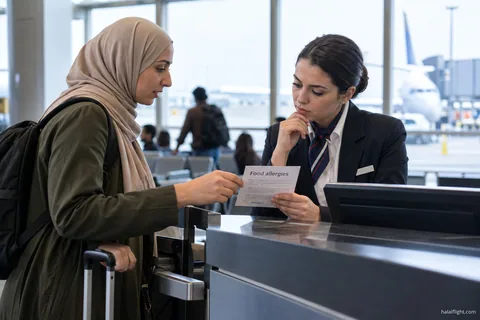
Contact the airline's special assistance or reservations team and ask these questions in writing where possible:
- Can the gluten-free meal also be halal on my flight?
- If only one code can be booked, which one does the caterer treat as the base?
- Can the second requirement be added as a note on the booking?
Airlines where halal is already the baseline
Some carriers state that their meals are prepared according to Islamic dietary rules for everyone. Turkish Airlines says its meals are prepared in accordance with Islamic dietary laws, and lists no separate Muslim meal code. Royal Brunei Airlines says all meals on its flights are halal. On such an airline, booking a gluten-free meal may leave you with a halal meal as the default, which solves half of the problem.
Even so, check the wording carefully. A general statement about the airline's meals may not extend to every special meal or every departure airport, and a flight operated by a partner can follow different rules. Confirm that the statement applies to your flight and your cabin.
What the gluten-free label does and does not mean
Airline definitions vary. Royal Brunei says its gluten-free meal excludes wheat, rye, barley, oats and bran. Delta says its meals exclude gluten-containing foods and ingredients sourced from wheat, barley and rye, and also says it cannot guarantee that they are 100 per cent gluten free. Turkish Airlines notes that its gluten-intolerant meals may contain trace amounts of gluten and are not suitable for passengers with wheat allergies. Emirates describes gluten-friendly meals and notes that its caterers lack dedicated certified gluten-free facilities.
These statements share a message: a gluten-free airline meal is prepared with gluten-free ingredients, but it is not made in a certified gluten-free kitchen. If you have coeliac disease or another condition that requires strict avoidance, discuss the risk with your doctor or dietitian before you fly, and decide on that advice whether to rely on the airline at all.
Hidden wheat in a halal main course
Halal dishes often contain wheat in forms that are easy to miss. The following deserve a second look on any tray:
- Sauces thickened with flour, and gravies.
- Breadcrumb or batter coatings on chicken and fish.
- Couscous, bulgur, freekeh, semolina and noodles.
- Stock cubes and seasoning mixes.
- Bread rolls, crackers and desserts supplied alongside the main.
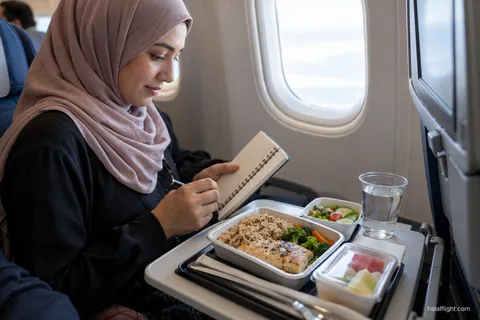
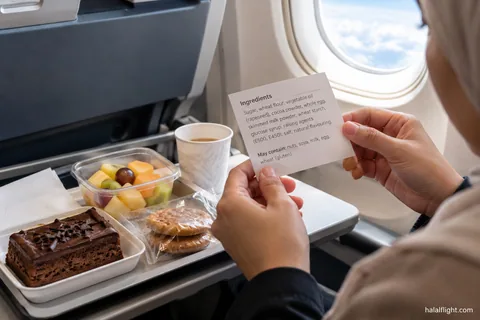
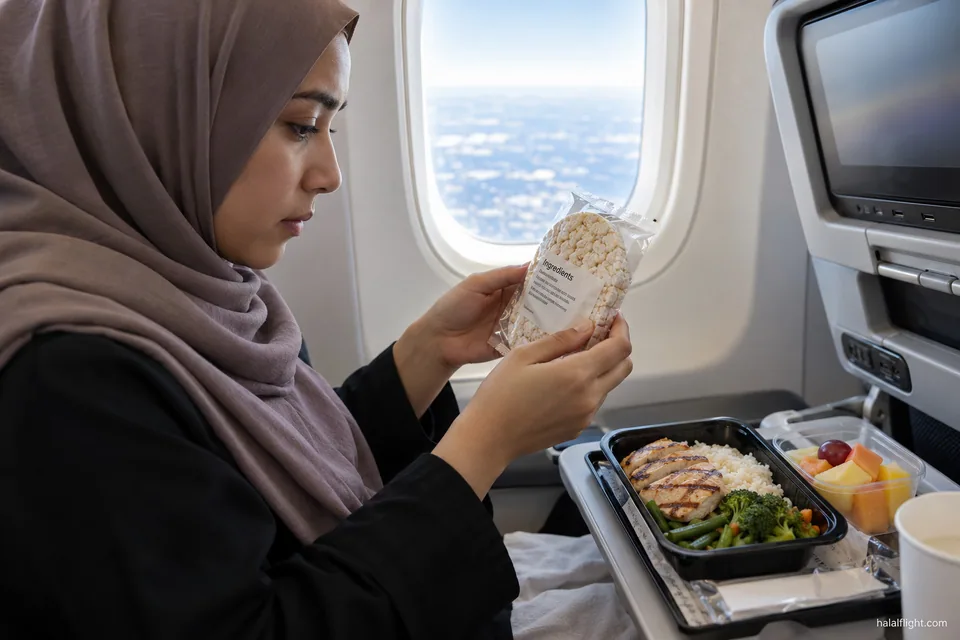
Inspect every component and its packaging, instead of judging the tray by the rice and vegetables you can see. If an item is unlabelled, leave it. A halal certificate on the main course says nothing about the wheat content of the roll next to it.
Booking steps for both needs
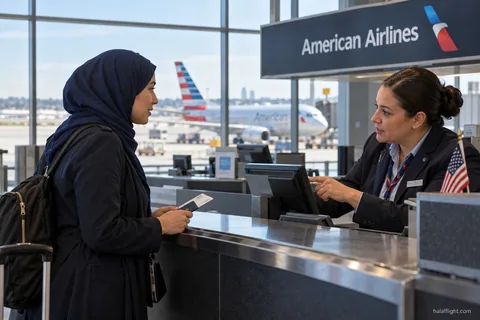
Start early, because special meals are usually requested before departure and deadlines can be tight. Delta, for example, asks for requests at least 24 hours before departure, and Turkish Airlines accepts them up to 24 hours before. Other airlines set longer deadlines on certain routes, so read the page for your own carrier.
- Open the airline's special meals page and note which codes exist and what each one says.
- Choose the code that matches the stricter of your two needs, based on the answers you obtained.
- Contact the airline to add a written note about the second requirement.
- Check that the request shows against every passenger on the booking.
- Re-request after any voluntary change. Delta states that meals must be re-requested after a change to the reservation.
A request made with another airline does not carry over to a partner-operated segment, so repeat it for each carrier on a multi-airline journey.
Pack a backup that satisfies both requirements
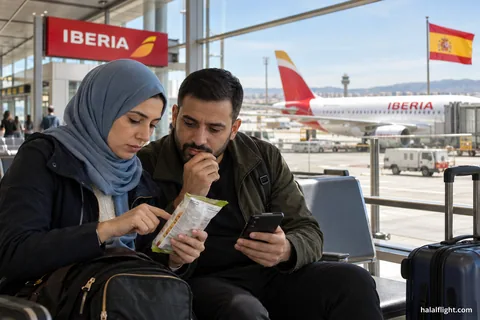
Coeliac UK recommends planning ahead and packing emergency gluten-free snacks in case of delays or travel problems, and it notes that choices at transport hubs may be limited. Add the halal dimension to that advice: choose products whose ingredients you have read, such as plain nuts, dried fruit, rice cakes or labelled gluten-free bars, and check that they contain no gelatine or alcohol-based flavouring.
Check airport security rules and the customs rules of your destination before you pack. Coeliac UK notes that some countries have strict rules on plant-based products, and that a GP letter explaining your need for gluten-free products can help with reassurance. Sealed gluten-free products may also be worth discussing with the airline in advance.
If the meal does not arrive or is wrong
Before you eat
- Check the label on the tray against your request.
- Look for bread, pastry or crumb in the meal.
- Ask the crew to confirm what the caterer provided.
If it is not right
Tell the crew early, since alternatives are limited and may already be allocated. If nothing suitable is available, eat from your backup supply and do not take a risk with a medical condition because the tray is in front of you. After the flight, report the problem to the airline with your booking reference so that the request can be corrected for the return journey.
Frequently asked questions
Can I order a halal and gluten-free meal on the same flight?
Sometimes, but not by selecting two codes. Many airlines allow one special meal per passenger. Delta states this explicitly. Contact the airline, explain both needs, and ask whether it can prepare a meal that meets both. On airlines whose standard meals are halal, a gluten-free request may already cover both.
Is a gluten-free airline meal safe for coeliac disease?
Airlines do not claim certified gluten-free kitchens. Delta says it cannot guarantee 100 per cent gluten-free meals, and Emirates notes its caterers lack dedicated certified facilities. Ask your doctor or dietitian whether the risk is acceptable, and carry safe food of your own.
Which code should I choose, MOML or GFML?
Choose the code that matches the need you cannot compromise on, after asking the airline how it handles both. If the airline serves only halal meals, GFML is usually enough. If it sells a separate Muslim meal, request written confirmation that the gluten-free meal is also halal.
How far ahead should I request the meal?
Delta requires requests at least 24 hours before departure, and Turkish Airlines accepts them up to 24 hours before. Some routes and carriers need more notice, so check your airline's page and request when you book.
Can I bring my own gluten-free halal food on board?
Often yes, subject to security and customs rules. Coeliac UK suggests asking the airline about bringing sealed gluten-free products. Check liquid limits at the airport, and the rules on meat, dairy and plant products at your destination.