What Tunisair has said about halal food
Tunisair is the national airline of Tunisia, a Muslim-majority country, and many travellers expect its catering to be halal. The evidence available on the airline’s website is narrower than that expectation. The clearest statement comes from an archived issue of the in-flight magazine Gazelle, not from a current catering policy page.
That archived issue, number 56 from April to June 2014, states in French that all of Tunisair’s menus are halal. The document remains on the official site, but it is an old publication. The statement is worth reading as the airline’s own words at that date, not as proof of what is served today.
- The halal statement is dated 2014 and appears in a magazine.
- It names no certifying body and no catering supplier.
- Current Economy fares list an onboard meal as included.
If your standard requires current evidence, the practical course is to ask the airline, as set out below.
Two language versions, two different claims
The same archived service panel does not say the same thing in each language. The French text states that all menus are halal. The English text, as summarised for this page, describes the policy only as not serving pork. Those are different claims with different scope.
Why the difference matters
A promise not to serve pork leaves open questions about alcohol in cooking, the source of the meat and the method of slaughter. A statement that menus are halal is broader, but it is still an assertion without a named standard. A traveller who reads only the English version could reasonably conclude something weaker than a traveller who reads the French.
Neither version names a current certifying body or identifies the kitchens that supply today’s flight. That is not a criticism of the airline; it is a reason to ask for current evidence when certification matters to you.
What Economy fares include today
Tunisair’s Economy page compares its fare families: Light, Classic, Flex and Flex+. In the benefits table the row for onboard meals, labelled in French as repas à bord, is marked as included for all four.
This establishes a catering benefit across those fares. It does not say what the dish is, how large the portion is, or whether a particular meal is certified. The fare table is a commercial summary, not a catering specification.
What this means in practice
- You should expect a meal or snack on flights where catering is provided, rather than paying separately.
- You should not assume the content is identical on every route and departure.
- You still need to confirm that the standard meal meets the requirements you follow.
Fares and conditions can change, so check the Economy page again before you book.
What the meal may be: breakfast, snack or full meal
The archived magazine distinguishes breakfast, a snack and a full meal according to the flight. That broadly matches how many airlines scale catering to flight length and departure time, with a short morning flight getting something lighter than a long evening one.
The magazine is old, so use it only as a guide to the idea that catering varies. Get the current service details for your own journey from the airline, and do not assume that a short flight includes a hot meal.
Plan around the likely service
- On a short or early flight, expect a lighter offer and eat beforehand if you want more.
- On a longer flight, ask whether a hot meal is planned.
- Carry a sealed snack for delays, which can affect catering.
Questions to ask Tunisair before you fly
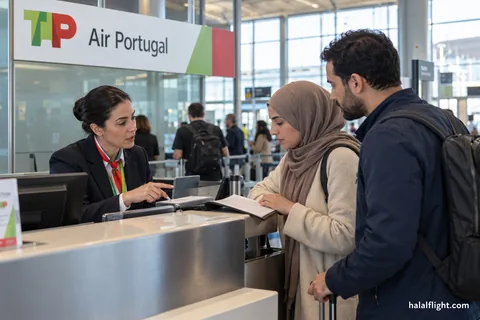
Tunisair’s contact page lists a call centre with numbers for Tunisia, France, Belgium, Germany, Switzerland, the United Kingdom, the Netherlands, Austria, Spain, Portugal, Canada and Turkey, plus a general number for other countries. It also offers an online form in its customer relations section and a postal address for its headquarters in Tunis-Carthage.
Choose the channel that suits you, and give the departure airport, date and flight number. Then ask precise questions.
- Does the standard meal on this flight meet halal requirements, and who certifies it?
- Is a separate request needed for a Muslim or other special meal?
- If so, what is the deadline for this flight? Do not assume a universal notice period.
- Is there a supplier statement or certificate the airline can share?
Ask for the answer in writing and note the date and the name of the person who replied.
Judging the answer you receive
Responses vary. You may be told the meals are halal with no further detail, that a special meal can be requested, or that the agent cannot confirm. Each answer calls for a different decision.
If you are told the meals are halal
Ask whether this is based on a certificate or on the airline’s policy. Many travellers find a clear airline statement sufficient; others want a named certifier. Which applies to you is a personal matter, and a qualified scholar can advise where differences between schools of thought affect you.
If a special meal is offered
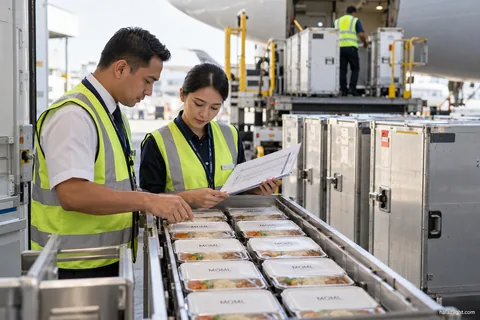
Ask for the exact meal code and confirmation that it is recorded on your booking. Muslim meals are usually coded MOML, though airlines differ in what that covers.
If no one can confirm
Treat the meal as unconfirmed, check what is served, and bring food of your own.
Related pages for comparison
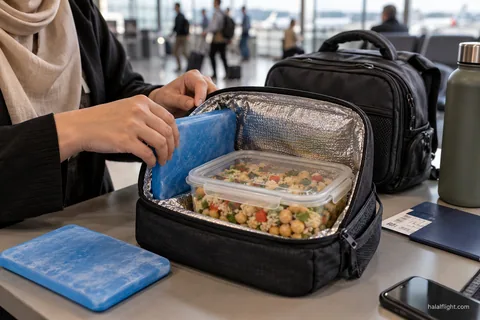
Tunisair is one of several airlines whose own wording suggests a broad halal catering policy. A separate guide lists airlines that describe all onboard meals as halal and explains how to read such claims. For the ingredients that can cause doubt in any airline meal, such as animal-derived additives, a guide to E-numbers covers the subject without tying it to one carrier. Another page deals with keeping homemade halal food fresh in transit, which is useful if you decide to bring a meal.
Checklist and what to do if it goes wrong
Use this list when you book and again before departure.
- Read the dated Gazelle statement in both languages and note what each version claims.
- Check the current Economy page for the meal inclusion on your fare.
- Contact Tunisair with your flight details and ask the four questions above.
- Record the answer, the date and who gave it.
- Pack a sealed snack in case of changes or delays.
If the meal served differs from what was confirmed
Ask the crew to identify the replacement before you eat it, and ask about its ingredients. If you cannot be satisfied, eat your own food. After the flight, write to customer relations with your flight number, date and the confirmation you received, and ask for a written explanation.
Frequently asked questions
Are all Tunisair meals halal?
An archived Tunisair magazine from April to June 2014 states in French that all its menus are halal, while the English text describes only a no-pork policy. Neither names a certifier or is a current catering policy, so confirm with Tunisair for your flight if certification matters to you.
Does Tunisair serve pork?
The English text in the archived 2014 magazine describes the policy as not serving pork, and the French text says all menus are halal. That is the airline’s statement as published at that date. For current confirmation on your flight, ask Tunisair directly and keep the reply.
Is a meal included in Tunisair Economy fares?
Tunisair’s Economy comparison marks onboard meals as included for the Light, Classic, Flex and Flex+ fares. The table does not specify the dish, portion or certification, and content can differ by route and departure, so check details for your own flight.
Do I need to request a Muslim meal on Tunisair?
That is not established by the pages reviewed. Ask the airline whether the standard meal already meets your requirements and whether a separate request is needed. If it is, ask for the deadline for your flight rather than assuming a universal notice period.
How can I contact Tunisair about food?
Tunisair’s contact page lists country-specific call-centre numbers, an online form in the customer relations section and a postal address for its headquarters. Give your departure airport, date and flight number, and ask for the answer in writing.