Two requests, two separate checks
Passengers with diabetes who also eat halal are really making two requests that airlines often handle in different systems. The religious request is about how the food was sourced and prepared. The medical request is about what the food does to blood glucose. Neither one answers the other, so each needs its own check.
A meal booked under a diabetic code may be sensibly portioned and still contain ingredients you would not accept. A halal meal may be fully acceptable religiously and still deliver far more carbohydrate than your treatment expects. The sensible approach is to decide in advance which of the two matters most when they conflict, and to carry something that lets you cover the other gap yourself.
Nothing here replaces your own diabetes team. Doses, targets and what to do about a low or high reading are decisions for them, not for an airline or a travel guide.
How a halal request and a diabetic request meet
When the airline serves only halal food
On an airline that declares all its meals halal, a diabetic meal request may already satisfy both needs. Read the airline's own wording rather than a third-party summary, and look for the exact name of the meal option.
When halal is one option among several
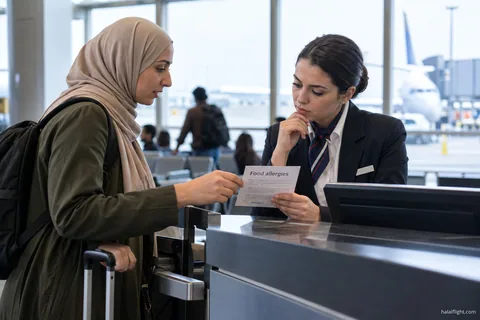
Most airlines list special meals as separate choices: you pick one code, not two. In that case ask the airline directly whether a single meal can meet both requirements, or whether you must choose. If the answer is unclear, treat the diabetic option as unconfirmed for halal purposes until you have it in writing.
- Ask for the exact meal name and code that will appear on your booking.
- Ask whether the halal status applies to that meal specifically.
- Ask for the deadline for changes, and keep the reply.
For the wider question of how the halal code itself works, see the sibling guide on gluten-free and other combined special meals rather than repeating the process here.
Carbohydrates are the real unknown
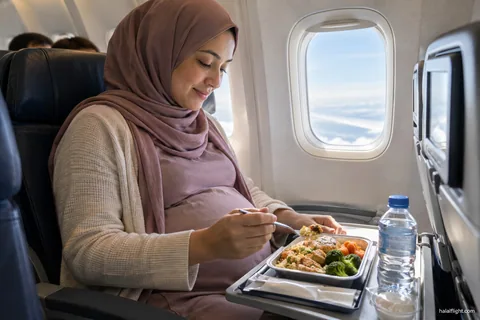
Low sugar is not the same as low carbohydrate. Rice, bread, pasta, potato, couscous and fruit all contribute carbohydrate whether or not sugar was added, and a dessert or sweet drink on the tray can change the total considerably.
Airlines rarely publish carbohydrate counts per tray, so you should not expect a predictable figure. If you count carbohydrates, use the method your care team has agreed with you, and treat any estimate on the day as approximate. Diabetes UK notes that standard airline meals may not give enough carbohydrate for people who take insulin or certain tablets, and that crew can usually supply items such as fruit, crackers or rolls on request.
Practical ways to judge a tray
- Identify the starch first: rice, bread, pasta, potato or pastry.
- Note any sweet items: dessert, juice, jam, sweetened yoghurt.
- Keep a bread roll or similar item aside to eat later if you are unsure.
- Check your glucose before eating, as your plan advises, rather than guessing from the menu.
Meal timing, delays and the snack reserve
Diabetes UK advises checking your airline's meal times in advance so you can plan insulin around them. Even so, delays, turbulence and a late departure can push a meal back by hours. The CDC points out that delayed meals, unfamiliar food, time-zone shifts and changes in activity can all affect blood sugar, and recommends checking more often when travelling.
For that reason, a flight plan should never depend on the tray arriving on time. Carry your prescribed hypo treatment where you can reach it without getting up, and carry food that is both suitable for your plan and acceptable to you religiously.
What a halal-friendly reserve can include
- Nuts, dried fruit or fruit that travels well, as both the CDC and Diabetes UK suggest.
- Plain crackers or rolls from a source whose ingredients you have read.
- A sandwich with a filling you are sure about, if you can keep it cool and eat it soon.
- Your prescribed fast-acting glucose, packed separately from the snacks.
Read labels on packaged snacks for gelatine, alcohol-based flavourings and animal-derived additives. If a label is unclear, leave that item out of the reserve.
Time zones and medicine: a conversation for before the trip
Crossing time zones lengthens or shortens your day, which can change when you need medicine and how much. Diabetes UK explains that flying east generally shortens the day and flying west lengthens it, and asks travellers to talk to their healthcare team before leaving, with departure time, flight length and local arrival time to hand.
An airline meal selection cannot decide any of this. The meal is one input; the schedule for tablets, insulin or monitoring is a medical decision made with the people who know your treatment.
What to bring to that appointment
- Your full itinerary including connections and the time each flight departs and lands.
- The meal times the airline has told you to expect.
- A question about what to do if a meal is late, missing or does not contain what you expected.
- A question about devices: pumps and glucose readers may need the time changed by hand.
Supplies, security and hand luggage
Both Diabetes UK and the CDC say to keep insulin, medication and equipment in hand luggage, because the hold can be very cold and checked bags can be lost. Diabetes UK also suggests splitting supplies between bags and taking two to three times the amount you would normally use; the CDC suggests at least twice as much as you think you need.
The CDC notes that liquids for diabetes needs, such as juice, liquid medicine or gel packs for insulin, can exceed the usual liquid limit at security. Diabetes UK adds that a doctor's letter listing your medication and devices can help justify containers over 100 ml. Rules differ by country and airport, so check the security guidance for every airport on your route.
- Carry a doctor's letter and a diabetes ID card or wristband.
- Ask for a hand inspection of a pump or glucose monitor instead of sending it through an X-ray machine, as the CDC advises.
- Keep insulin away from direct ice and from heat.
Airport food when the gate is your only option
Long layovers often mean eating at the airport. The CDC suggests choices such as grilled chicken or fish, salads with lean protein, or eggs, and watching portion size. For a halal eater the question is whether the meat is halal, which a menu word like grilled does not tell you.
Ask staff directly about the meat source, and if they cannot say, choose a vegetarian or egg-based option you can read about. A destination guide to airport halal food will help you locate outlets, but verify any named outlet with the airport or operator before relying on it, as opening hours and menus change.
Do not buy a large meal only because it is the one halal item available. Eat the amount your plan calls for and keep the rest for later if it keeps safely.
Checklist and what to do if it goes wrong
Before you fly
- Agree the plan for doses, monitoring and low-glucose treatment with your diabetes team.
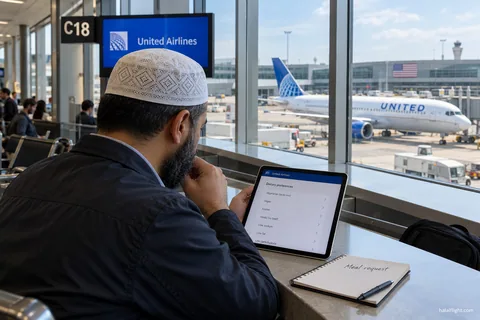
- Ask the airline in writing whether a diabetic meal can also be halal, and note the deadline.
- Pack a letter, spare supplies in hand luggage, and a snack reserve you have read the labels for.
On the day
- Check your glucose as your plan advises, before and after eating.
- Tell the crew early that you have diabetes and need your meal on time.
- If the tray does not arrive or is not suitable, eat from your reserve and ask for bread or fruit.
If something goes wrong
If your special meal is missing, ask the crew what is on board, and say plainly that you need food for a medical reason. If you feel unwell, follow your care plan and tell the crew immediately. Afterwards, complain to the airline in writing so that the note on your booking is corrected for next time.
Frequently asked questions
Can I order a diabetic meal and a halal meal on the same flight?
Many airlines let you choose only one special meal code per passenger. Ask the airline whether its diabetic meal is halal, or whether a halal option can be made suitable for diabetes. On an airline that serves only halal food, the diabetic request may cover both. Get the answer in writing before the booking deadline.
Is a diabetic airline meal automatically halal?
No. The diabetic label describes the nutritional intent of the meal, not how the meat was sourced or whether any ingredient is a concern to you. Check the airline's own halal statement and ask whether that specific meal meets it. If it cannot be confirmed, carry a suitable alternative.
What should I do if my halal meal arrives late and I take insulin?
Follow the plan agreed with your diabetes team, which should cover delayed meals. Keep your hypo treatment and a snack reserve within reach, and tell the crew early. Do not base your medicine decisions on the assumption that a tray will arrive on time.
Can I bring my own food on the plane if I have diabetes?
Generally yes for food you carry yourself, and diabetes supplies such as juice or gel packs are often allowed past security beyond the usual liquid limit. Rules vary by country and airport, so check the guidance for each airport on your route and carry a doctor's letter.
How do time zones affect when I eat and take my medicine?
Crossing time zones changes the length of your day, so the timing of tablets or insulin may need adjusting. That is a medical decision. Take your itinerary to your diabetes team before travelling and ask for written guidance for each leg of the journey.