The short answer for Muslim passengers
Southwest Airlines does not run a pre-ordered special-meal programme of the kind found on many international carriers. Its food and beverage page describes complimentary drinks and snacks on select flights of 251 miles or more, states that food is not sold onboard, and recommends that passengers bring a full meal for their journey. The page makes no statement about halal options, so there is no Muslim meal code to request and no halal tray to expect.
In practical terms, the halal question on Southwest becomes a packing question. You decide what you will eat, buy or prepare it in advance, and carry it through screening and onto the aircraft. This page covers what the airline publishes and how to organise food around it. Wider questions, such as how meal codes work on other airlines, are covered elsewhere on the site.
What the snack service actually is
The airline describes its snack service as complimentary on select flights, not on every departure. Selections vary by route and seat: the published page lists different items for flights to Hawaii and a premium snack for Extra Legroom seats on select longer flights. Because the range changes and depends on the flight, any specific product named today may not be the one handed to you.
Why a snack is not a halal answer
The page warns that snacks may contain allergens, including milk, eggs, fish, shellfish, tree nuts, peanuts, wheat, soybeans and sesame. That list concerns allergy, not religious status. Southwest does not describe any snack as halal-certified, and nothing on the page confirms whether the baked or confectionery items contain animal-derived additives, alcohol-based flavourings or similar ingredients that some travellers avoid.
Many travellers treat plain items such as sealed nuts or unflavoured crackers as acceptable after reading the packet, while others only accept products carrying a recognised halal mark. Which approach applies to you is a personal matter on which a qualified scholar can advise. The sensible habit is the same either way: read the ingredient list on the packet, and if you cannot confirm it, decline it politely and eat your own food.
Bringing your own food is allowed
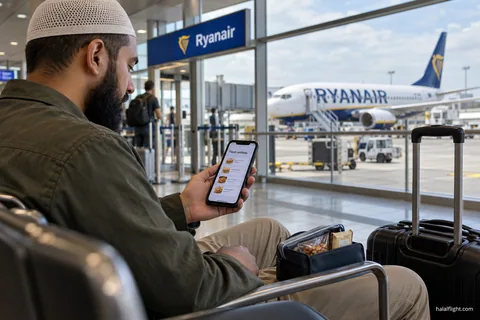
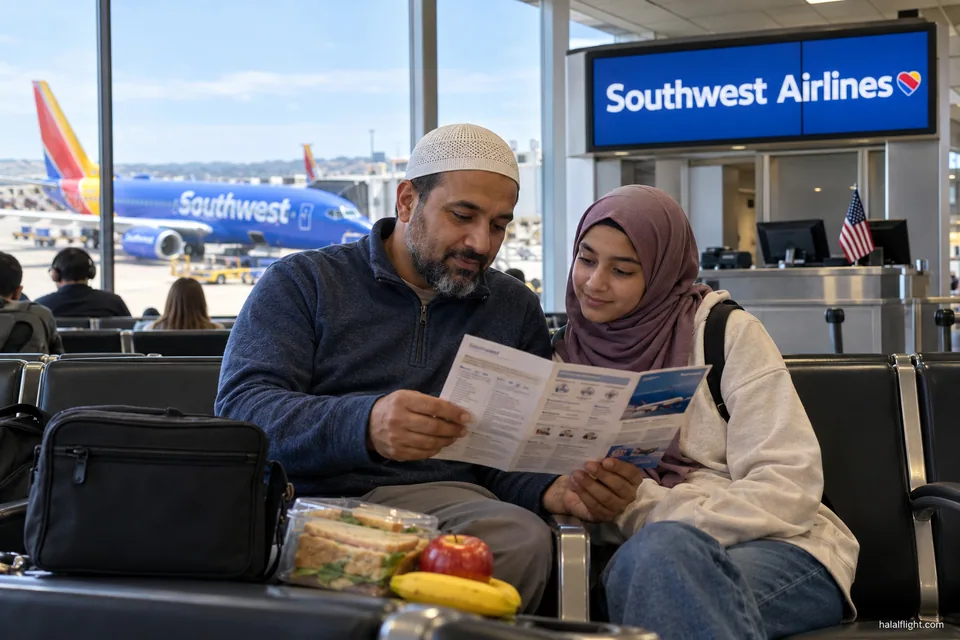
Southwest states plainly that passengers may bring their own food onboard, and its help centre repeats that customers can bring their own snacks or meals. This is the airline's recommended route for anyone who wants a proper meal, and it works in your favour: you control the ingredients, the supplier and the preparation.
Two limits sit outside the airline's own rules. First, everything you carry must pass security screening at the departure airport, and those rules differ by country, particularly for liquids, gels and sauces. Second, the arrival country may restrict meat, dairy, fruit or other fresh products at the border, so food that is fine to eat in the cabin may have to be declared or discarded before you leave the airport. Check the border authority of your destination if you are crossing a border.
Choosing food that travels well
Southwest does not promise reheating or refrigeration, so pick food that stays safe and pleasant at room temperature for several hours. Cabin temperature and the time between preparing the meal and eating it matter more than most travellers expect.
Suitable options
- Sandwiches or wraps filled with halal-certified cold meat, tuna, egg, falafel or hummus, wrapped tightly.
- Rice or pasta salads that contain no dairy sauces and keep well.
- Dates, dried fruit, nuts and seeds, which also work for breaking a fast.
- Whole fruit with skins that can be peeled or washed, plus cut vegetables.
- Sealed halal-labelled snack bars, biscuits or crisps bought from a shop you trust.
Better left at home
- Strong-smelling food that will bother seatmates in a confined cabin.
- Anything with a runny sauce, which is hard to handle on a tray table and may fail screening.
- Fresh meat or dairy that needs cooling for a long day of travel.
Packing the meal within the bag allowance
Southwest's baggage policy allows one carry-on bag and one personal item. The carry-on goes in the overhead bin and must not exceed 24 by 16 by 10 inches including wheels and handles; the personal item goes under the seat in front of you. A food bag or small cooler is not a third allowance, so it has to fit inside one of these two.
The easiest arrangement is to put the meal in the personal item so that it sits within reach and does not require opening the overhead bin during the flight. Use a leak-proof container, pack cutlery that is allowed through screening, and carry a few napkins. If the bag is too large or you have extra items, the airline advises checking them at the ticket counter before going to the gate, so measure before you leave home.
Travellers on partner airlines or connecting itineraries should note that the Southwest policy covers Southwest flights. Another carrier on the same ticket may apply different carry-on rules.
Planning around the whole travel day
A short Southwest hop can sit between long airport waits, a connection or a late arrival. Count backwards from your destination: when will you next be able to buy or prepare a suitable meal, and will shops be open? If the answer is uncertain, carry more than you think you need.
Prayer and fasting
If you are travelling during Ramadan or need to fit prayers around departure times, take dates and water for the fast-breaking moment and check sunset times for your route. The timing of fasting while travelling and of combining prayers is a matter for your own scholar. Southwest does not publish any special arrangements for fasting passengers, so rely on what you carry.
Water
Empty bottles can usually be carried through screening and filled airside. Keep water accessible after screening, since drinks are served only on select flights and the service can be limited at the airline's discretion.
Checking what is current before you fly
The snack list, the mileage thresholds and the baggage dimensions are all published by the airline and can change. The help centre states that onboard service may be modified or limited at Southwest's discretion, so a flight you expect to include a snack may not. Treat the snack as a bonus, never as a meal.
If you want to ask the airline a question, such as whether a particular route will have snacks or whether it can share ingredient information, use the customer support channels listed on the Southwest website and keep a note of the answer. Do not rely on a verbal comment at the gate to cover a dietary need. Because no halal product is published, an ingredient statement for the specific packet is the most you can reasonably ask for.
Checklist and what to do if food runs short
- Decide before booking whether you need a full meal; if so, assume you must supply it.
- Buy or prepare food that is halal by your own standard and safe at room temperature.
- Pack it in the personal item, in a leak-proof container.
- Check screening rules at the departure airport and border food rules at arrival.
- Carry dates, nuts and water as a reserve.
- Read the packet before accepting any onboard snack.
- Keep receipts or labels for packaged food in case an officer asks.
If the food is gone or spoiled
Tell a crew member quietly; they cannot sell you a meal, but they may be able to offer a snack if the flight carries one. Decide whether it meets your standard. At the next airport, look for sealed vegetarian or fish options, which many travellers consider the lowest-risk choice when halal meat is unavailable. This is a general practice, not a ruling.
Frequently asked questions
Does Southwest Airlines offer halal meals?
Southwest publishes no halal or other religious special meal. It offers complimentary snacks on select flights of 251 miles or more, does not sell food onboard and recommends that passengers bring a full meal. Anyone needing halal food should arrange it before boarding and carry it in their cabin bag.
Can I bring my own halal food on a Southwest flight?
Yes. Southwest's food and beverage page and help centre both say passengers may bring their own food or snacks onboard. The food must pass security screening, and if you are crossing a border, the destination may restrict meat, dairy or fresh produce. Check those rules before packing.
Are Southwest snacks halal?
Southwest does not state that any snack is halal. The airline lists allergens such as milk, eggs, wheat and sesame, which is separate from religious status. Read the ingredient list on the packet, and if you cannot confirm it meets your standard, eat your own food instead.
Does the halal food count as a carry-on bag on Southwest?
Food has no separate allowance. Southwest permits one carry-on and one personal item, so a meal bag or small cooler must fit inside one of them. The personal item stays under the seat and keeps the meal within reach during the flight.
Will Southwest serve snacks on every flight?
No. The airline says snack and drink offerings are available on select flights of 251 miles or more, and that service may be modified or limited at its discretion. Flights to Hawaii and Extra Legroom seats have different selections. Pack your own food in case there is no service.