The short answer: two needs, often two separate codes
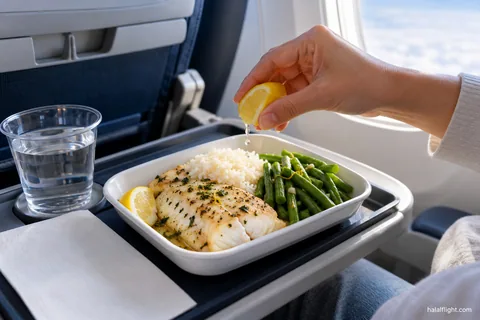
A halal requirement and a lactose restriction are recorded in different ways on most airline systems. The religious option is normally the Muslim meal (code MOML), while the lactose option is a dietary meal, commonly coded NLML. Choosing one in a booking screen does not automatically add the other, and on some websites the second selection simply replaces the first.
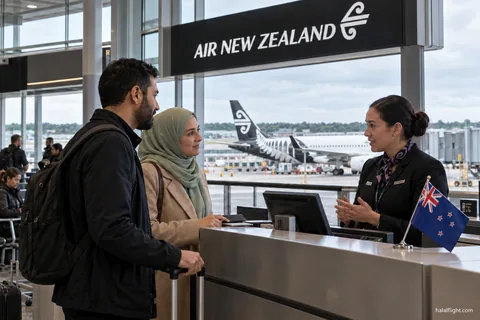
The practical goal is therefore a written confirmation from the airline that the meal on your flight will be both halal and free of lactose. Where an airline serves only halal food on board, the question becomes easier, because the lactose meal is already prepared within a halal catering policy. Where it does not, you need the airline to say how the two requirements are combined.
This page covers the lactose side of the question. The booking steps for a Muslim meal itself are covered in the guide to requesting a Muslim meal while booking, and the low-sodium combination has its own page.
Lactose intolerance and milk allergy are not the same
Before describing your need to an airline, be clear which condition applies, because the meal that suits one can be unsafe for the other.
Lactose intolerance
The NHS describes lactose intolerance as a problem digesting lactose, the sugar in milk. The most common cause is not making enough lactase, the enzyme that breaks lactose down. Symptoms include tummy pain, bloating, wind and diarrhoea, and they can appear within minutes or a few hours of eating. The NHS adds that symptoms can often be prevented by eating smaller portions of lactose-containing foods or avoiding them, and that foods should not be cut out of an adult's or child's diet without advice from a GP or dietitian.
Cow's milk protein allergy
A milk allergy is a reaction to the proteins in milk, not the sugar. Cambridge University Hospitals lists lactose-free cow's milk as unsuitable for people with cow's milk protein allergy, because it still contains the protein. Goat's milk is also unsuitable, as its proteins are similar. Reactions can range from skin and gut symptoms to severe anaphylaxis.
Several airlines say this plainly on their own pages. TAP Air Portugal, ANA, Korean Air and Emirates each state that their lactose-related meal is not suitable for a milk allergy. If you have a milk allergy, follow the advice of your allergy clinician, tell the airline about it separately and do not rely on a lactose-free label.
How airlines describe the lactose meal
The names differ, and so does the promise behind them. Airlines may call the option low lactose, lactose-free, non-lactose or a meal for lactose-intolerant passengers. Reading the operating carrier's own wording matters, because a description such as lactose restricted is weaker than one that says dairy products and their derivatives are excluded.
- TAP Air Portugal describes a lactose intolerance meal that excludes lactose and dairy derivatives but may contain traces, and it also lists a combined lactose and gluten intolerance meal.
- ANA describes its lactose-intolerant meal as excluding lactose-containing ingredients, including dairy products and their derivatives.
- Qatar Airways describes a non-lactose meal for passengers who are lactose intolerant or cannot consume dairy, excluding milk, yoghurt, cheese, ice cream and other dairy products.
- Emirates lists a low-lactose meal for passengers who need a lactose-restricted diet.
These differences are exactly why a general rule is unsafe. A trace statement on one airline and a strict exclusion on another may suit different people. If your doctor or dietitian has set a particular level of avoidance, ask the airline to tell you in writing what its meal excludes.
Where the halal assurance comes from
The halal side of the tray depends on how the airline handles religious food generally. Two situations are common.
Airlines that state all meals are halal
Some carriers say that everything served on board is halal. Emirates states that all its meals are halal certified, and Qatar Airways says that all its meals are halal. With these airlines a lactose-free request does not need to be paired with a separate Muslim meal request, because the base catering is already within the airline's halal statement. You should still confirm this on the day of booking, since a statement on a website describes the airline's general policy rather than a guarantee for every departure point.
Airlines that offer a Muslim meal as a category
Where a Muslim meal is one choice among many, it is a category and not a recipe. TAP describes its Muslim meal as using halal-certified meat or chicken, or halal-approved fish and produce, with no pork, alcohol or doubtful items. ANA describes a Muslim meal as excluding pork products, gelatin, alcohol and alcohol-based flavouring extracts. Neither description, taken alone, says that the same tray is also dairy free.
In that case ask the airline directly whether a Muslim meal can carry the lactose restriction, or whether the lactose meal can be supplied from halal sources. If the airline can only record one code, ask which one it will prioritise and what the crew will be told. For individual religious questions, such as how to treat a dish you are unsure about, a qualified scholar is the right authority.
Dairy that hides outside the main dish
Even a correctly coded meal can include items that contain milk. The NHS notes that lactose is found not only in milk, butter, cheese, cream, yoghurt and ice cream but also in many processed foods such as cereals, baked goods, sauces and dressings.
When the tray arrives, look beyond the main course.
- Bread and rolls: some are made with milk, and the butter or spread served beside them is dairy unless stated otherwise.
- Sauces and dressings: creamy sauces, yoghurt dressings and some mayonnaise-style products may contain milk derivatives.
- Dessert: cakes, mousse and puddings often rely on cream, milk powder or butter.
- Hot drinks: a sachet of whitener or a carton of milk is dairy even if the meal itself is not.
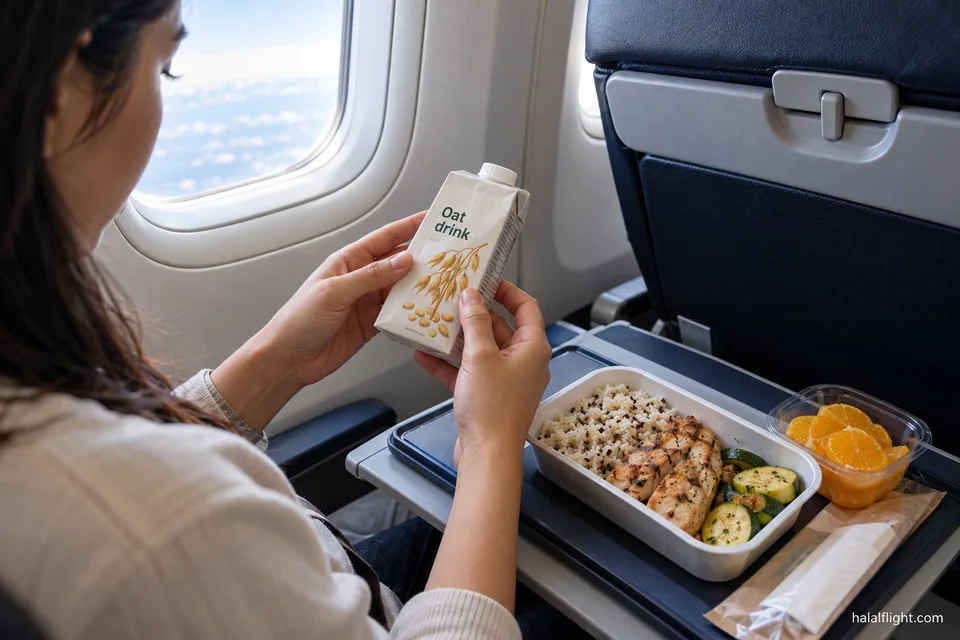
- Plant-based drinks: a soya, oat or almond drink has its own ingredient and allergy profile, so read the label instead of assuming it suits you.
If packaging is unlabelled, ask the cabin crew to read the ingredients from the catering information, and decline anything they cannot confirm.
Deadlines and request channels
Special meals are prepared before departure, so timing is firm. The figures below come from the airline pages named, and they can change, so check the operating airline's page when you book.
- TAP Air Portugal: standard special meals up to 24 hours before departure, but food intolerance meals at least 7 days in advance. Requests are made through Manage your Booking, the contact centre, an airport counter or a travel agency.
- Emirates: dietary meals up to 24 hours before the flight, requested through Manage Your Booking. Some dietary meals are not offered in economy on flights under two hours.
- Qatar Airways: at least 24 hours before departure, at booking or through Manage booking. Special meals other than vegetarian are not provided on flights to some Gulf countries.
- ANA: other special meals up to 24 hours before departure through its website, or up to 5 days through its message service.
The TAP example shows why reading the deadline for the specific meal type is worth the effort: a 7-day window is very different from 24 hours. Do not assume that a lactose option follows the same timetable as a Muslim meal.
Codeshares, connections and short flights
Meal requests apply to flights operated by the airline taking the request. TAP, for example, says its special meals are available only on flights it operates or that operate on its behalf. If your journey includes a partner airline, contact that airline separately, and see the page on codeshare flights for how to do so.
Short flights may offer a reduced choice. Etihad says that on flights under 2 hours 50 minutes some special meals are unavailable and only certain meals, including a low-lactose option, can be requested. If a sector is short, plan food for yourself rather than relying on the service.
For children and babies, milk-based products are a separate topic with extra care needed. The guides to children's meals and baby food on flights cover those points, and a paediatric dietitian or doctor should advise on any restriction for a child.
Checklist and what to do if the meal does not arrive
Use this list when booking and again before leaving home.
- Decide whether your need is lactose intolerance or milk allergy, and follow your clinician's advice.
- Identify the operating airline for every sector.
- Read the airline's own description of its lactose meal and note what it excludes.
- Ask in writing whether the meal can also meet your halal requirement, and keep the reply.
- Check the deadline for the specific meal type.
- After booking, view your reservation and confirm the meal code is displayed for each flight.
- Pack a suitable, familiar reserve within airline and security rules.
If the tray is wrong
Tell the crew politely and early, show your confirmation and ask what can be offered. If you cannot verify an item, leave it. Eat from your reserve, and later send a short complaint to the operating airline with your booking reference, flight number and a copy of the confirmation. Do not expand your restriction beyond your clinician's advice simply because the menu is unclear.
Frequently asked questions
Is a lactose-free airline meal automatically halal?
No. A lactose-free meal removes dairy-based lactose, but it says nothing about meat sourcing, alcohol or gelatin. On airlines that state all meals are halal, the lactose meal sits inside that policy. On others, you must ask whether the meal can meet both requirements, and request confirmation in writing.
Can I choose a Muslim meal and a lactose-free meal for the same flight?
Often only one special meal code can be recorded per passenger and flight. Selecting a second code on a website may replace the first. Contact the operating airline, explain both needs, and ask how the request will be entered. Ask for the reply to be confirmed by email.
Is a lactose-free meal safe if I have a milk allergy?
Not necessarily. Several airlines say their lactose meal is not suitable for milk allergy, because lactose-free products can still contain milk protein. Cambridge University Hospitals also lists lactose-free cow's milk as unsuitable for cow's milk protein allergy. Follow your allergy clinician's advice and tell the airline about the allergy separately.
How far ahead should I request a lactose-free halal meal?
Many airlines ask for at least 24 hours, but this varies by meal type and airline. TAP Air Portugal, for example, asks for food intolerance meals at least 7 days ahead. Check the operating airline's page for your meal type and request as early as possible.
Should I bring my own food as well?
A suitable reserve is sensible if the combined meal cannot be confirmed, in line with your dietary advice and the airline's rules on carrying food. Choose items that travel well and whose ingredients you know, and remember that security rules may restrict liquids and some fresh food.