Halal eating at BKK in brief
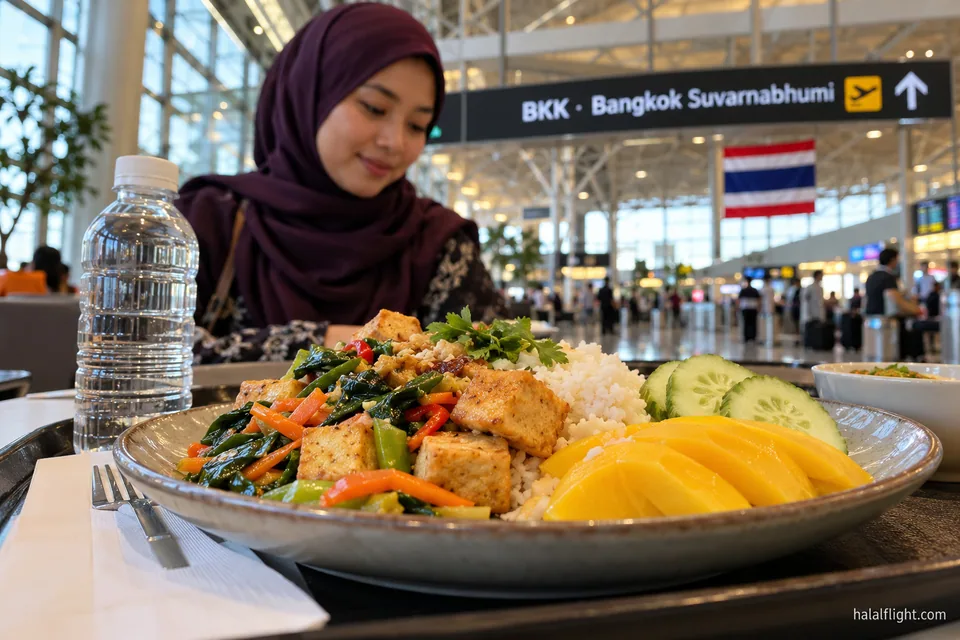
Suvarnabhumi Airport, code BKK, is Bangkok's main international airport. Thailand has a large Muslim community and a well-known halal certification system, which makes it more likely than in many countries that an outlet can explain its halal arrangements. That is a reason to ask, not a reason to assume. The airport's dining directory lists outlets, but a listing is not a certificate, and each stall in a food court is its own business.
Three questions decide most meals here: can I reach the food court from where I am, does the stall hold a current halal certificate or other assurance, and what is in the broth and sauce of the dish I want?
- Confirm you are at the right airport and in the right area.
- Ask the stall, not the seating area.
- Ask about stock, fat and sauces before ordering.
Suvarnabhumi or Don Mueang: avoid the wrong airport
Bangkok has two commercial airports, and they have separate dining and facility information. Suvarnabhumi uses the code BKK; the older Don Mueang airport has a different code and is a different building, some distance away. A search for halal food in Bangkok airports can return results for either, and a recommendation for one is no use at the other.
Check the airport name on your ticket before saving any outlet. If you are connecting between the two airports, treat it as a full journey with its own time allowance, not as a stopover meal break.
- BKK on the ticket means Suvarnabhumi.
- Use the Suvarnabhumi dining directory for BKK plans.
- Do not mix recommendations between airports.
Magic Food Point: what the airport says
The airport's listing describes Magic Food Point as located on Floor 1 of the Main Terminal, in a public area, and open 24 hours a day, every day of the week. Those three facts together shape how you can use it.
Public area, not automatically airside
A public-area food court is designed for anyone in the terminal, including meeters and greeters and passengers who have not yet cleared immigration and security. A passenger who is already in the transit or departure area cannot assume that going back to the public floor is a quick option. Immigration, visa and security rules differ by nationality and ticket, so check with your airline or airport staff before leaving the passenger area.
Who it suits
It is most practical for passengers arriving in Thailand, passengers who have time before check-in, and families waiting for someone. For a tight international connection it is rarely the right choice.
Check the stall, not the food court
A food court is a group of separate businesses sharing seating. One stall may hold a halal certificate while the one beside it serves pork. The listing for the food court as a whole therefore cannot answer the halal question, and neither can a halal sign at the entrance.
What to ask the stall
- Is there a current halal certificate on display, and can I see it?
- Who supplies the meat?
- Are pork or alcohol handled or cooked on the same equipment?
- Does the certificate cover this dish or only some items?
Reading what you are shown
Thailand's halal certification is carried out by recognised Islamic bodies, and the Halal Science Center at Chulalongkorn University describes a scientific approach to halal assurance, including its HAL-Q system. A certificate is evidence that an inspection took place; check that it names the business, is within its date and covers the product. Which certifiers you personally accept is a matter for your own scholar or community.
Broths, sauces and fats in Thai dishes
Many Thai dishes rely on stocks, pastes and sauces that are invisible on the plate. A bowl of rice with vegetables, a noodle soup or a stir-fry may be made with meat stock, animal fat or sauces with added ingredients. Taking off the visible meat does not answer those questions.
Points worth raising
- Is the soup base made from meat or fish stock, and which meat?
- Are the curry paste or sauce free from alcohol or animal additives?
- Is the dish fried in oil that is also used for other products?
Fish sauce and shrimp paste
Fish and shrimp products are common in Thai cooking. Whether they are acceptable depends on the school of thought a person follows, so a traveller who has a firm view should ask staff about them directly, and a traveller who is unsure should ask a qualified scholar before the trip.
Staff may speak limited English, so showing a short written note with the key questions in Thai from a trusted source can help; ask a Thai-speaking friend or your hotel for wording.
Prayer and meals along one route
The airport publishes a facility page for prayer rooms with locations in both public and passenger areas. That page could not be read automatically while this guide was prepared, so open it directly on the airport's website before you travel and note which room is on your side of security.
Planning prayer and a meal on the same route saves time. Choose the prayer room you can reach, find a stall near it or near your gate, and keep an eye on the departure board. Confirm your gate before leaving a restaurant, especially if the walk includes another concourse.
- Check the prayer-room list for your area, public or passenger.
- Use the gate display, not an old boarding pass, for the walking route.
- Allow extra time if you intend to make ablution before praying.
Back-up food and timing
Because even a good stall may be closed, queued or unable to answer, carry something that does not depend on anyone else. Dates, nuts, dried fruit or a sealed snack with a full ingredient list will cover a delay. If you buy packaged food in the airport, read the label for gelatine, alcohol-based flavourings and meat-derived ingredients, and be aware that labels may be in Thai only.
Timing a meal
Allow time to find the stall, to ask your questions and to eat. In a busy period, queues for popular dishes can be long. If your gate is far away, eat before moving rather than taking a hot meal on the walk.
For Ramadan travel the question becomes where and when you can break the fast; the separate guide on iftar during flights and airport transfers covers that.
Checklist and what to do if it goes wrong
- Confirm your airport is Suvarnabhumi (BKK).
- Decide whether you are in the public, transit or departure area.
- Check access rules before leaving the passenger area.
- Choose a stall, then ask about certificate, meat supplier and equipment.
- Ask about stock, sauce and cooking fat for the dish.
- Locate a prayer room on your side of security.
- Keep sealed food as a back-up.
- Return to your gate with time in hand.
If the answers are unclear
Do not argue with staff. Thank them, choose a simpler dish or your back-up food, and keep to what you can account for. If you later doubt what you ate, ask a qualified scholar rather than relying on the airport.
Frequently asked questions
Is Magic Food Point inside the transit area at Suvarnabhumi?
The airport lists Magic Food Point on Floor 1 of the Main Terminal in a public area, open 24 hours a day. A passenger already in the transit or departure area should check with the airline or airport staff whether returning to the public floor is possible and how long it would take.
Are all stalls in the Suvarnabhumi food court halal?
No. A food court contains separate businesses, and one stall's halal claim does not cover its neighbours. Ask each stall whether it has a current halal certificate, who supplies its meat and whether the dish you want is covered by it.
Is Don Mueang the same as Suvarnabhumi for halal food?
No. They are different airports with different codes and separate facility information. Suvarnabhumi is BKK. Check your ticket before saving an outlet, and do not apply a recommendation for one airport to the other.
Can a vegetable dish in Thailand contain meat products?
Yes, it can. Stocks, curry pastes, sauces and cooking fats may contain meat or animal ingredients that are not visible. Ask how the dish is made, not only what is on the plate. Views on fish sauce and shrimp paste differ, so consult a qualified scholar if unsure.
Where can I find prayer rooms at Suvarnabhumi?
The airport publishes a prayer-room facility page listing locations in public and passenger areas. Open it on the airport website before travelling and note which room is on your side of security, since access depends on whether you are in the public or passenger area.