Halal on a low-cost airline: the basic picture
AirAsia works differently from a full-service carrier. The fare buys the seat, and food is an add-on. For Muslim travellers this changes the question from "how do I request a halal meal?" to "which meal do I buy, and who certifies the kitchen that prepared it?"
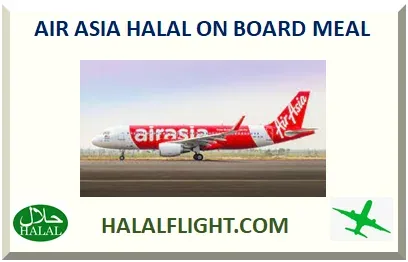
AirAsia is Malaysian, and its home market expects halal food. The airline's published position, which sits on its support site under the question of whether in-flight food is halal, is the starting reference. Malaysian halal certification is the standard it points to for meals prepared in Malaysia. The practical result is that for most Malaysian departures the menu is halal as a matter of course, and the decision you make is about which dish to buy and when.
- Default position: food on Malaysian departures is described as halal-certified.
- Elsewhere: the certificate that applies depends on where the meal was prepared.
- Payment: meals are not included in the standard ticket price.
What "halal-certified" means in the Malaysian context
In Malaysia, halal status for food is governed by an official certification system. A certified kitchen is audited for ingredients, slaughter, storage, cleaning and the separation of halal from non-halal items. That is a stronger statement than a menu that merely leaves out pork and alcohol.
Why this differs from a "Muslim meal" code
Many airlines offer a Muslim meal, coded MOML in reservation systems, which is ordered separately from the standard tray. AirAsia does not need that concept for its own Malaysian menu, because the menu is the halal menu. The reservation code matters more on a full-service airline where the default meal is not halal.
Where certification can differ
Certification is tied to a kitchen, not to the airline's name. A meal loaded in Kuala Lumpur and a meal loaded at an overseas station may come from different suppliers with different certificates. The airline's own guidance is that certification levels can vary by departure country, so check the certificate that covers the actual catering operation on your flight.
The Santan menu and typical dishes
Santan is the name of AirAsia's inflight food range, and the word is Malay for coconut milk, which gives a clue to the cooking style. Dishes associated with the range include nasi lemak, chicken rice, pasta, Asian curries and vegetarian dishes, alongside some international choices. Exact dishes change over time and by route, so use the live menu at the time you book rather than a remembered list.
Points that are useful when choosing:
- Rice dishes with chicken are the most common choice and are easy to eat in a narrow seat.
- Curries and coconut-based dishes may be spicy; check the description if you are travelling with children.
- Vegetarian dishes are a reasonable fallback if you want to avoid any doubt over meat sourcing, though they do not answer the question about kitchen certification.
- Some items on the menu may be snacks and drinks, so read the portion description before ordering.
How to pre-order your meal
The airline encourages passengers to pre-book food, either while buying the ticket or later through the Manage My Booking section of the website or app. Pre-ordering has three benefits: the dish is reserved for you, the price is generally lower than the onboard price, and the menu is wider than what the crew carries for sale on the day.
- Book the flight, or open your existing booking in Manage My Booking.
- Find the meal or add-on step. The airline's pages call this area ancillary add-ons.
- Select a meal for each passenger and each flight segment.
- Pay, and keep the confirmation email.
- Check again after any schedule change.
The deadline for changing or adding a meal is set by the airline and can change. Look at the cut-off shown on the page when you order, and do not wait until the airport.
What it costs and what you are not getting
Meals are not included in the standard fare. They are purchased separately, and pre-booked meals are usually cheaper than buying on board. Prices vary by route and over time, and this guide does not state amounts because they change; the booking screen shows the current price in your currency.
Two things are worth knowing. First, onboard purchases depend on what is left in the trolley, and popular hot dishes can sell out, especially on full flights. Second, there is no free "Muslim meal" tier that you can request on top of the ticket, because there is nothing to request: you simply buy a halal dish.
If you are on a very short flight, a pre-ordered meal can feel like poor value. Eating before you leave and carrying a sealed snack is a legitimate alternative.
Cabins and long-haul routes
AirAsia mostly flies a single economy cabin. On some long-haul aircraft it offers a Premium Flatbed section with a wider seat and an expanded meal choice. The halal basis does not change with the cabin; what changes is the number of dishes and the way they are served.
Long-haul sectors to Australia and the Middle East carry a fuller meal service than short regional flights. On these routes pre-ordering matters even more, because a full cabin of passengers will draw down the hot choices early. If a flight is a connection through Kuala Lumpur, check each leg separately, since you may be buying separate meals from different stations.
Network differences to keep in mind
AirAsia flies across Southeast Asia, South Asia, East Asia, Australia and the Middle East. Food standards on all of these are not identical, and the halal position at a given station depends on the local caterer.
- Malaysia and nearby Muslim-majority markets: halal supply is normal, and certification is easiest to confirm.
- Other Southeast Asian stations: halal food is widely available, but ask which certificate covers the meal.
- South and East Asia, Australia: the meal may be halal-friendly rather than certified; pre-order and verify.
The safest habit is the same everywhere: look up the departure station, read the airline's halal statement, and ask customer service if you need written evidence.
Checklist and what to do if it goes wrong
- Read the airline's halal statement on its support site before booking.
- Pre-order for every passenger and every sector.
- Screenshot the order confirmation.
- Pack a sealed snack and an empty water bottle to fill after security.
- If the dish is missing onboard, show the confirmation to the crew and ask for the closest halal-suitable alternative; ask for a refund of the add-on if nothing suitable is offered.
- If the certificate for a non-Malaysian station is unclear, contact the airline before travel and ask in writing.
- For questions on whether a particular dish is acceptable to you, refer to a qualified scholar; views differ between schools.
For other low-cost and Asian carriers, see the separate airline pages; this one covers AirAsia only.
Frequently asked questions
Is the food on AirAsia halal?
AirAsia describes its in-flight food as halal, and meals prepared in Malaysia fall under Malaysian halal certification. Certification can vary by departure country, so for flights from other stations check which certificate covers the catering, and ask the airline in writing if proof matters to you.
Do I have to request a Muslim meal on AirAsia?
No separate Muslim-meal request is needed in the way it is on many full-service airlines, because the Malaysian menu is itself halal. You buy the dish you want. Pre-ordering is still advisable so that the meal is reserved and the price is lower than onboard.
Is the Santan menu available on every AirAsia flight?
The Santan range is AirAsia's main inflight food brand, but the dishes offered depend on the route, the aircraft and the departure station. Look at the menu shown at booking or in Manage My Booking for your own flight rather than assuming a particular dish.
Is it cheaper to pre-order meals on AirAsia?
Pre-booked meals are generally priced below the same items bought onboard, and the pre-order menu is wider. The booking page shows the current price and the cut-off for adding a meal, so compare it with onboard prices if you are unsure.
Can I bring my own halal food on an AirAsia flight?
Passengers commonly bring sealed snacks, but the airline sets its own rules on outside food and security limits liquids and some items. Check the airline's conditions and the rules at both airports, and carry food in your hand luggage in original packaging.